

Delhi High Court Bar Association Strike: The ₹10 Crore Pecuniary Jurisdiction Row Explained
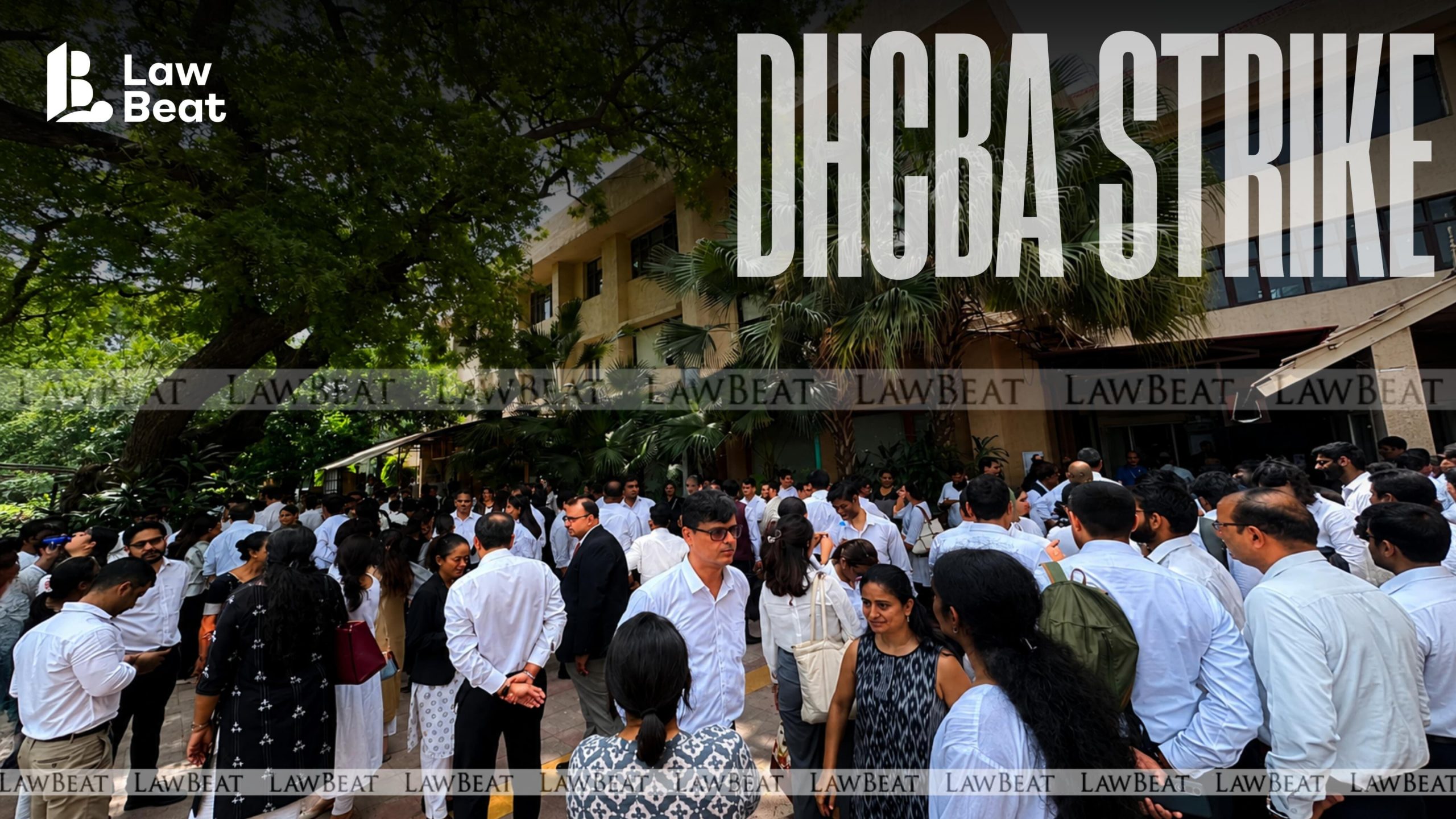
The Delhi High Court Bar Association continued its strike for the third consecutive day against the proposal to enhance district courts’ pecuniary jurisdiction from ₹2 crore to ₹10 crore, contending that the move would significantly curtail the High Court’s original civil jurisdiction and adversely affect legal practice
Delhi High Court lawyers continued their strike against the proposal to increase the pecuniary jurisdiction of Delhi district courts from ₹2 crore to ₹10 crore
Lawyers at the Delhi High Court have abstained from work for the third consecutive day on July 16, intensifying their protest against a proposal to increase the pecuniary jurisdiction of Delhi’s district courts from₹2 crore to ₹10 crore. The Delhi High Court Bar Association (DHCBA) contends that the move would drastically reduce the High Court’s original civil jurisdiction, affect lawyers’ livelihoods, and disrupt the efficient adjudication of specialised commercial disputes.
What is the dispute?
The controversy stems from a recommendation made by the Full Court of the Delhi High Court to enhance the pecuniary jurisdiction of district courts.
Pecuniary jurisdiction refers to the monetary limit up to which a court is empowered to hear civil disputes. At present, civil suits valued above ₹2 crore are instituted before the Delhi High Court on its original side. If the proposal is implemented, only disputes valued above ₹10 crore would be filed directly before the High Court, while all suits below that threshold would be transferred to district courts.
Why is the Delhi High Court’s original side important?
The Delhi High Court is among the few High Courts in India that exercises original civil jurisdiction, enabling it to function as a trial court in high-value civil and commercial disputes rather than only hearing appeals.
This jurisdiction has made Delhi a preferred forum for complex commercial litigation, particularly matters involving intellectual property, trademarks, patents, infrastructure disputes, arbitration, and high-value commercial contracts.
Why are lawyers opposing the proposal?
The DHCBA argues that raising the pecuniary threshold would significantly curtail the High Court’s original jurisdiction.
According to the Association, nearly 70% of civil cases currently instituted before the High Court would instead move to district courts, substantially reducing work for advocates practising on the original side.
The Bar has maintained that the proposal would adversely affect not only lawyers’ professional interests but also litigants, who may face longer delays due to the already substantial pendency before district courts.
Lawyers have also expressed apprehension that shifting thousands of additional commercial and civil suits to district courts would further burden an already congested system.
According to the National Judicial Data Grid, the Delhi High Court presently has over 6,000 original civil suits and around 10,000 commercial suits pending. Delhi’s district courts, meanwhile, already have nearly 97,000 pending civil suits.
The Bar fears that transferring a large volume of high-value litigation could result in prolonged delays in adjudication.
Why are intellectual property lawyers especially worried?
The proposal has drawn particular concern from lawyers practising in intellectual property (IP) law.
Unlike ordinary civil disputes, IP litigation often involves interconnected proceedings. While infringement suits may fall within pecuniary limits, related proceedings such as patent revocation petitions, trademark validity challenges and appeals against decisions of IP offices continue to lie exclusively before the High Court.
Lawyers argue that if infringement suits below ₹10 crore are transferred to district courts while connected validity proceedings remain before the High Court, litigants could be forced to pursue parallel proceedings before different forums, leading to duplication, conflicting findings and increased costs.
They have also pointed to the specialised expertise developed by Delhi High Court judges in handling complex IP disputes involving technical evidence, international witnesses and cross-border commercial issues.
Notably, the Asian Patent Attorneys Association (Indian Group) [APAA], at an emergency meeting of its Executive Committee held on July 14, resolved to “stand in complete solidarity” with the DHCBA, fully endorsing “the DHCBA’s concerns regarding pecuniary jurisdiction” and pledging “unequivocal support for the ongoing strike and collective action for as long as necessary.” The resolution is signed by APAA (Indian Group) secretary Advocate Sudeep Chatterjee.
The same day, the Intellectual Property Attorneys Association (IPAA) passed a similar resolution at its own emergent meeting, stating that its members had unanimously decided “to stand in solidarity with the Delhi High Court Bar Association (DHCBA) and fully support its call for abstention from work on the issue of pecuniary jurisdiction, for as long as it is necessary.” The IPAA resolution, issued for and on behalf of the association by its president, Advocate Ranjan Narula, adds that the body “endorses the concerns raised by the Delhi High Court Bar Association and expresses its unequivocal support for the collective action proposed in this regard.”
The International Trademark Association (INTA) has filed a writ petition before the Delhi High Court, through Advocate Urfee Roomi, challenging the Full Court’s resolution of September 2, 2025 and the constitution of the committee of judges examining the enhancement, and seeking directions that IP matters continue to be heard by the Intellectual Property Division regardless of pecuniary value. The petition notes that similar challenges have already been filed by the DHCBA and by the APAA (Indian Group) earlier this year.
What has happened in court so far?
The issue reached the Delhi High Court through petitions filed by the Delhi High Court Bar Association, the Asian Patent Attorneys Association, and the International Trademark Association, challenging the Full Court’s recommendation.
On July 10, a Division Bench declined to grant interim relief or stay the recommendation.
The Bench observed that property values in Delhi have risen substantially, with even comparatively modest residential properties frequently exceeding the existing ₹2 crore threshold. It noted that requiring all such disputes to be filed before the High Court increases litigation costs and inconvenience for litigants.
How did the proposal originate?
The proposal has been under consideration since May 2025, when the Coordination Committee of All District Court Bar Associations of Delhi requested the Union Law Ministry to enhance the pecuniary jurisdiction of district courts.
Following the request, the Chief Justice of the Delhi High Court constituted a committee to examine the issue and consult stakeholders, including representatives of the Bar, before making its recommendations.
What happens next?
Despite the High Court declining interim relief, the Delhi High Court Bar Association has continued its protest by abstaining from judicial work.
The Association has urged its members not to appear before the High Court, either physically or virtually, while reiterating its opposition to the proposed enhancement of pecuniary jurisdiction and calling for reconsideration of the recommendation.
