

Deputy Minister Calls for Stronger Action Against Illegal Fishing Trade
According to Singh, protecting South Africa‘s coastal and marine re system
- Country:
- South Africa
Deputy Minister of Forestry, Fisheries and the Environment Narend Singh has called for closer cooperation between law enforcement agencies and prosecutors to strengthen the fight against the illegal trade in South Africa’s marine reng the country’s fisheries, supporting lawful fishing communities and preserving natural re
Authorities urged to strengthen the enforcement chain
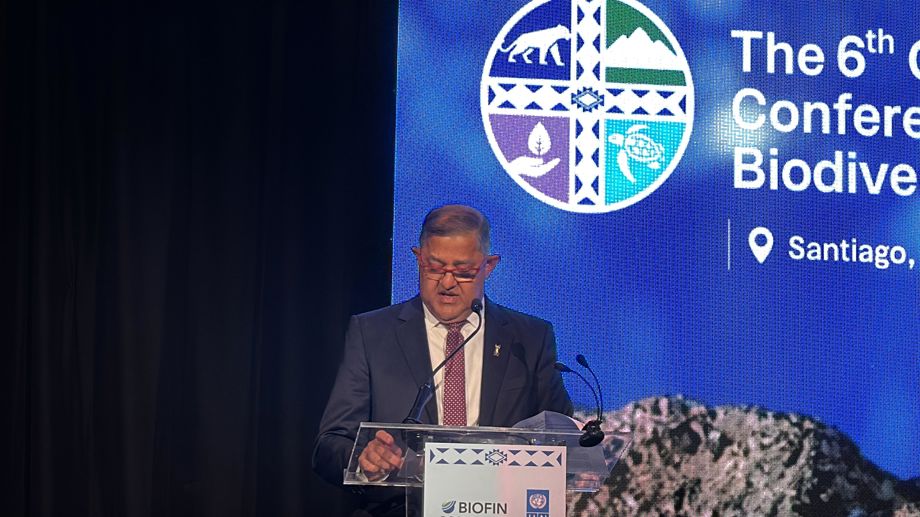
Speaking during a training session for prosecutors, the South African Police Service (SAPS) and the Coastal Marine Task Force (CMTF) in Scottburgh, KwaZulu-Natal, Singh said illegal fishing operations extend far beyond the sale of seafood at roadside stalls.
His remarks come amid continued reports of the unlawful sale of East Coast rock lobster along the N2 near Hibberdene. Singh warned that what appears to be a simple roadside purchase is often linked to organised criminal activity involving illegal harvesting, storage, transportation and distribution of protected marine resources. He said these activities place severe pressure on fish stocks, undermine the livelihoods of legal fishers, create safety risks for enforcement officers and weaken respect for environmental laws.
According to Singh, protecting South Africa’s coastal and marine re system. Intelligence gathering, investigations, evidence collection, prosecution and court proceedings all need to function as one connected process if environmental crimes are to be tackled effectively
Strong prosecutions seen as key to protecting coastal communities
The Deputy Minister said government has already taken important steps to support lawful fishing through the Small-Scale Fisheries Policy, which has allocated long-term fishing rights to 172 cooperatives representing about 10,000 fishers. He explained that the focus has now shifted towards helping these cooperatives access markets, processing facilities, cold storage infrastructure, business development support and stronger governance systems.
Singh said these investments can only deliver lasting benefits if illegal fishing activities are dealt with decisively. Weak enforcement and unsuccessful prosecutions allow illegal operators to continue profiting while reducing opportunities for legitimate fishing communities.
Recent operations highlight progress and ongoing challenges
Between April and June 2026, joint enforcement operations opened six case dockets under the Marine Living Re-guilt fines worth R42,000. Authorities also confiscated 352 linefish valued at R176,000, East Coast rock lobster worth R31,500, and 47 illegal gillnets valued at R21,150
While welcoming these results, Singh said significant challenges remain. Illegal gillnetting continues to damage estuaries, while investigations involving undocumented foreign nationals often add complexity to enforcement efforts. He also pointed to illegal developments in sensitive coastal areas such as Umgababa, forestry violations and other environmental offences that require coordinated responses across government agencies.
The two-day training programme will equip officials with updated knowledge on the Marine Living Regrated Coastal Management Act, biodiversity offences, forestry legislation, mining and water-use compliance, off-road vehicle regulations, municipal development enforcement and the protection of Marine Protected Areas
Singh said lasting success will ultimately be measured not only by arrests and confiscations but by successful prosecutions, appropriate sentencing and the long-term protection of South Africa’s marine and environmental re
