


Australia’s national security relies on essential digital infrastructure functioning regardless of political disputes, sanctions, export controls or changes in foreign governments, writes Paul Budde.
A RECENT ARTICLE on the Amateur Ethicist website argued that American technology dominance is increasingly being undermined by the way the United States uses law, sanctions and national security powers to control access to digital infrastructure. While the language of that article is more provocative than I would use, its central message deserves serious attention.
For decades, much of the world built its digital economy around American technology. Microsoft, Amazon, Google, Apple, Meta, SpaceX and, more recently, the leading AI companies became the platforms on which businesses, governments and citizens increasingly depend. This happened for a simple reason: the technology was innovative, scalable and reliable.
But convenience does not guarantee resilience or sovereignty. Indeed, the pursuit of convenience has often increased dependence on foreign-controlled platforms.
This is where the debate is becoming more complex.
For years, the United States, Australia, and several European countries argued that Chinese ICT vendors posed unacceptable national security risks because they could be compelled to cooperate with Beijing under Chinese law. This became the principal justification for excluding Huawei and ZTE from critical telecommunications infrastructure. Australia was one of the first countries to ban Huawei from its 5G networks on national security grounds.
Ironically, exactly the same strategic logic is now being applied to American technology.
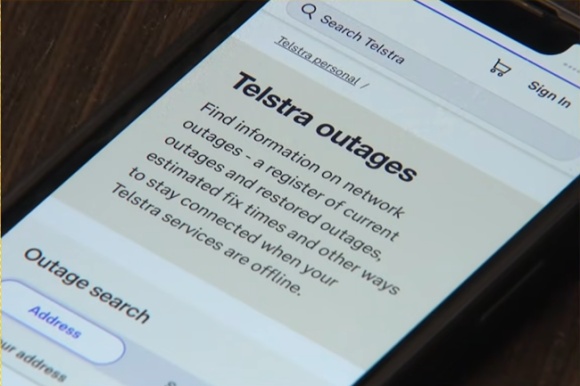
Telstra outage reveals a dangerous gap in Australia’s digital resilience
The Telstra outage exposed a bigger problem than a software fault: Australia’s telecommunications laws are still built for the last century.
Through mechanisms such as the CLOUD Act export controls, sanctions and national security directives, American companies can equally find themselves obliged to comply with instructions from Washington, regardless of where their customers are located. The issue is therefore no longer whether the risk comes from China or the United States.
The lesson is that any country relying heavily on foreign-controlled digital infrastructure ultimately becomes subject to another country’s legal and political system.
The Dutch email scandal illustrates the point. Microsoft reportedly shared information relating to Dutch civil servants working for regulators enforcing European digital legislation. From Microsoft’s perspective, it was complying with American legal obligations. From a European perspective, however, it confirmed the sovereignty problem: data stored with an American provider remains subject to American jurisdiction.
The Dutch Government responded with more than diplomatic protests. It accelerated its search for European cloud alternatives, tightened policies governing the use of foreign cloud providers for government services and strengthened its commitment to digital sovereignty. The broader European push towards initiatives such as EuroStack reflects the same thinking.
The same principle is now emerging in artificial intelligence. In June 2026, Anthropic was instructed by U.S. authoritiesto suspend access to certain advanced AI models for foreign nationals while national security concerns were assessed. Although temporary, the incident demonstrated how quickly access to critical AI services can become subject to political and security decisions beyond the control of users—or even the company itself.
Satellite communications provide another compelling example.
There is no doubt that Starlink has transformed broadband availability in regional and remote Australia. It has proved invaluable during natural disasters and has introduced welcome competition into the Australian broadband market. More than half a million Australians are now believed to rely on Starlink for their internet connectivity.

The Starlink challenge: Australia’s next hyperscaler problem
Starlink’s long-term ambitions appear to extend well beyond telecommunications access.
But Starlink is no longer simply another telecommunications provider. It is becoming part of Australia’s critical communications infrastructure. Emergency services increasingly rely on it to maintain communications during disasters. Elements of the Australian Defence Force (ADF) also use Starlink services to enhance operational resilience.
This creates a strategic dilemma.
Communications underpin almost every aspect of modern society. If broadband, satellite connectivity or digital communications become unavailable, the consequences extend far beyond inconvenience. They affect emergency response, business continuity, government operations and national security.
Starlink has already demonstrated how these issues can become geopolitical. During the war in Ukraine, there were well-publicised disputes regarding the availability of Starlink services for certain military operations. Regardless of the specific circumstances, the episode highlighted an important reality: operational decisions affecting critical communications may ultimately rest with a private company operating under the jurisdiction of another country.
Australia, therefore, faces the same strategic question confronting Europe. The issue is not whether Starlink is an excellent service — it clearly is. The issue is whether a growing proportion of Australia’s communications resilience should ultimately depend on decisions made outside Australia.
This leads to a broader principle that deserves greater attention.
Rather than framing the debate as one of “Chinese risk” or “American risk”, we should be discussing the strategic neutrality of infrastructure.
Telecommunications, cloud computing, satellite systems, payment platforms and artificial intelligence are no longer simply commercial services. They have become essential national infrastructure. They underpin government, defence, emergency services, healthcare, education, finance and virtually every aspect of economic and social life.
Once infrastructure reaches that level of importance, excessive dependence on any single foreign jurisdiction becomes a strategic vulnerability.

AI is not just technology — it’s reshaping society in ways we don’t control
AI is transforming society: Will humanity shape that transformation or be shaped by it?
This does not mean Australia should reject American technology. Nor does it imply that Europe should cut itself off from U.S. innovation. American companies remain world leaders in many critical technologies, just as companies from other countries continue to make valuable contributions.
The objective should not be technological nationalism. The objective should be resilience.
That requires diversity of suppliers, interoperability between systems, domestic capability where appropriate and policies that avoid excessive dependence on any single foreign jurisdiction. Europe’s investment in sovereign cloud capability, regional payment systems and AI infrastructure should therefore be understood not as protectionism but as prudent risk management.
Australia should be having exactly the same discussion.
The Huawei debate taught us that technology cannot be separated from jurisdiction. The Microsoft, Anthropic and Starlink examples demonstrate that this principle applies equally to our allies. The lesson is not that one country should replace another as the dominant supplier of digital infrastructure. Rather, it is that no modern nation should allow critical national infrastructure to become overly dependent on decisions made elsewhere.
Digital sovereignty is therefore not anti-American, anti-Chinese or anti-anyone. It is about national resilience.
In an increasingly uncertain geopolitical environment, essential digital infrastructure must continue to function regardless of political disputes, sanctions, export controls or changes in government. The future should not depend on the goodwill of any single foreign government or company.
That, ultimately, is the purpose of strategic neutrality.
Paul Budde is an IA columnist and managing director of independent telecommunications research and consultancy, Paul Budde Consulting. You can follow Paul on Twitter @PaulBudde.

This work is licensed under a Creative Commons Attribution-NonCommercial-NoDerivs 3.0 Australia License
Support independent journalism Subscribe to IA.


