

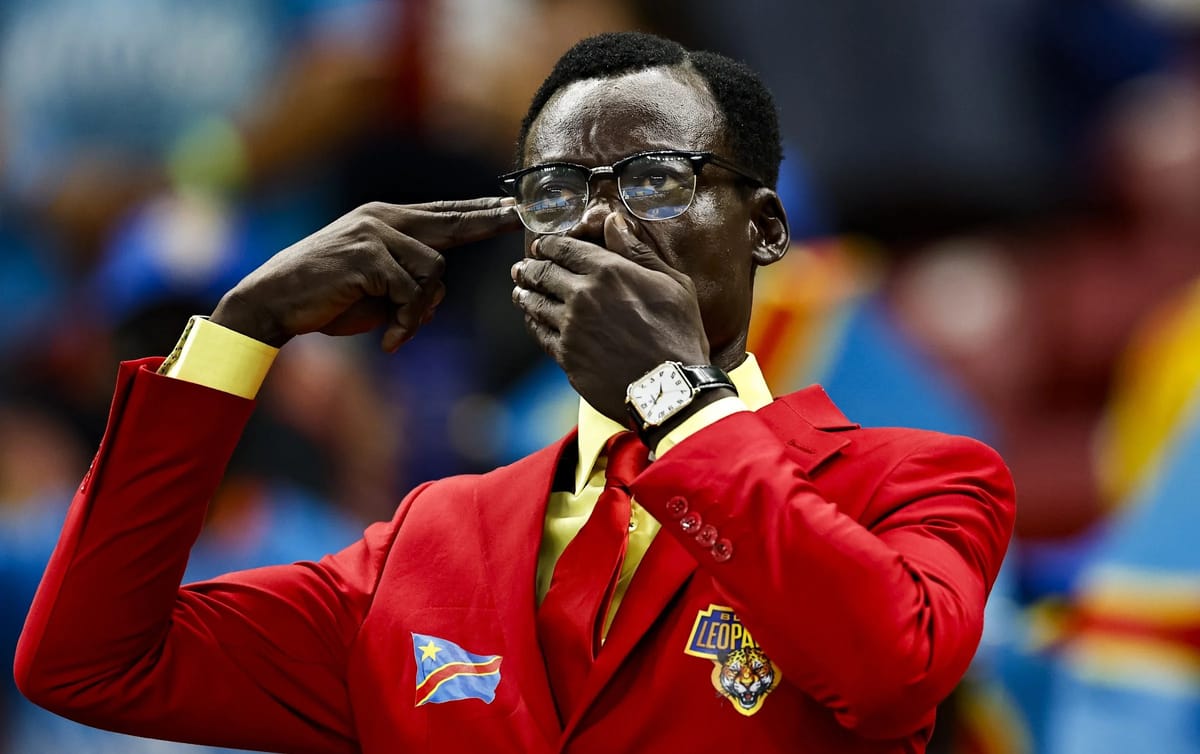
DR Congo’s iconic living-statue superfan Michel Nkuka Mboladinga — known as Lumumba Vea — was denied timely entry to the US and remains stuck in Mexico, forcing a trained young stand-in, Enock Kabwende (“Lumumba Junior”), to carry the nation’s symbolic presence at the World Cup knockout against England in Atlanta. The substitution highlights how visa friction and security measures can mute powerful cultural storytelling on football’s biggest stage
Lumumba Vea barred from Atlanta; Lumumba Junior takes the stand
DR Congo will not have its best-known supporter, Michel Nkuka Mboladinga, inside Atlanta for the World Cup clash with England after US entry was not processed in time. Mboladinga, who rose to global attention during the 2026 Africa Cup of Nations and DR Congo’s Mexico fixtures, remains stranded in Guadalajara
Enock Kabwende — billed as “Lumumba Junior” — has been confirmed to perform the living-statue tribute inside the stadium. The substitution was arranged by DR Congo’s diplomatic team to ensure the nation’s emblematic presence is not absent on arguably the country’s biggest football night
Who is Michel Nkuka Mboladinga — Lumumba Vea?
Mboladinga, a fixture at DR Congo matches since 2013, performs as a living statue in bright red, yellow and blue suits. He emulates the Kinshasa statue of Patrice Lumumba, the country’s independence leader, standing motionless with one arm raised for the full 90-plus minutes
His persona — “Lumumba Vea,” meaning “Lumumba lives” — became a viral symbol of DR Congo’s pride and resilience after high-profile appearances at Afcon 2026 and during the team’s World Cup group-stage games in Mexico
Symbolism on and off the pitch
Mboladinga’s act is more than fan theatre. It is a deliberate piece of cultural diplomacy: a visual assertion that DR Congo’s identity extends beyond headlines about conflict and disease. For supporters, the image of Lumumba Vea is shorthand for unity and national dignity
Why the visa was denied — and what happened in Mexico
The delay in processing Mboladinga’s US visa was linked to security and health concerns tied to the eastern DR Congo region, where conflict and a localized Ebola outbreak have prompted stricter scrutiny by US authorities. DR Congo’s ambassador to the US stated the visa was not formally denied but remained unprocessed in time for the Atlanta fixture
Mboladinga had been in Mexico for the earlier World Cup matches. Organisers and DR Congo officials moved quickly to find a replacement when the visa issue became irreversible
Lumumba Junior: training, duty and expectation
Enock Kabwende has trained to replicate Mboladinga’s trademark stillness and poses for the duration of a match. He sees the role as carrying a cultural torch: “Patrice Lumumba represents liberty, storing power, prosperity and freedom in our country,” Kabwende said, adding that he stepped in to make sure DR Congo’s identity is visible inside the stadium
The ambassador framed the substitution as continuity: if the original cannot travel, a younger generation will keep the ritual alive and showcase DR Congo’s resilience on a global stage
What this means for DR Congo at the World Cup
On the surface, a missing superfan is a small operational hitch. In narrative terms, it’s significant. The absence of Lumumba Vea removes a vivid, human element that helped reframe DR Congo’s World Cup story from crisis to cultural comeback. His presence — or lack of it — shapes international perceptions during a tournament when symbolism matters as much as goals
For the team, having any visible, composed symbol in the crowd can lift players and focus attention. For the nation, ensuring that a younger representative carries the mantle signals generational continuity and a deliberate effort to manage the country’s image on football’s biggest platform
Context: DR Congo’s momentum and the stakes in Atlanta
DR Congo arrive in Atlanta buoyed by breakthroughs from other African nations and surprising results around the tournament. A win over England would be historic and could amplify DR Congo’s message of progress and resilience
The diplomatic scramble over a fan’s visa lays bare a broader tension: global sporting events spotlight nations’ soft power but depend on administrative systems that can blunt those signals. Ensuring cultural ambassadors can travel and be seen is part of modern tournament logistics — and an area where lessons should be learned
Looking ahead
If DR Congo produces a shock result in Atlanta, the story of Lumumba Vea’s absence will be reframed as a quirk in a triumphant narrative — and may increase calls for smoother access for cultural figures at future events. If not, the episode will still stand as an instructive moment about how bureaucracy can interrupt the symbolic theatre that makes the World Cup more than just 22 players on a pitch
Arsenal intensify pursuit of Bradley Barcola as PSG resist and Liverpool circle
Either way, the sight of Lumumba Junior inside the stadium will be watched closely: not only for its visual impact during the match, but for what it reveals about DR Congo’s effort to control its own narrative on football’s global stage

From the Sportstack
Yahoo News9 minutes ago
Madueke vs Saka: Healthy Arsenal rivalry gives England a tactical edge
Yahoo News17 minutes ago
Haaland’s late strike and Nusa’s opener send Norway past Ivory Coast into World Cup last 16
Yahoo News19 minutes ago
How the U.S. can break Bosnia’s low block – Dzeko poses aerial test
Yahoo News41 minutes ago
Tactical test for France as Sweden’s pace threatens Les Bleus at MetLife
Yahoo News1 hour ago
Royal Dutch FA blasts racist online abuse after Morocco penalty shootout ends Netherlands’ World Cup run
View All Posts

