

Experts point to systemic education gaps as concerns grow over student performance abroad
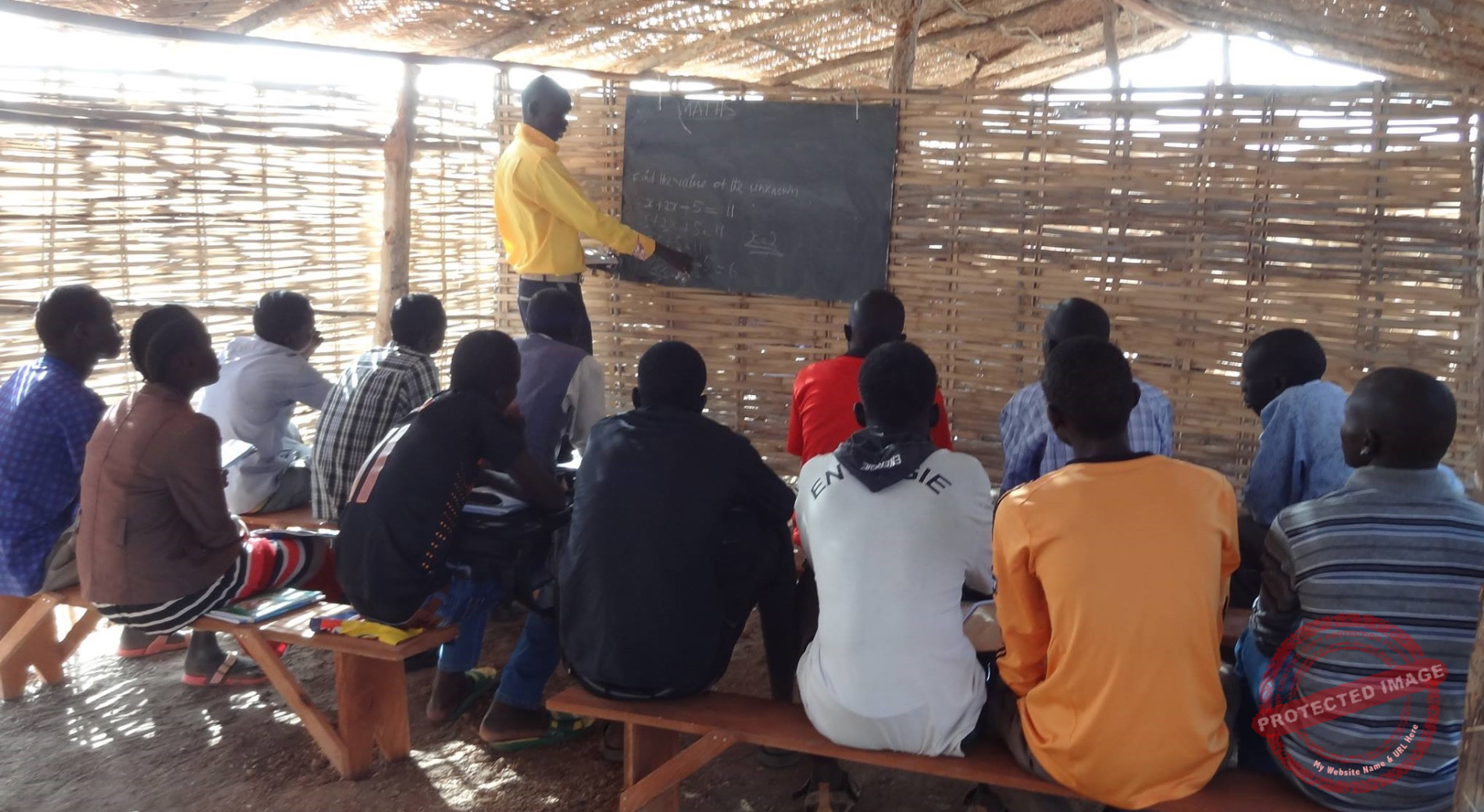
FILE PHOTO: A teacher seen in this class in one of the schools in Aweil South Sudan – courtesy
Concerns over the quality of South Sudan’s education system have intensified after education experts pointed to deep structural weaknesses in schools as a key factor behind reported poor performance of students studying abroad, despite high national examination scores
The debate follows remarks by the Minister of Higher Education, Dr. Madut Biar, who told Parliament that South SudaEducation experts have highlighted deep structural weaknesses in South Sudan’s education system following claims by the Minister of Higher Education, Dr. Madut Biar, that students on government scholarships abroad are underperforming despite high national examination scores
He said partner countries had raised concerns over the students’ performance, particularly in science programmes
However, educationists speaking on the Eye Radio Around South Sudan Podcast on Friday questioned the basis of the claims, calling for verified data and cautioning against drawing conclusions without official evidence
Calls for evidence-cased Claims
Tim Monybun, a PhD researcher and education policy consultant, said any assessment of student performance abroad must be supported by formal data from host institutions
“For us to agree with such a statement, we would need official communication from the countries involved. We must ask: where is the data, and how was that conclusion reached?”
He warned that relying on informal feedback risks misrepresenting students and undermining confidence in the education system
“If it is not backed by statistics, then it remains anecdotal information, and we cannot base national conclusions on that.”
Monybun also cautioned that such claims must be handled carefully due to their diplomatic and reputational implications
“If partner countries are said to be making such assessments, then it must be handled carefully because it affects the image of our education system and our country.”
Systemic gaps beyond examination scores
Despite questioning the evidence behind the Minister’s remarks, education experts acknowledged that the issue reflects deeper structural weaknesses in the education system
Monybun said South Sudan’s competency-based curriculum is sound in design but poorly implemented due to re
“We have a competency-based curriculum, but the challenge is implementation. The policy is there, but the re
He added that many schools lack the basic infrastructure needed to support practical learning
“Even the best curriculum cannot deliver results if schools do not have laboratories, learning materials, and trained teachers.”
According to educators, this has created a situation where students graduate with strong theoretical knowledge but limited practical exposure, particularly in science subjects
“In many of our schools, especially government schools, students learn science theoretically. They do not have access to laboratories, so everything becomes abstract,” one educationist said
Teachers under strain
Education practitioners also pointed to teacher capacity and motivation as a major constraint affecting learning outcomes
“The biggest challenge is teacher development. Many teachers are still using knowledge from decades ago without upgrading,” said Monybun
He added that poor remuneration and irregular salaries continue to affect teacher performance and retention
“If teachers are not motivated, if salaries are irregular or too low, the quality of teaching will be affected.”
Philip Chol, Executive Director of Teachers Without Borders, said the profession has lost many skilled educators due to lack of incentives and support systems
Mismatch between exams and competence
Experts further highlighted a widening gap between high national examination scores and actual academic readiness at university level
“There is a mismatch between high examination scores and actual performance at university level,” Monybun said
“A student may score 85 or 90 percent, but that does not always translate into practical competence later.”
They argued that the current assessment system may not fully measure applied knowledge and critical thinking skills needed for higher education environments abroad
Policy versus implementation gap
While South Sudan has introduced reforms such as the competency-based curriculum, experts said implementation remains the weakest link in the system
“Even the best curriculum cannot deliver results if schools do not have laboratories, learning materials, and trained teachers,” Monybun reiterated
He added that improving outcomes will require stronger public financial management and better coordination across education institutions
“We need to strengthen public financial management, accountability, and coordination if we are to improve education outcomes.”
Education as a national priority
The debate has also renewed calls for greater investment in the sector, with experts stressing that education must be treated as a national priority
“If we want to transform this country, we must treat education as a national priority—not just in policy, but in funding and implementation,” one expert said.“The future of this country will be determined in the classroom, not elsewhere.”
Conclusion
As discussions continue, educationists argue that the controversy over student performance abroad reflects a deeper national challenge: a system where policy ambition has not yet translated into classroom reality. They say bridging that gap will require investment in teachers, infrastructure, and assessment systems to ensure that high exam scores reflect genuine competence
NB: This article was edited with AI and proof-read by the author
Previous PostEquatoria traditional leaders renew call for federalism, credible elections
