

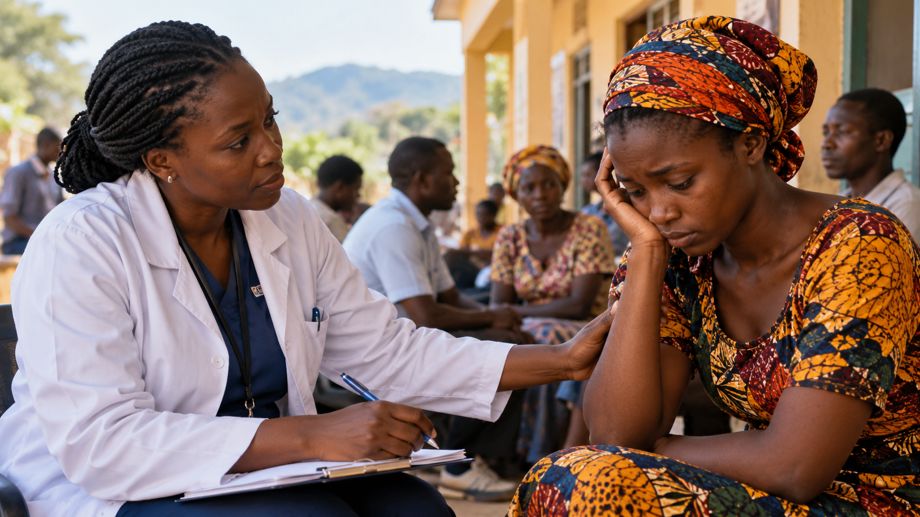
Africa CDC’s Mental Health Leadership Programme is strengthening healthcare leadership to address severe funding shortages, limited treatment access and the mental health needs of over 116 million Africans. With 301 participants trained or undergoing training in its first year, the initiative shows early promise in advancing policy reforms, improving emergency responses and building stronger mental healthcare systems across Africa.
Africa’s growing mental health crisis is exposing serious weaknesses in healthcare systems, leaving millions of people without access to essential treatment. A new study published in SSM – Health Systems in October 2026 examines how the Africa Centres for Disease Control and Prevention (Africa CDC) is tackling these challenges through its Mental Health Leadership Programme. The research brings together experts from Africa CDC, Liverpool School of Tropical Medicine, London School of Hygiene and Tropical Medicine, American University in Cairo, University of Ibadan, Zambia Institute of Public Health, Stellenbosch University and CBM Global Disability Inclusion. The study examines the programme’s first-year achievements, challenges and potential to improve mental healthcare across Africa.
With more than 116 million Africans estimated to be living with mental health conditions, researchers warn that inadequate funding, shortages of specialists and weak healthcare leadership are preventing millions from receiving appropriate care. The findings suggest that developing skilled leaders could be essential to transforming mental healthcare, strengthening national policies and expanding services to underserved communities.
Africa’s Mental Health Crisis Deepens Amid Funding Shortages
Mental health conditions affect approximately 11% of Africa’s population, with depression, anxiety, substance use disorders and trauma-related illnesses creating serious social and economic challenges. Communities affected by poverty, armed conflict, displacement and humanitarian emergencies face particularly high risks.
Despite the growing burden, mental healthcare receives less than 1% of national health budgets in most African countries. Nearly 70% of available mental health funding is directed toward psychiatric institutions concentrated in cities, leaving rural communities and primary healthcare facilities underserved.
Fewer than 11% of primary healthcare facilities across Africa provide psychological or medication-based treatment for mental health conditions. The continent also has fewer than one psychiatrist for every 200,000 people on average, making specialist care difficult to access.
Researchers argue that the problem extends beyond shortages of doctors and hospitals. Weak leadership, outdated legislation, inadequate monitoring systems and limited government coordination frequently prevent countries from implementing effective mental health policies.
Untreated mental health conditions also affect economic productivity, education and household incomes, increasing financial pressures on families and slowing broader development.
A New Generation of Leaders Could Transform Mental Healthcare
To address these challenges, Africa CDC launched its Mental Health Leadership Programme in 2024 with financial support from the Wellcome Trust. The initiative aims to strengthen leadership, improve healthcare planning and help governments integrate mental health into national health systems.
The programme operates through four major components designed to reach different groups of professionals.
The Kofi Annan Fellowship in Global Health Leadership trains senior mental health leaders to influence government policies, financing decisions and healthcare reforms.
The Field Epidemiology Training Programme develops expertise in mental health surveillance, data analysis and emergency response, helping countries identify mental health risks and improve evidence-based decision-making.
A third component provides intensive two-week leadership courses for healthcare workers, policymakers, journalists, teachers, law enforcement personnel and civil society representatives. Training is delivered through institutions in Nigeria, Egypt, Zimbabwe, Côte d’Ivoire and Kenya.
The fourth component strengthens civil society networks and encourages people with lived experience of mental health conditions to participate in advocacy, training and policy decisions.
Together, these initiatives aim to make mental healthcare more accessible, coordinated and responsive to community needs.
First-Year Results Show Progress in Training and Policy Reform
The programme’s first-year findings indicate encouraging progress in strengthening mental health leadership across Africa.
A total of 301 participants had completed or were undertaking training, including 10 Kofi Annan fellows, 36 field epidemiology trainees and 255 participants in public mental health leadership short courses.
The initiative also mapped 465 civil society organizations and organizations representing people with psychosocial disabilities, identifying opportunities to improve coordination, advocacy and organizational capacity.
Researchers reported early signs that trained professionals were contributing to important policy discussions and legislative reforms. These included processes related to the decriminalization of attempted suicide in Nigeria and mental health legislative reforms in Kenya and Sierra Leone.
Participants also reported stronger skills in coordinating mental health support during emergencies, including Ebola response activities in Uganda.
Feedback highlighted improvements in leadership confidence, healthcare management, advocacy and cooperation between government institutions and civil society organizations.
However, researchers emphasize that these achievements mainly reflect training participation and self-reported experiences. Independent evidence demonstrating improvements in patient outcomes or nationwide healthcare delivery remains limited.
Funding, Government Support and Long-Term Planning Hold the Key
Despite early achievements, the programme faces significant obstacles that could limit its long-term effectiveness.
Insufficient mentorship after training, shortages of qualified instructors, weak institutional support and limited financing make it difficult for graduates to apply their newly acquired skills.
Humanitarian emergencies in Ethiopia and the Democratic Republic of the Congo have also disrupted programme activities, while language barriers have restricted participation from Portuguese-speaking African countries.
The researchers recommend dedicated national mental health budgets, stronger government coordination, improved monitoring systems and greater investment in community-based healthcare.
They also propose establishing a continental master’s degree programme in global mental health through African universities to develop advanced expertise and create long-term career opportunities.
Future evaluations will track graduates’ contributions to policy reforms, healthcare integration and leadership development over several years.
The study concludes that Africa’s mental health crisis cannot be solved through medical treatment alone. Sustainable progress requires capable leadership, stronger institutions, adequate financing and meaningful participation from affected communities.
While the programme’s first year demonstrates promising progress, its ultimate success will depend on whether trained leaders can turn policy commitments into accessible, affordable and effective mental healthcare for millions of Africans.
- FIRST PUBLISHED IN:
- Devdiscourse

