

Ghana equities to see selective bargaining in H2’26
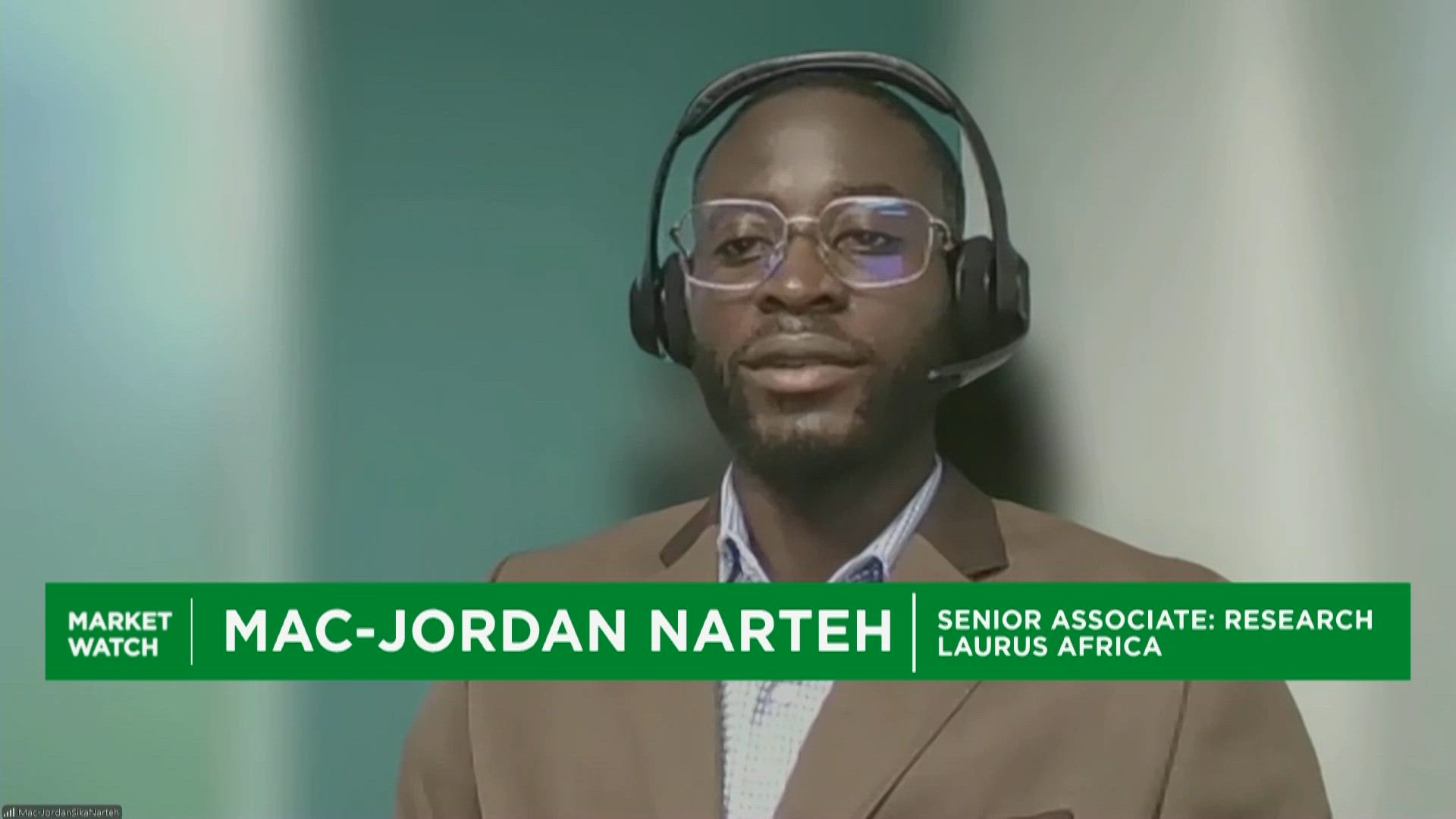
Analysts at Laurus Africa say they expect a selective second half in the Ghana equities market, while noting the positive drivers witnessed in the first half of the year. Mac-Jodan Narteh, Senior Research Associate at Laurus Africa, joins me for a focus on the market.
Mon, 29 Jun 2026 14:54:28 GMT
Disclaimer: The following content is generated automatically by a GPT AI and may not be accurate. To verify the details, please watch the video
AI Generated Summary
Key Points:
- Laurus Africa expects a constructive but selective second half for Ghana equities in 2026.
- The Ghana market saw a sharp correction of about 17% in a single week around March after hitting all-time highs, reflecting profit-taking.
- Despite volatility, the market has generated more than 116 billion Ghana cedis in capital gains so far this year.
- Declining inflation and lower fixed-income yields have been major catalysts for the rally in Ghanaian equities.
- Benchmark short-term rates have fallen from high double digits at the start of the year to single-digit levels, helping redirect capital into stocks.
- Recent inflation uncertainty tied to geo<a href="https://absafricatv.com/book-review-playing-with-fire-parties-and-political-violence-in-kenya-and-india-2/” title=”Book Review – Playing with fire: Parties and political violence in Kenya and India”>political tensions and higher crude prices temporarily complicated the rate outlook.
- Laurus Africa believes easing oil prices could help improve inflation and renew the downward trend in yields.
- Analysts say some Ghana-listed stocks still trade below intrinsic value and offer upside based on strong fundamentals.
- Local participation in the Ghana market has risen significantly, led by pension funds.
- Strong demand for IPOs including First Atlantic Bank, Zen and Casarey points to growing domestic investor appetite for equities.
Topics
Ghana Stock ExchangeGhana equitiesLaurus AfricaMark Jordan NateAfrican marketsfrontier marketspension fundsinflationfixed income yieldsH2 2026 outlook
Ghana’s stock market is expected to remain broadly supported in the second half of 2026, although investors may need to become more selective after a powerful first-half rally that was driven by improving macroeconomic conditions, easing inflation and lower fixed-income yields, according to analysts at Laurus Africa
Speaking in a television interview, Mark Jordan Nate, senior research associate at Laurus Africa, said the Ghana Stock Exchange entered the year with strong momentum and, despite bouts of volatility, still retains upside potential. His remarks come as investors across African frontier markets assess whether the sharp gains seen earlier in the year can be sustained, particularly after some markets, including Nigeria, have paused following rapid advances
Nate said Ghana’s market has not been immune to profit-taking and short-term pullbacks. After hitting one of its all-time highs around March 2026, the market experienced a sharp correction, including what he described as a roughly 17% decline in a single week during the first half of the year as investors locked in gains. Even so, he said the rebound that followed has been substantial, leaving the market with more than 116 billion Ghana cedis in capital gains so far this year, equivalent to roughly $10 billion.
That performance underscores the strength of the rally, but also frames the debate around what comes next. Nate said Laurus Africa maintains a constructive near-term view, even if the outlook is not unequivocally bullish
The firm’s central argument is that Ghana’s equity story has been closely tied to the country’s macroeconomic turnaround. A moderation in inflation has helped drive a significant drop in fixed-income yields, reducing the attractiveness of government securities that had previously absorbed a large share of investor funds. As yields fell, capital began rotating toward equities and parts of the broader capital market
According to Nate, benchmark short-term rates that started the year in high double digits have fallen markedly, with the 91-day instrument now in single-digit territory. That shift has been a major support for equity demand, particularly among domestic institutional investors searching for stronger returns
Still, he cautioned that the backdrop has recently become more mixed. In the past month, the downtrend in rates has partially reversed, reflecting inflation uncertainty linked to geopolitical tensions that pushed crude oil prices higher. Because Ghana is sensitive to imported inflation and energy price swings, oil’s trajectory remains an important variable for markets
Nate said the recent easing in geopolitical risks and the pullback in crude prices could help restore a more favorable inflation path. If inflation continues to moderate, fixed-income yields may resume declining, which in turn could revive investor appetite for shares
Beyond macro factors, he argued that stock-specific opportunities remain compelling. Some listed companies, he said, continue to post strong fundamentals and are still trading below what Laurus Africa considers their intrinsic value. That suggests the market may not deliver broad-based gains across all names in the second half, but investors willing to focus on fundamentally strong and undervalued stocks could still find meaningful upside
The market’s composition of investors is also evolving. Nate said local participation, especially from pension funds, has become increasingly important in Ghana’s equities market, mirroring a trend seen elsewhere on the continent
He pointed to several public offerings as evidence of growing domestic appetite for equity exposure. The First Atlantic Bank IPO, which he said was fully taken up even before listing in December 2025, marked an early sign of this momentum. That was followed by the Zen IPO, which drew similarly strong support from pension funds. More recently, the Casarey IPO generated one of the largest investor bids seen in Ghana’s equities market, attracting around 1.7 billion Ghana cedis in orders despite the company seeking about 700 million Ghana cedis.
For market participants, those transactions highlight a notable change in allocation behavior. Pension funds had long favored fixed-income securities to optimize returns while limiting risk. But as yields on those instruments declined, they increasingly began moving into private markets and listed equities. That flow has provided an importantrices even amid episodes of volatility
The stronger role of domestic institutions may also be significant for market resilience. Local investors can offer a steadier base of capital than foreign portfolio flows, which are often more sensitive to global risk sentiment, currency concerns and external shocks. While Nate did not provide a detailed breakdown of foreign participation, his comments suggest that the Ghanaian market, like Nigeria’s, is increasingly being shaped by homegrown institutional money
For the second half of 2026, the key issue will be whether the macro recovery remains intact. If inflation continues trending lower, oil prices stay contained and interest rates resume their downward path, equities could extend gains from current levels. However, the sharp first-half run-up and the earlier correction are reminders that the market may be vulnerable to periodic bouts of profit-taking
In that environment, Laurus Africa’s message is one of cautious optimism rather than indiscriminate bullishness. The house view is that Ghanaian equities still have room to rise, but that returns are likely to be concentrated in selected counters supported by solid earnings, attractive valuations and favorable positioning for a lower-rate environment
For investors, that means the broad macro tailwinds that lifted the market in the first half may remain in place, but stock picking could matter more in the months ahead. As domestic pension capital continues to deepen the market and macro conditions stabilize, Ghana’s bourse may remain one of the more closely watched frontier equity stories in Africa through the rest of the year
ChooseCNBC Africaas your preferred source on Google and never miss a moment from the most trusted name in business news.

