

How We Think About BEE? ― A JICA Staff Member’s Perspective on <a href="https://absafricatv.com/rubio-assails-south-africa-with-visa-restrictions-on-bias-claims/" title="Rubio Assails South Africa With Visa Restrictions on Bias Claims”>South Africa’s Reality ―
Shunsuke Yamashita, JICA South Africa Office
A Word I Heared repeatedly in South Africa
Shortly after I started working in South Africa, there was one term that repeatedly came up in meetings with local stakeholders: BEE.
BEE, or Black Economic Empowerment, is a framework designed to address economic disparities rooted in the apartheid era. Even after democratization, many people continued to have limited access to economic opportunities. To address this, the government introduced policies that encourage companies to contribute to economic inclusion through areas such as skills development, employment, and procurement.
For businesses operating in South Africa, BEE is an important consideration because it can influence business opportunities and engagement with public institutions. As a result, many companies incorporate it into their overall business strategy.
At first, I did not fully understand what BEE meant. However, through discussions with companies and involvement in various projects, I gradually realized that it is much more than a policy framework. It is closely connected to South Africa’s history, values, and approach to economic development.
For many Japanese professionals, this may be a concept they rarely encounter in Japan. Yet for Japanese companies operating in South Africa, it is an important reality. It is also a topic that frequently arises when JICA works with private-sector partners.
Realizing That the System Cannot Be Ignored
I came to understand BEE more deeply while managing the NINJA Acceleration Program, which supports African startups.
The program encouraged collaboration between Japanese companies and South African startups. During the project, I had an opportunity to speak with a representative of a Japanese company.
One comment has stayed with me:
“When working with South African companies, BEE is something we need to understand and take into account. If we approach it appropriately, it can actually create opportunities to connect with new partners and expand business possibilities.”
Before hearing this perspective, I sometimes viewed BEE mainly as a factor that added complexity to business decisions. However, this conversation reminded me that understanding local realities and operating within that context can also open doors to new partnerships and markets.
At the same time, the system is not without challenges.
There are situations where technical capability and price alone do not determine outcomes, making decision-making more complex. I have also encountered cases where compliance with the framework appeared to take precedence over its original purpose.
These experiences have led me to reflect on how difficult it is to address deeply rooted historical inequalities. Policies may be necessary, but translating them into practice in the real world often involves difficult trade-offs and competing considerations.
What Working in South Africa Has Taught Me
Through my work with companies and stakeholders in South Africa, I have learned that BEE reflects not only economic policy but also the country’s broader effort to confront historical challenges and build a more inclusive future.
That is why I do not think it can be judged simply as “good” or “bad.”
What matters more is understanding the historical context while also paying attention to present-day realities. Bridging perspectives between Japan and South Africa, and continuing to search for balanced ways of working together, has been one of the most valuable lessons I have learned in this country.
Engaging with complex realities and gradually building trust within them is both the challenge and the appeal of working in international cooperation.
For me, that is also an important part of being a JICA staff member.
JICA South Africa Office colleagues enjoying a traditional South African braai (BBQ) (The author is in the center)
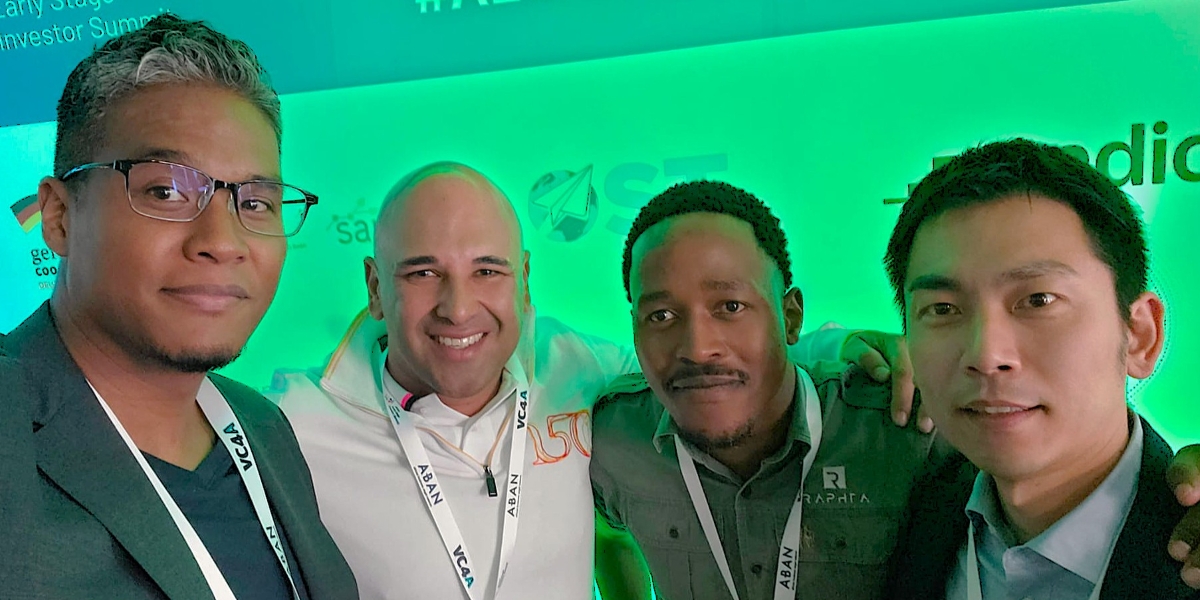
With startup entrepreneurs participating in the NINJA Acceleration Program

