

[ad_1]
The findings were stark. In one investigation, the U.S. Department of Housing and Urban Development concluded that a Texas state agency had steered $1 billion in disaster mitigation money away from Houston and nearby communities of color after Hurricane Harvey inundated the region in 2017. In another investigation, HUD found that a homeowners association outside of Dallas had created rules to kick poor Black people out of their neighborhood.
The episodes amounted to egregious violations of civil rights laws, officials at the housing agency believed — enough to warrant litigation against the alleged culprits. That, at least, was the view during the presidency of Joe Biden. After the Trump administration took over, HUD quietly took steps that will likely kill both cases, according to three officials familiar with the matter.
Those steps were extremely unusual. Current and former HUD officials said they could not recall the housing agency ever pulling back cases of this magnitude in which the agency had found evidence of discrimination. That leaves the yearslong, high-profile investigations in a state of limbo, with no likely path for the government to advance them, current and former officials said. As a result, the alleged perpetrators of the discrimination could face no government penalties, and the alleged victims could receive no compensation.
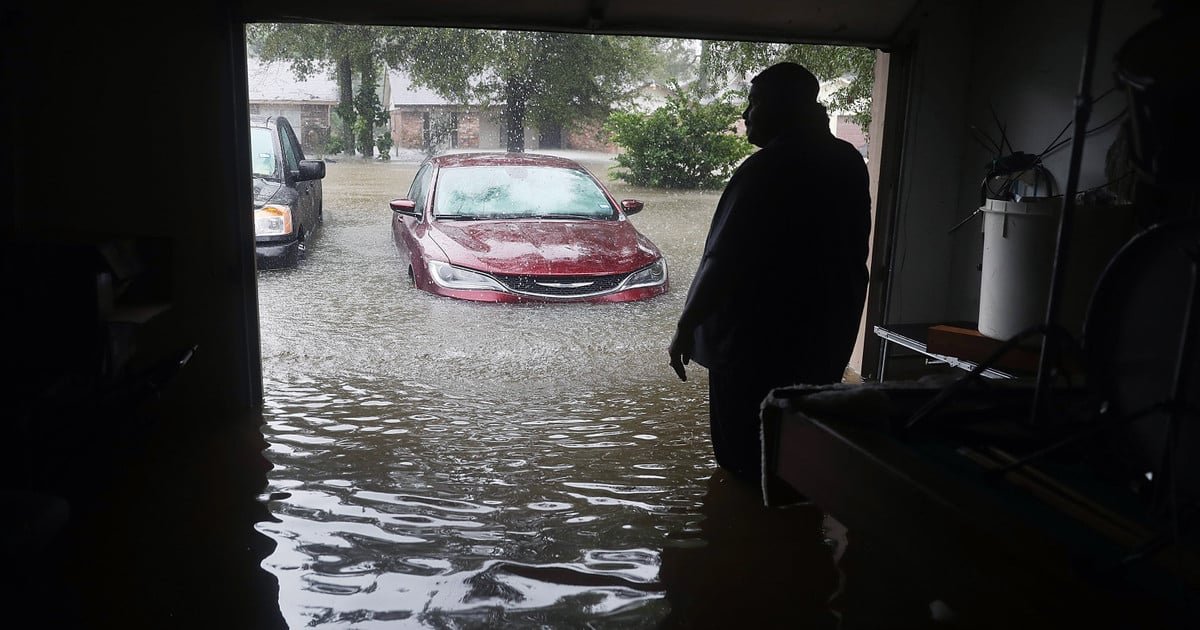
“I just think that’s a doggone shame,” said Doris Brown, a Houston resident and a co-founder of a community group that, together with a housing nonprofit, filed the Harvey complaint. Brown saw 3 feet of water flood her home in a predominantly Black neighborhood that still shows damage from the storm. “We might’ve been able to get some more money to help the people that are still suffering,” she said.
On Jan. 15, HUD referred the Houston case to the Department of Justice, a necessary step to a federal lawsuit after the housing agency finds evidence of discrimination. Less than a month later, on Feb. 13, the agency rescinded its referral without public explanation. HUD did the same with the Dallas case not long after.
The development has alarmed some about a rollback of civil rights enforcement at the agency under President Donald Trump and HUD Secretary Scott Turner, who is from Texas. “The new administration is systematically dismantling the fair housing enforcement and education system,” said Sara Pratt, a former HUD official and an attorney for complainants in both Texas cases. “The message is: The federal government no longer takes housing discrimination seriously.”
HUD spokesperson Kasey Lovett disagreed, saying there was precedent for the rescinded referrals, which were done to gather more facts and scrutinize the investigations. “We’re taking a fresh look at Biden Administration policies, regulations, and cases. These cases are no exception,” Lovett said in a statement. “HUD will uphold the Fair Housing Act and the Civil Rights Act as the department is strongly and wholeheartedly opposed to housing discrimination.”
The Justice Department did not respond to a request for comment.
The Harvey case concerns a portion of a $4.3 billion grant that HUD gave to Texas after the hurricane inundated low-lying coastal areas, killing at least 89 people and causing more than $100 billion in damage. The money was meant to fund better drainage, flood control systems and other storm mitigation measures.
HUD sent the money to a state agency called the Texas General Land Office, which awarded the first $1 billion in funding to communities affected by Harvey through a grant competition. But the state agency excluded Houston and many of the most exposed coastal areas from eligibility for half of that money, according to HUD’s investigation. And, for the other half, it created award criteria that benefited rural areas at the expense of more populous applicants like Houston.
The result: Of that initial $1 billion, Houston — where nearly half of all homes were damaged by the hurricane — received nothing. Neither did Harris County, where Houston is located, or other coastal areas with large minority populations. Instead, the Texas agency, according to HUD, awarded a disproportionate amount of the aid to more rural, white areas that had suffered less damage in the hurricane. After an outcry, GLO asked HUD a few days later to send $750 million to Harris County, but HUD found that allocation still fell far short of the county’s mitigation needs. And none of that money went directly to Houston.
HUD launched an investigation into the competition in 2021, ultimately finding that GLO had discriminated on the basis of race and national origin, thereby violating Title VI of the Civil Rights Act of 1964 and possibly the Fair Housing Act as well.
“GLO knowingly developed and operated a competition for the purpose of allocating funds to mitigate storm and flood risk that steered money away from urban Black and Hispanic communities that had the highest storm and flood risk into Whiter, more rural areas with less risk,” the agency wrote. “Despite awareness that its course of action would result in disparate harm for Black and Hispanic individuals, GLO still knowingly and disparately denied these communities critical mitigation funding.”
GLO has consistently disputed the allegations. It contends that many people of color benefited from its allocations. The Texas agency has also argued that the evidence in the case was weak, citing the fact that, in 2023, the Justice Department returned the case to HUD. At the time, the DOJ said it wanted HUD to investigate further. The housing agency then spent more than a year digging deeper into the facts and assembling more evidence before making its short-lived referral in January.
Asked about the rescinded referral, GLO spokesperson Brittany Eck told ProPublica: “Liberal political appointees and advocates spent years spinning false narratives without the facts to build a case. Four years of sensationalized, clickbait rhetoric without evidence is long enough.”
The other HUD case involved Providence Village, a largely white community north of Dallas of around 9,000 people. Purported concerns about crime and property values led the Providence Homeowners Association to adopt a rule in 2022 prohibiting property owners from renting to holders of Section 8 Housing Choice Vouchers, through which HUD subsidizes the housing costs of poor, elderly and disabled people. There were at least 157 households in Providence Village supported by vouchers, nearly all of them Black families. After the HOA action, some of them began leaving.
The rule attracted national attention, leading the Texas Legislature to prohibit HOAs from banning Section 8 tenants. Undeterred, the Providence HOA adopted amended rules in 2024 that placed restrictions on rental properties, which HUD found would have a similar effect as the previous ban.
Throughout the HOA’s efforts, people peppered community social media groups with racist vitriol about voucher holders, describing them as “wild animals,” “ghetto poverty crime ridden mentality people” and “lazy entitled leeching TR@SH.” One person wrote that “they might just leave in a coroner’s wagon.”
The discord attracted a white nationalist group, which twice protested just outside Providence Village. “The federal government views safe White communities as a problem,” flyers distributed by the group read. “The Section 8 Housing Voucher is a tool used to bring diversity to these neighborhoods.”
In January, HUD formally accused the HOA, its board president, a property management company and one of its property managers of violating the Fair Housing Act. The respondents have disputed the allegation. The HOA has argued its rules were meant to protect property values, support well-maintained homes and address crime concerns. The property management company, FirstService Residential Texas, said it was not responsible for the actions of the HOA.
The HOA and FirstService did not respond to requests for comment. The property manager declined to comment. Mitch Little, a lawyer for the HOA board president, said: “HUD didn’t pursue this case because there’s nothing to pursue. The claims are baseless and unsubstantiated.”
The Providence Village and Houston cases stretched on for years. All it took was two terse emails to undo them. “HUD’s Office of General Counsel withdrew the referral of the above-captioned case to the Department of Justice,” HUD wrote to Pratt this month regarding one of the cases. “We have no further information at this time.” That was the entirety of the message; neither email explained the reasoning behind the decisions.
The cases may have fallen victim to a broader roll-back of civil rights enforcement at the Justice Department, where memos circulated in January ordering a freeze of civil rights cases and investigations.
The development is the latest sign that the Trump administration may dramatically curtail HUD’s housing discrimination work. The agency canceled 78 grants to local fair housing groups last month, sparking a lawsuit by some of them. HUD justified the cancellations by saying each grant “no longer effectuates the program goals or agency priorities.” (Pratt’s firm, Relman Colfax, is representing the plaintiffs in that suit.) And projections circulating within HUD last month indicated the agency’s Office of Fair Housing and Equal Opportunity could see its staff cut by 76% under the new administration.
If HUD does not pursue the cases, the complainants could file their own lawsuits. But they may not soon forget the government’s about-face on the issue. “If there is a major flood in Houston, which there almost certainly will be, and people die, and homes get destroyed, the people who made this decision are in large part responsible,” said Ben Hirsch, a member of one of the groups that brought the Harvey complaint. “People will die because of this.”
[ad_2]
Source link

