

You have a preview view of this article while we are checking your access. When we have confirmed access, the full article content will load.
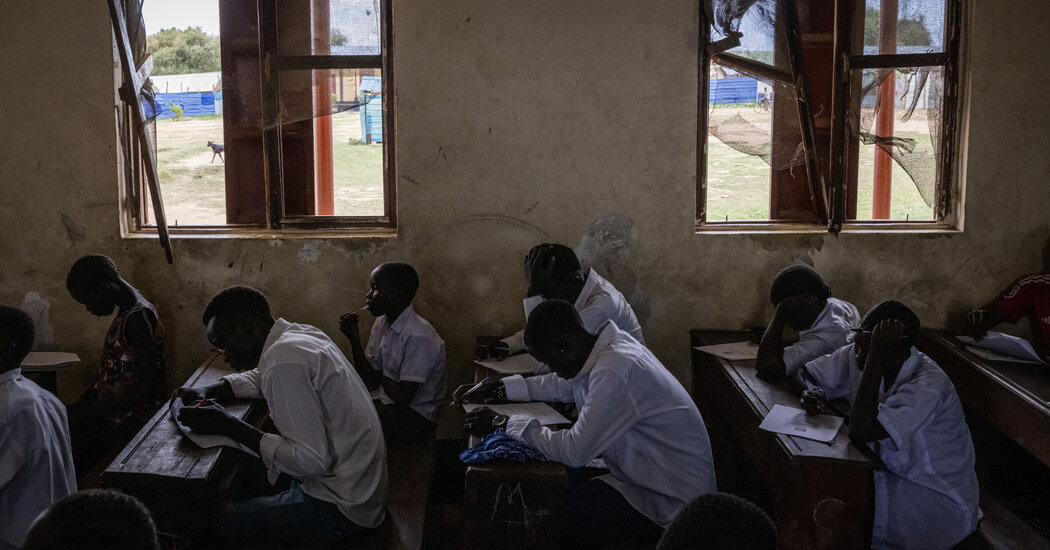
At first glance, the work life of Paul Santino, the headmaster of a school here in South Sudan, resembles that of many educators
He sits alone at a dark wooden desk in a room lined with books. Students and staff knock politely before entering. Every so often he makes his rounds, poking his head into classrooms, overseeing goings on around the schoolyard, chiding students for their uniform or behavior
But unlike most educators, Mr. Santino has not received a salary in more than a year, nor has any of the staff at the Gumbo Basic School in Juba, the capital, nor any other teachers in the country
Education in South Sudan is in crisis
The country, founded in 2011 after an independence war that lasted decades, is one of the most fragile in Africa. Its public coffers are nearly empty. Around half of the population is 18 or under, but for years education has rated little more than a rounding error in the government’s budget, forcing the country’s schools to the brink

That could spell disaster for the world’s newest nation. Education is vital for Africa to unleash the economic potential of its demographic boom, but South Sudan, a country of 12 million, points to what could happen if schools fail. Only 40 percent of primary school aged children are enrolled and only a tiny fraction of those attain benchmarks for literacy and numeracy, according to United Nations data.
Plummeting attention from donors, including the United States, has left schools like Gumbo running on fumes. That schools continue to function in South Sudan comes down to the commitment of educators like Mr. Santino, 67
“I like my job too much,” he said when asked why he bothered to come to work everyday without being paid. In the absence of a government salary, he has cut costs to support his wife and six children, he said. Parents also provide small stipends to the school when they can
Thank you for your patience while we verify access. If you are in Reader mode please exit and log into your Times account, or subscribe for all of The Times
Thank you for your patience while we verify access
Already a subscriber? Log in
Want all of The Times? Subscribe
Related Content
SKIP ADVERTISEMENT

