Close Menu
    Facebook X (Twitter) Instagram
    • Home
    • Contact Us
    • About Us
    • Privacy Policy
    • Terms Of Service
    • Advertisement
    Monday, July 20
    Facebook X (Twitter) Instagram Pinterest Vimeo
    ABS Africa TV
    • Breaking News
    • Trending
    • Africa News
    • World News
    • Features
    • Technology
    • More
      • Sports
      • Politics
      • Culture
      • Lifestyle
      • Travel
      • Business
      • Environment
      • Legal
      • Health
      • Cameroon
      • Ambazonia
      • AfroSingles
      • Environ/Climate
      • Editorial
      • The Leak Magazine
    • Donate
    Subscription
    ABS Africa TV
    Home»Trending Now»In the 1980s, youth literacy was higher in Sub-Saharan Africa than in South Asia; it’s now the opposite
    Trending Now

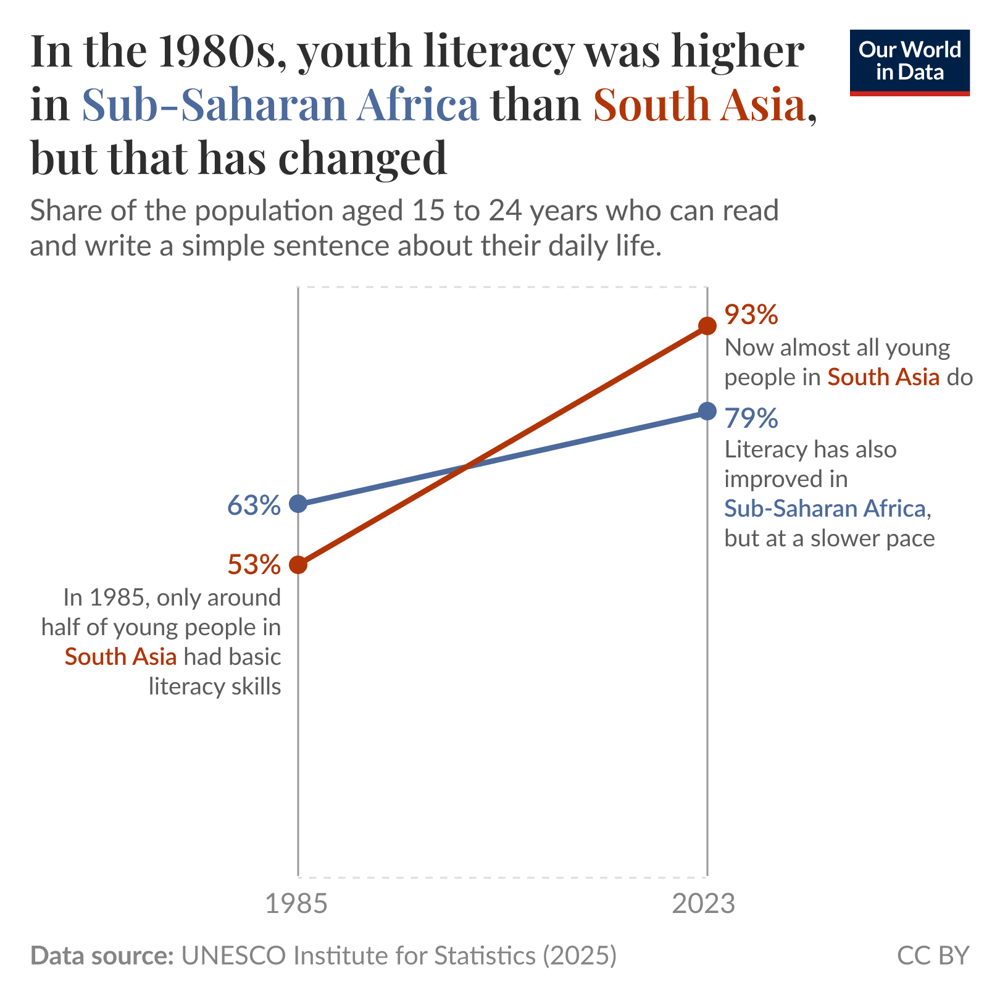
    In the 1980s, youth literacy was higher in Sub-Saharan Africa than in South Asia; it’s now the opposite

    Chris AnuBy Chris AnuJune 26, 2026No Comments2 Mins Read
    Facebook Twitter Pinterest LinkedIn Tumblr Email
    In the 1980s, youth literacy was higher in Sub-Saharan Africa than in South Asia; it’s now the opposite
    Share
    Facebook Twitter LinkedIn Pinterest Email
    Post Views: 7

    June 23

    A woman’s risk of dying in pregnancy or childbirth varies hugely by country

    How likely is it that a 15-year-old girl will eventually die from a pregnancy-related cause?

    Researchers at the UN and the <a href="https://absafricatv.com/sub-saharan-africa-set-for-faster-growth-at-3-8-amid-cooling-inflation-world-bank/” title=”Sub-Saharan Africa set for faster growth at 3.8% amid cooling inflation – World Bank”>World Bank combined available birth and mortality data with statistical models to answer this question. Their estimates assume that the country’s fertility and mortality rates remain constant throughout the teenager’s lifetime (an important assumption I’ll get to later). The chart shows their results

    In Chad, the Central African Republic, and Nigeria, the estimated lifetime risk is around 4%. This is dire: it means about 1 in 25 girls would eventually die from a pregnancy-related cause

    Women in many other African countries also face substantial risks, and much of Sub-Saharan Africa has a rate above 1%. By comparison, estimates in most other regions are considerably lower, and across Europe the risk is below 0.1%

    The very high risks for the countries on the left of the chart reflect two factors that compound: they have some ofthe highestmaternal mortality rates in the world, and the average number of births per woman in these countries isalso high. They face a high mortality risk per pregnancy, multiplied by five or six pregnancies over a lifetime

    Maternal mortalityrates per pregnancyandfertility ratesare falling in these countries. Both of these declines would substantially reduce the lifetime risks. The results in the chart assume they stay at current levels, but that doesn’t have to be the case

    Continue reading

    1980s higher literacy SubSaharan youth
    Share. Facebook Twitter Pinterest LinkedIn Tumblr Email
    Chris Anu
    • Website

    Related Posts

    Preview: European Youth Championships biggest competition for many in Rome

    July 20, 2026

    China-Europe Youth Exchange Campaign: When Fashion Meets Football — A Green Pitch Appointment for Cross

    July 19, 2026

    Why stakes are higher in Big Brother Naija Season 11

    July 19, 2026
    Leave A Reply Cancel Reply

    Search
    Latest Post

    Ghana Surpasses Nigeria, Liberia, Mali, Mauritania and Other Leading African Markets as South Africa Tourism Arrivals Rise in March 2026, With Five Hundred Twenty Eight Additional Visitors Driving Regional Travel Growth, Cross-Border Connections and Stronger Tourism Opportunities Across Southern Africa

    July 20, 2026

    What’s causing ASML’s Europe-leading success in the chip market?

    July 20, 2026

    Nigerian startups to watch out for in H2 2026, according to VCs

    July 20, 2026

    Indias economy is expected to grow from 6.5% to 6.8% in FY27: Deloitte

    July 20, 2026

    Kenya Leverages Trade Corridors to Tap Regional Healthcare Growth

    July 20, 2026

    Subscribe to Updates

    Get the latest creative news from FooBar about art, design and business.

    • Facebook
    • Twitter
    • Pinterest
    • Instagram
    • YouTube
    • TikTok
    ABS TV and ABS Network News is a leading Pan-African 24/7 broadcasting network delivering nonstop news, talk shows, lifestyle programs, and digital media content worldwide through Satellite, Streaming Platforms, and Roku TV.
     
    Based in the United States, we connect Africa to the world while empowering creators, journalists, and brands through innovative media and broadcasting services.
    Facebook X (Twitter) Pinterest WhatsApp Instagram

    Our Picks

    Ghana Surpasses Nigeria, Liberia, Mali, Mauritania and Other Leading African Markets as South Africa Tourism Arrivals Rise in March 2026, With Five Hundred Twenty Eight Additional Visitors Driving Regional Travel Growth, Cross-Border Connections and Stronger Tourism Opportunities Across Southern Africa

    What’s causing ASML’s Europe-leading success in the chip market?

    Nigerian startups to watch out for in H2 2026, according to VCs

    Most Popular

    Indias economy is expected to grow from 6.5% to 6.8% in FY27: Deloitte

    Kenya Leverages Trade Corridors to Tap Regional Healthcare Growth

    UK Government’s Final KCSIE Guidance Fails to Protect Trans, Non-Binary and Intersex Children and Young People | ILGA

    © 2026 Copyright. All Rights Reserved by ABSAFRICATV
    • Privacy Policy
    • Terms of Services

    Type above and press Enter to search. Press Esc to cancel.

    We use cookies to ensure that we give you the best experience on our website. If you continue to use this site we will assume that you are happy with it.