

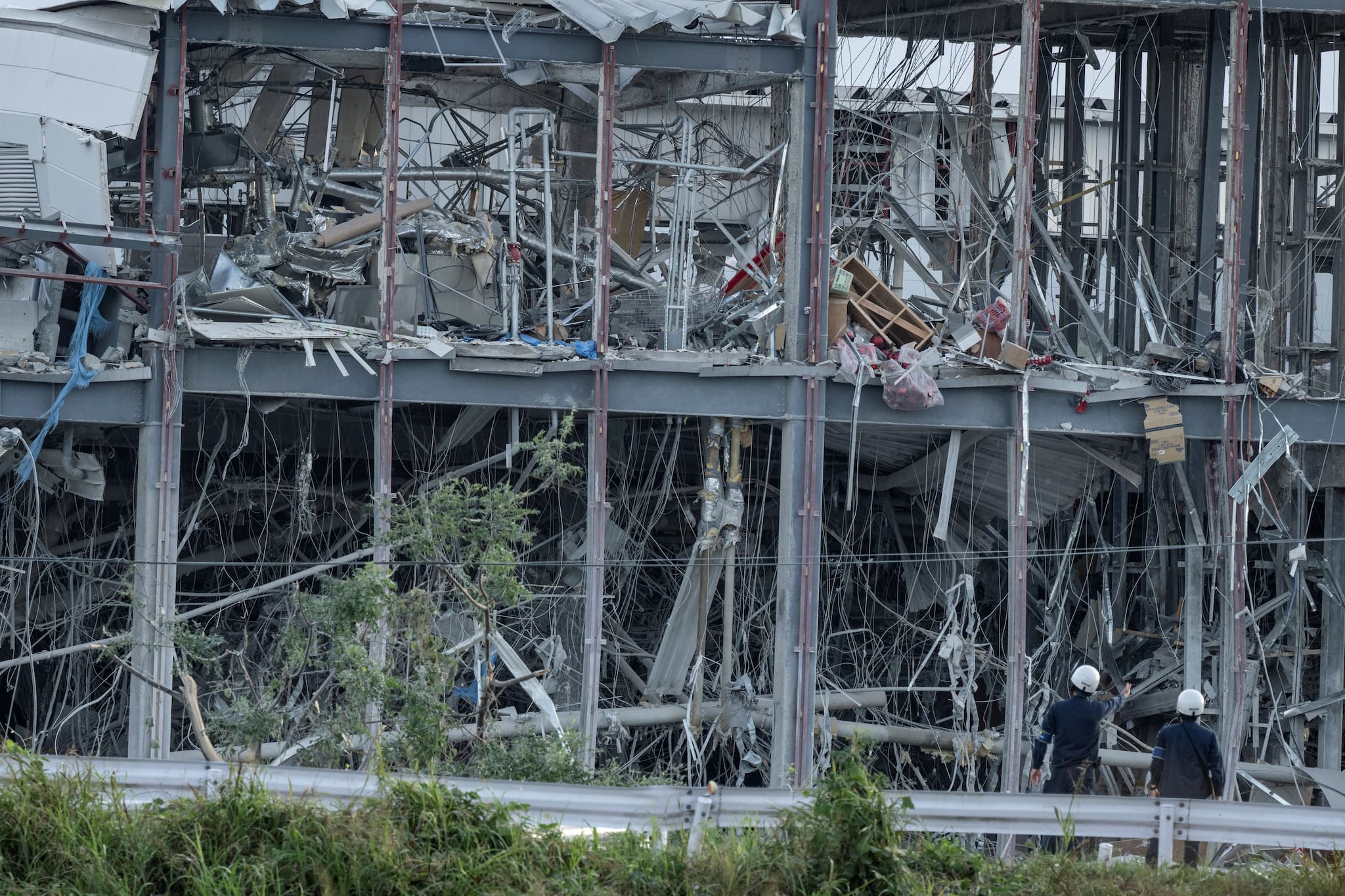
TSMC has restarted operations after structural checks, but the quake also interrupted facilities run by Sony, Tokyo Electron and other manufacturers.
Aishwarya Dabhade
July 29, 2026 / 09:29 IST
Japan’s earthquake interrupted TSMC, Sony and Tokyo Electron facilities in Kumamoto. Here is what the chip hub makes and what happens next.
- TSMC Kumamoto plant restarted after earthquake.
- Earthquake affected other Japan chip manufacturers.
- Kumamoto is a key semiconductor hub for global tech.
Liked this AI Summary?
TSMC began restarting its Kumamoto semiconductor plant on Tuesday night, hours after a magnitude-7.1 earthquake emptied the factory, interrupted neighbouring manufacturing sites and killed at least 13 people across southern Japan.
The chipmaker said its workers were safe and the buildings at Japan Advanced Semiconductor Manufacturing, or JASM, had cleared structural inspections. Detailed equipment checks and an assessment of the production impact were still underway, according to a company statement
Tokyo Electron suspended work at two Kumamoto factories through Wednesday. Sony and Fujifilm evacuated employees, while Honda temporarily idled its motorcycle plant in the prefecture, Reuters reported.
Why does a brief factory evacuation in one Japanese prefecture draw attention from the global technology industry? The answer lies in what Japan has built around Kumamoto: a semiconductor cluster producing chips and equipment used in cars, cameras, industrial machinery and, increasingly, artificial intelligence systems.
Do Not Miss | Japan Earthquake 2026 vs 2016 Kumamoto Crisis: What makes the two earthquakes so similar?
Why has Kumamoto become a chip hub?
Kumamoto’s semiconductor history predates TSMC. Sony has manufactured image sensors there for years, while Tokyo Electron develops chipmaking equipment in the region.
TSMC transformed the scale of that network.
The Taiwanese company established JASM in 2021 with minority investments from Sony Semiconductor Solutions, automotive supplier Denso and Toyota Motor. Construction began in 2022, and the first factory entered volume production at the end of 2024, according to TSMC’s 2025 annual report.
When the first plant opened, TSMC said investment across two Kumamoto factories would exceed $20 billion. The original plan projected combined capacity of more than 100,000 12-inch wafers a month.
That makes Kumamoto more than an overseas outpost for TSMC. It brings the world’s largest contract chipmaker, one of the biggest image-sensor producers and a major semiconductor-equipment company into the same Japanese manufacturing region.
What chips are being made there?
The first JASM factory produces chips using several process technologies, including 12-, 16-, 22-, 28- and 40-nanometre processes.
These are not necessarily the smallest or most advanced chips available. They are, however, widely used in automobiles, factory equipment, consumer electronics and other products that require reliable, long-running components.
The second factory was initially planned around 6- and 7-nanometre production. TSMC expanded that ambition in February 2026, when chief executive CC Wei said the plant would manufacture 3-nanometre chips to meet demand generated by AI.
Three-nanometre technology is used in high-performance processors and AI servers. TSMC currently manufactures most of its leading-edge chips in Taiwan.
Japanese newspaper Yomiuri valued the revised Kumamoto investment at $17 billion. TSMC confirmed the change in technology but declined to verify the investment figure, Reuters reported.
For The Curious | Japan Earthquake 2026: What happens after a 7.1 earthquake?
Where does Sony fit into the picture?
Sony is both a JASM investor and a major manufacturer in its own right.
The company says its image sensors are used in smartphones, digital cameras, cars, industrial systems and security cameras. Sony estimates that it controls 53% of the global image-sensor market by revenue.
In May, Sony and TSMC signed a non-binding agreement to explore a joint venture at Sony’s new factory in Koshi City, Kumamoto. The proposed operation would develop and manufacture next-generation image sensors for applications including automobiles and robotics.
Sony would control the venture, which remains subject to a final binding agreement, according to the joint announcement.
The Japanese government had separately approved a subsidy of up to 60 billion yen for a Sony image-sensor factory in Kumamoto. Industry Minister Ryosei Akazawa said in April that the support was intended to secure supplies for autonomous-driving and physical-AI applications, Reuters reported.
And what does Tokyo Electron make there?
Tokyo Electron does not manufacture semiconductors. It builds some of the machines required to make them.
Its Kumamoto operations develop and manufacture wafer coaters, cleaning systems and equipment used in advanced three-dimensional chip packaging.
In October 2025, the company completed a new 47-billion-yen development building in Koshi City. The site was designed for next-generation semiconductor equipment and included a base-isolation system
The company suspended operations at its two Kumamoto factories through Wednesday following the latest earthquake.
Why has Japan spent so much on the region?
Japan’s Ministry of Economy, Trade and Industry has acknowledged that the country lacked a domestic advanced-logic chipmaking base before TSMC established JASM.
Tokyo promised up to 732 billion yen in additional subsidies for JASM’s second plant. The government was considering further support after TSMC upgraded the factory’s plans to 3-nanometre production, Reuters reported in February.
Japan is also financing domestic foundry Rapidus, which is developing 2-nanometre chips in Hokkaido. In April, the industry ministry approved another 631.5 billion yen for Rapidus, taking government assistance to 2.354 trillion yen.
The policy has placed different parts of the chip supply chain, from sensors and mature automotive components to advanced AI processors, inside Japan.
Does the earthquake mean another chip shortage?
Not on the evidence available so far.
TSMC has restarted operations and has not announced damage to its buildings, wafer losses or delays to customers. Its detailed inspections remain incomplete.
Tokyo Electron announced a temporary shutdown through Wednesday, while Sony had not publicly quantified any production impact as of early Wednesday. None of the companies has issued a supply-shortage warning.
The distinction matters. Evacuating a semiconductor factory after a major earthquake does not, by itself, establish that production equipment or wafers have been damaged.
There is, however, a relevant precedent. Sony said the 2016 Kumamoto earthquakes damaged an image-sensor manufacturing site and interrupted production. Those earthquakes killed 275 people and injured 2,739, according to the official tally cited by Reuters.
For now, public disclosures show precautionary shutdowns, factory inspections and a gradual restart at TSMC, not a confirmed disruption to global semiconductor supplies.
Aishwarya Dabhade Chief Sub-Editor at Moneycontrol. She leads shifts and writes explainers on business, policy, markets and geopolitics. Ex-CNBC-TV18, The Economic Times, YouGov and WebEngage.
first published: Jul 29, 2026 09:27 am
Discover the latest Business News, Sensex, and Nifty updates. Obtain Personal Finance insights, tax queries, and expert opinions on Moneycontrol or download the Moneycontrol App to stay updated!
Watch
Trending news

‘There is a lot of flexibility’: Indian woman at Google reveals the reality of working at tech giant
- Woman fired for ‘poor performance’ wins Rs 19 lakh after employer fails to prove claims
- Bengaluru techie returns from US after failing to get a job for months: ‘Hardest experiences of my life’
- CA reveals IITian with 3 homes, 1 crore package had ‘no money’ to file ITR: ‘He borrowed Rs 15k’
- ‘This isn’t permanent’: Tech executive says fiancée’s family called off wedding after he lost his job
- Ram Charan’s first picture from hospital bed after wrist surgery goes viral; actor poses with bandaged hand
- R Madhavan praises billionaire Telegram CEO Pavel Durov who has been sober for over 20 years: ‘You become zombies…’
- Startup rejected on Shark Tank, now worth Rs 3,000 crore: How Zypp Electric turned a ‘No’ into a booming EV business
- Hidden in the Himalayas, this 172-year-old Indian boarding school is home to one of the world’s most beautiful campuses
- Samsung Galaxy Z Fold 8 review: Built for commute, couch, and everything after
- Can a simple waterproof phone pouch and laptop sleeve can protect your phone, laptop
- Nutritionist shares simple 4-ingredient trick that eased 10 years of bloating
- Is palm oil really that bad for you? A cardiologist explains the hidden risks
- In 1851, just 16 sparrows were released to eat caterpillars but they multiplied into millions and took over America, here’s what happened
- Quote of the Day by William Arthur Ward: “Greatness is not found in possessions, power, position, or prestige. It is discovered in…” – The real meaning of greatness goes beyond wealth and power
`);
}
if(res.stay_updated){
$(“.stay-updated-ajax”).html(res.stay_updated);
}
}catch(e){ console.log(e); }
});
},2000); // Reduced from 8s to 2s for better Core Web Vitals (LCP/UX)
});

