

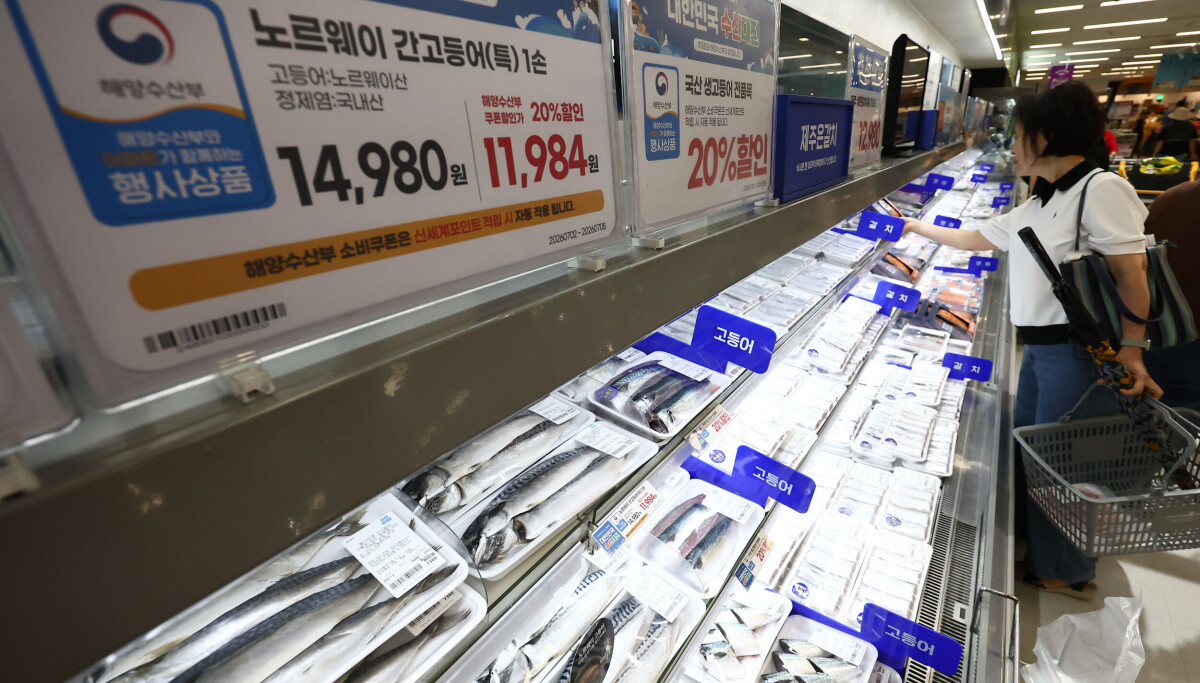
Korean mackerel is making its way to dinner tables in West Africa — not by swimming farther, but inside refrigerated shipping containers.
In Korea, small- and medium-sized mackerel often end up as side dishes at budget diners or, if deemed too low in value, as feed for fish farms. In West Africa, however, they are more highly prized because they fit local culinary traditions of cooking fish whole.
Korean exporters first entered the market about a decade ago after recognizing that Africans consume fish species similar to Korean mackerel.
Related Article
-
Fruit exports for first half of year hit record high
-
July earnings season will decide the fate of the Kospi (KOR)
-
Auto exports set new record by growing 5.8% in June
Since then, mackerel exports have surged 5.6-fold, from $35.54 million in 2020 to $199.78 million last year.
Starting in July, HMM, Korea’s largest shipping company, began transporting domestically-caught small- and medium-sized mackerel to Ivory Coast, Ghana and Nigeria.
Korea’s food export portfolio is expanding beyond traditional staples such as instant noodles and kimchi to encompass seafood, fruit and ready-to-eat meals.
Among fruit exports, Shine Muscat grapes have led the way. In 2020, grape exports totaled 1,972 metric tons, valued at $30.74 million. That jumped to 9,949 tons worth $85.74 million last year, overtaking strawberries last year to become Korea’s top fruit export item for the first time.
Most of the grapes shipped overseas are now Shine Muscat, with exports to Taiwan and Vietnam alone totaling $18.82 million and $7.36 million, respectively. Their crisp texture, high sugar content and large, premium-looking berries have made them a popular gift item across Asia, with the rising popularity of Korean culture.
“[Grape] exports could surpass $100 million this year,” a Ministry of Agriculture, Food and Rural Affairs official said.
Strawberry exports have also increased over the past several years. Export volume rose from $53.75 million to $71.98 million in the same period.
Korean strawberries — cultivated in cooler areas — are especially popular in Southeast Asia, where the tropical climate makes local cultivation difficult.
In the United States, frozen vegan gimbap (seaweed rice rolls) has gained traction amid the plant-based food boom, while Korea’s ice cream exports exceeded $100 million for the first time last year.
Behind much of that export growth is the refrigerated shipping container, better known as the reefer container. Grapes, mackerel and ice cream are all typically transported overseas by sea in these temperature-controlled containers.
Most strawberries are still transported by air because they spoil quickly. Even so, industry officials say the use of refrigerated containers has grown rapidly in recent years.
A reefer container, often likened to a mobile refrigerator, is equipped with a refrigeration unit at one end.
Keeping cargo at the right temperature is only half the job: It’s just as important to ensure a steady power supply to keep refrigeration equipment running properly throughout the voyage.
As containers pass through multiple climate zones and are repeatedly loaded and unloaded by cranes, moisture and rough seas can interfere with electrical systems. Even a brief power outage can compromise the quality of an entire shipment.
To reduce that risk, newer reefer containers are equipped with sensing and monitoring systems that trigger alerts whenever temperatures move outside the designated range.
“Because cargo spends weeks crossing different climate zones and is constantly transferred between ships and ports, the ability to manage those conditions ultimately determines the quality of the goods,” an industry
