

Kenya’s double climate crisis: It needs funds to adapt, and disaster aid is damaging environment
Kenya’s double climate crisis: It needs funds to adapt, and disaster aid is damaging environment
Read this story aloud
Listen to the clean text version of this article
Ready
1 min listen
Audio reading is not supported on this browser.
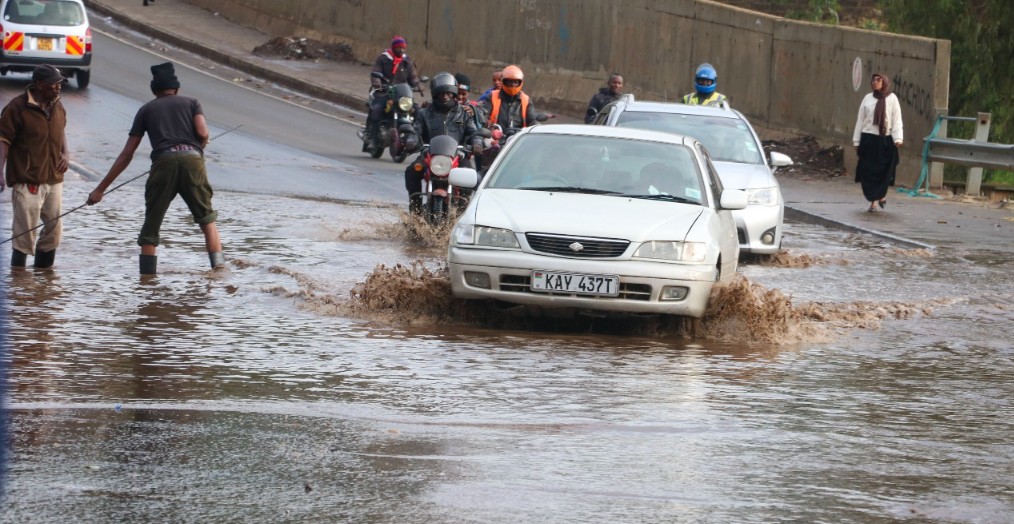
In parts of Kenya and particularly in Nairobi County, disasters have ranged from severe drought to killer floods that submerged residential areas and displaced hundreds of families
Over the last two decades, economic losses from extreme weather (such as the damage caused by floods, mudslides and drought) has amounted to trillions of dollars.
In parts of Kenya and particularly in Nairobi County, disasters have ranged from severe drought to killer floods that submerged residential areas and displaced hundreds of families.
The most recent crisis highlights a pattern of climate-driven extreme weather in Kenya, where intense rainfall events are becoming more frequent following prolonged droughts. While Nairobi drowns, communities in north-eastern Kenya are facing a prolonged drought that has decimated livelihoods, dried up water sources, and pushed families to the edge.
More To Read
- How climate change is threatening grassroots football in Kenya ahead of AFCON 2027
- WMO Report: Africa warming faster than global average as climate disasters surge
- 10 dead as heavy rains hit country, says NPS
- Relief for motorists as MOJA Expressway suspends toll fees amid heavy flooding and traffic gridlock
- Government urges Garissa, Tana River residents to move to higher grounds as flood risk rises
- Flood warnings as River Tana dam levels rise; woman killed in Nairobi floodwaters
Flood and drought are two faces of the same broken climate system, and Kenya is bearing both at once.
In the case of Kenya, where I have conducted research on climate-related disasters and the response of humanitarian organisations, the government is well aware of the need for climate adaptation. It has enacted new laws, adopted a climate change action plan, passed regulations for carbon markets and come up with a strategy to reduce greenhouse gas emissions by 2050.
How the Kenyan government will finance climate adaptation remains a huge headache, however. It is clear that there is a need for collaboration and partnerships among the government, counties, the not-for-profit sector and the private sector to reverse the climate change trend. But can all these groups play a role that doesn’t make the problems caused by climate change worse?
Latest Stories
- DP Kindiki hails cooperatives as key to Kenya’s economic transformation
- SHA seeks Treasury funds to clear NHIF claims above Sh10 million
- Eight arrested in Marsabit over Sh1.2 million SIM swap fraud
- What the World Cup hydration breaks reveal about who governs men’s football
In a recent paper, I set out my findings based on a review of existing articles on humanitarian aid, green technology innovation, climate financing and climate change.
My findings indicate that, to reduce the negative impacts of climate change in Kenya, there is a need for:
In Kenya, 80 per cent of the country is arid and semi-arid. This puts pressure on clean water and food security, yet agriculture drives the economy. Climate adaptation is essential for survival and reducing climate-related disasters.
Making humanitarian interventions more climate-friendly
About 3.3 million people in Kenya are currently in urgent need of humanitarian assistance because of climate-change related drought.
But sometimes humanitarian responses can inflict more damage on the climate.
For example, they may cut down trees to clear land to set up camps for displaced people. Another example is drilling boreholes for water so close to each other that they deplete underground water reserves.
People fleeing extreme weather disasters need to cut down trees for firewood and charcoal. This has led to deforestation in many settlement areas in Kenya. Too few latrines or toilets built close to clean water sources lead to poor sanitation. This can cause widespread disease.
This worsens the risks associated with climate change in developing countries, including Kenya.
The development finance gap
If Kenya adapted to climate change, this would reduce or minimise the impact of extreme weather disasters. The country needs about $62 billion between 2020 and 2030 to adapt to climate change and to reduce greenhouse gas emissions.
Of the $62 billion needed, Kenya has committed to providing $3.36 billion. The rest of the money needs to come from international finance, investment, technology development and transfer, and capacity building. About $15.8 billion will be secured through investments in projects designed to deliver mitigation and adaptation benefits.
The Kenyan government’s plan is to use this finance to:
A key challenge is ensuring that climate adaptation funds actually reach vulnerable communities. Because the country has a devolved system of government, channelling climate finance to the county level is crucial. Different regions in Kenya have set up County Climate Change Funds, but links between these local funds and the national financing system remain weak.
A debate on whether funds should be spent on short term relief to humanitarian responders or long term climate adaptation is also needed. Adapting is more sustainable. It could help avert or even end climate change-related emergencies.
Other Topics To Read
For example, the current drought will cost Sh4 billion ($31 million) per month until the situation improves.
What needs to happen next
Full adaptation to climate change is going to take some time, especially as finance needs to be secured. Meanwhile, humanitarian aid agencies in Kenya need to urgently adopt climate-friendly measures.
These include the use of green procurement, less packaging or recyclable and biodegradable packaging. Relief organisations should avoid using nature reserves to construct homes for refugees or expand camps. Humanitarian projects should also provide food that requires less time to cook and use energy-saving or solar stoves.
The government should advise relief organisations to adhere to environmental and climate change regulations. This is so that humanitarian aid responders do not make the existing environmental crisis worse.
Advertisement
Climate financing is critical to developing countries like Kenya. It needs to be channelled to the country as grants to be used for adaptation. Loans will only make Kenya’s debt burden worse.
If these things can be achieved, this could help areas such as Turkana and West Pokot respond more effectively to extreme weather and climate-related emergencies.
The Conversation
Catherine Wanjiku Nyambura, Dean of the Business School, Uganda Technology and Management University
This article is republished from The Conversation under a Creative Commons license. Read the original article.
Top Stories Today
- Government reaffirms commitment to inclusive development across all regions
- DP Kindiki hails cooperatives as key to Kenya’s economic transformation
- SHA seeks Treasury funds to clear NHIF claims above Sh10 million
- Eight arrested in Marsabit over Sh1.2 million SIM swap fraud
- What the World Cup hydration breaks reveal about who governs men’s football
- Hope for patients as implant shows lasting benefits for treatment-resistant depression
`;
}
return “;
}
function commentActionsMarkup(comment, canComment) {
const likeLabel = comment.liked_by_me ? ‘Liked’ : ‘Like’;
const likeCount = Number(comment.like_count || 0) > 0
? “
: ”;
const likeButton = canComment && comment.status === ‘approved’
? “
: “;
const replyButton = canComment && comment.status === ‘approved’
? “
: ”;
return `
`;
}
function commentMarkup(comment, canComment, isReply = false) {
const pendingBadge = comment.status && comment.status !== ‘approved’
? “
: ”;
const edited = comment.is_edited
? “
: ”;
const repliesHtml = Array.isArray(comment.replies) && comment.replies.length
? `
`
: “;
return `
`;
}
function replyFormMarkup(commentId) {
return `
`;
}
function setNotice(widget, message, type = ‘info’) {
const notice = widget.querySelector(‘[data-role=”notice”]’);
if (!notice) return;
if (!message) {
notice.hidden = true;
notice.textContent = ”;
notice.classList.remove(‘is-error’);
return;
}
notice.hidden = false;
notice.textContent = message;
notice.classList.toggle(‘is-error’, type === ‘error’);
}
function setCount(widget, total) {
const count = widget.querySelector(‘[data-role=”count”]’);
if (!count) return;
const num = Number(total || 0);
count.textContent = num === 1 ? ‘1 comment’ : `${num} comments`;
}
function openReplyBox(widget, commentId) {
widget.querySelectorAll(‘[data-role=”reply-box”]’).forEach(box => {
box.hidden = true;
box.innerHTML = ”;
});
const targetItem = widget.querySelector(`.ev-comments__item[data-comment-id=”${commentId}”]`);
if (!targetItem) return;
const replyBox = targetItem.querySelector(‘[data-role=”reply-box”]’);
if (!replyBox) return;
replyBox.hidden = false;
replyBox.innerHTML = replyFormMarkup(commentId);
const textarea = replyBox.querySelector(‘textarea’);
if (textarea) textarea.focus();
}
function closeReplyBox(container) {
if (!container) return;
container.hidden = true;
container.innerHTML = ”;
}
async function initCommentsWidget(widget) {
const state = {
articleId: Number(widget.dataset.articleId),
loadUrl: widget.dataset.loadUrl,
storeUrl: widget.dataset.storeUrl,
commentsBaseUrl: widget.dataset.commentsBaseUrl,
canComment: widget.dataset.canComment === ‘1’,
page: 1,
perPage: 10,
sort: ‘newest’,
total: 0,
hasMore: false,
busy: false
};
const list = widget.querySelector(‘[data-role=”list”]’);
const loading = widget.querySelector(‘[data-role=”loading”]’);
const empty = widget.querySelector(‘[data-role=”empty”]’);
const loadMoreBtn = widget.querySelector(‘[data-role=”load-more”]’);
const sortSelect = widget.querySelector(‘[data-role=”sort”]’);
const composerForm = widget.querySelector(‘[data-role=”composer-form”]’);
async function loadComments(reset = true) {
if (state.busy) return;
state.busy = true;
setNotice(widget, ”);
loading.hidden = false;
if (reset) {
state.page = 1;
list.innerHTML = ”;
empty.hidden = true;
}
try {
const url = new URL(state.loadUrl, window.location.origin);
url.searchParams.set(‘page’, state.page);
url.searchParams.set(‘per_page’, state.perPage);
url.searchParams.set(‘sort’, state.sort);
const response = await requestJson(url.toString(), {
method: ‘GET’,
headers: {
‘Accept’: ‘application/json’,
‘X-Requested-With’: ‘XMLHttpRequest’
}
});
const items = Array.isArray(response.data) ? response.data : [];
const meta = response.meta || {};
state.total = Number(meta.total || 0);
state.hasMore = !!meta.has_more;
setCount(widget, state.total);
if (reset) {
list.innerHTML = ”;
}
if (!items.length && reset) {
empty.hidden = false;
} else {
empty.hidden = true;
list.insertAdjacentHTML(
‘beforeend’,
items.map(item => commentMarkup(item, state.canComment, false)).join(”)
);
}
loadMoreBtn.hidden = !state.hasMore;
} catch (error) {
if (!list.children.length) {
empty.hidden = false;
empty.textContent = ‘Unable to load comments right now.’;
}
setNotice(widget, error.message || ‘Unable to load comments.’, ‘error’);
} finally {
loading.hidden = true;
state.busy = false;
}
}
async function submitTopLevelComment(form) {
const textarea = form.querySelector(‘textarea[name=”content”]’);
const button = form.querySelector(‘[data-role=”submit-comment”]’);
if (!textarea) return;
const content = textarea.value.trim();
if (!content) return;
const originalText = button ? button.textContent : ”;
try {
if (button) {
button.disabled = true;
button.textContent = ‘Posting…’;
}
const response = await requestJson(state.storeUrl, {
method: ‘POST’,
headers: buildJsonHeaders(),
body: JSON.stringify({
article_id: state.articleId,
content: content,
source_url: window.location.href
})
});
textarea.value = ”;
if (response?.data) {
list.insertAdjacentHTML(
‘afterbegin’,
commentMarkup(response.data, state.canComment, false)
);
empty.hidden = true;
if ((response.data.status || ”) === ‘approved’) {
state.total += 1;
setCount(widget, state.total);
}
}
setNotice(widget, response.message || ‘Comment posted successfully.’);
} catch (error) {
setNotice(widget, error.message || ‘Unable to post comment.’, ‘error’);
} finally {
if (button) {
button.disabled = false;
button.textContent = originalText || ‘Post comment’;
}
}
}
async function submitReply(form) {
const commentId = Number(form.dataset.commentId || 0);
const textarea = form.querySelector(‘textarea[name=”content”]’);
const button = form.querySelector(‘.ev-comments__reply-submit’);
if (!commentId || !textarea) return;
const content = textarea.value.trim();
if (!content) return;
const originalText = button ? button.textContent : ”;
try {
if (button) {
button.disabled = true;
button.textContent = ‘Posting…’;
}
const response = await requestJson(`${state.commentsBaseUrl}/${commentId}/reply`, {
method: ‘POST’,
headers: buildJsonHeaders(),
body: JSON.stringify({
article_id: state.articleId,
content: content,
source_url: window.location.href
})
});
if (response?.data) {
const parentItem = widget.querySelector(`.ev-comments__item[data-comment-id=”${commentId}”]`);
if (parentItem) {
const repliesWrap = parentItem.querySelector(‘.ev-comments__replies’);
if (repliesWrap) {
repliesWrap.insertAdjacentHTML(
‘beforeend’,
commentMarkup(response.data, state.canComment, true)
);
}
}
}
closeReplyBox(form.closest(‘[data-role=”reply-box”]’));
setNotice(widget, response.message || ‘Reply posted successfully.’);
} catch (error) {
setNotice(widget, error.message || ‘Unable to post reply.’, ‘error’);
} finally {
if (button) {
button.disabled = false;
button.textContent = originalText || ‘Post reply’;
}
}
}
async function toggleLike(button) {
const commentId = Number(button.dataset.commentId || 0);
if (!commentId) return;
const originalHtml = button.innerHTML;
try {
button.disabled = true;
button.innerHTML = ‘Working…’;
const response = await requestJson(`${state.commentsBaseUrl}/${commentId}/like`, {
method: ‘POST’,
headers: buildJsonHeaders(),
body: JSON.stringify({})
});
const liked = !!response?.data?.liked;
const likeCount = Number(response?.data?.like_count || 0);
button.classList.toggle(‘is-liked’, liked);
button.innerHTML = `${liked ? ‘Liked’ : ‘Like’} ${likeCount > 0 ? “ : ”}`;
} catch (error) {
button.innerHTML = originalHtml;
setNotice(widget, error.message || ‘Unable to update like.’, ‘error’);
} finally {
button.disabled = false;
}
}
if (composerForm) {
composerForm.addEventListener(‘submit’, function (e) {
e.preventDefault();
submitTopLevelComment(composerForm);
});
}
if (sortSelect) {
sortSelect.addEventListener(‘change’, function () {
state.sort = this.value || ‘newest’;
loadComments(true);
});
}
if (loadMoreBtn) {
loadMoreBtn.addEventListener(‘click’, function () {
if (state.busy || !state.hasMore) return;
state.page += 1;
loadComments(false);
});
}
widget.addEventListener(‘click’, function (e) {
const likeBtn = e.target.closest(‘[data-action=”toggle-like”]’);
if (likeBtn) {
e.preventDefault();
toggleLike(likeBtn);
return;
}
const replyBtn = e.target.closest(‘[data-action=”toggle-reply”]’);
if (replyBtn) {
e.preventDefault();
openReplyBox(widget, Number(replyBtn.dataset.commentId || 0));
return;
}
const cancelReplyBtn = e.target.closest(‘[data-action=”cancel-reply”]’);
if (cancelReplyBtn) {
e.preventDefault();
closeReplyBox(cancelReplyBtn.closest(‘[data-role=”reply-box”]’));
}
});
widget.addEventListener(‘submit’, function (e) {
const replyForm = e.target.closest(‘.ev-comments__reply-form’);
if (replyForm) {
e.preventDefault();
submitReply(replyForm);
}
});
loadComments(true);
}
document.addEventListener(‘DOMContentLoaded’, function () {
document.querySelectorAll(‘.ev-comments’).forEach(initCommentsWidget);
});
})();
Trending

DP Kindiki hails cooperatives as key to Kenya’s economic transformationNews
|Rachael Mutabasi
|20 minutes ago
Government reaffirms commitment to inclusive development across all regionsNews
|Mary Wambui
|3 hours ago
UK, France agree with Oman on multinational military mission to secure Strait of HormuzNews
|Mary Wambui
|5 hours ago
CAF opens bidding for 2028, 2032 and 2036 AFCON tournamentsNews
|Erick Kariuki
|7 hours ago
Manufacturers call for reforms to cut cost of doing business in KenyaNews
|Rachael Mutabasi
|7 hours ago
Six killed as matatu, trailer collide head-on along Nakuru-Eldoret highwayNews
|Rachael Mutabasi
|9 hours ago
Iran begins six-day funeral for late Supreme Leader Ali KhameneiWorld
|DW News
|8 hours ago
60 more Kenyans arrive home from South Africa as government steps up evacuationsNews
|Mary Wambui
|5 hours ago
Colombia beats Ghana to complete World Cup round of 16 lineupSports
|XINHUA
|8 hours ago
What Kenya’s record Sh1.82 trillion forex reserves mean for the economyBusiness
|Alfred Onyango
|6 hours ago

