

South Korean President Lee Jae Myung pledged Sunday to help safeguard the world’s cultural heritage and promote global peace and prosperity, as South Korea hosted the UNESCO World Heritage Committee for the first time.
The 48th session of the UNESCO World Heritage Committee opened its annual session in Busan on Sunday. It was the first time South Korea has hosted the committee since joining the World Heritage Convention in 1988.
About 3,000 representatives from the convention’s 196 states, international organizations and civil society groups are attending the 10-day gathering at the Busan Exhibition and Convention Center. Delegates are expected to review the condition of existing sites and consider proposals for new additions to the World Heritage List.
Lee, attending the opening ceremony with first lady Kim Hea Kyung, connected the UNESCO’s founding principles to the vision of Korean independence leader Kim Koo, widely known by his pen name, Baekbeom.
“The spirit of the UNESCO Constitution, which says ‘it is in the minds of men that the defenses of peace must be constructed,’ points in precisely the same direction as the vision of Baekbeom Kim Koo, who sought to achieve peace through culture and promote unity among humanity,” Lee said.
“Building on the power of a highly developed culture, South Korea will carry forward Kim’s vision by working with the international community to protect humanity’s precious heritage and contribute to global peace and prosperity.”
Lee added that decades ago, Kim dreamed of a country defined not only by wealth and military strength, but also by its ability to contribute to humanity through the “power of culture.”
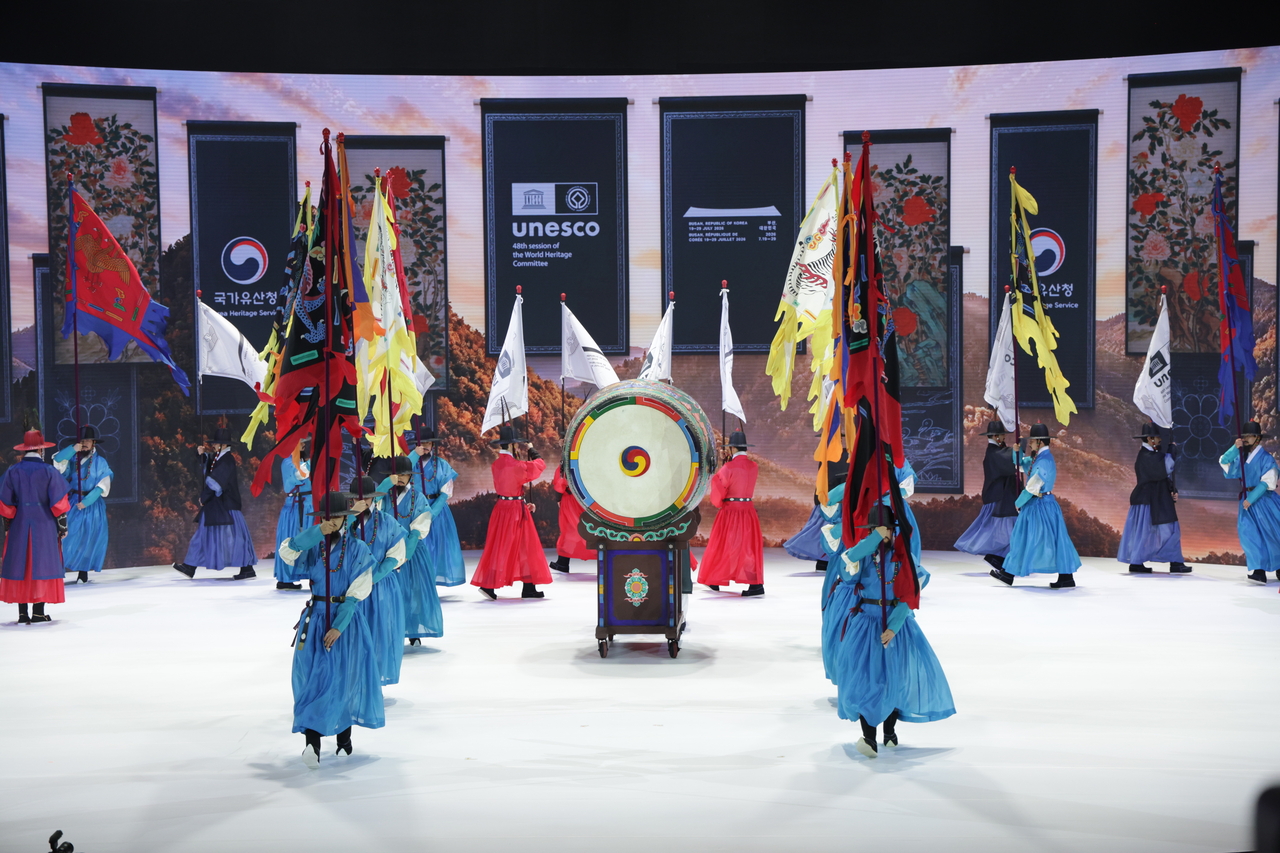
“He believed the roots of human suffering lay within the human mind and argued that culture was the only path to overcoming it,” Lee said, noting it was particularly meaningful for South Korea to host the World Heritage Committee’s meeting in 2026, which marks the 150th anniversary of Kim’s birth.
Lee also highlighted South Korea’s transformation from an aid recipient into a donor and global cultural power as an example of what international cooperation can achieve.
“South Korea’s journey from a country that received international assistance to one that provides aid and shares the value of its culture is a shared success story for humanity, made possible through cooperation and solidarity,” he said.
Lee also pointed to Busan’s transformation from a city devastated by the 1950-53 Korean War into a global maritime and cultural hub.
“Busan has risen from the ashes of war to become a maritime capital connecting not only East Asia, but the entire world, and a global cultural city engaging with people around the globe,” Lee said.
Given the history embodied in the city, he described Busan’s hosting of an international meeting dedicated to protecting and passing down humanity’s heritage as “destiny.”
Lee said that by jointly remembering and preserving heritage, countries could deepen respect for one another’s histories, strengthen mutual trust and reinforce solidarity within the international community.
“Culture is a gentle but immensely powerful force that transcends language and borders, allowing people to understand and empathize with one another,” Lee said.
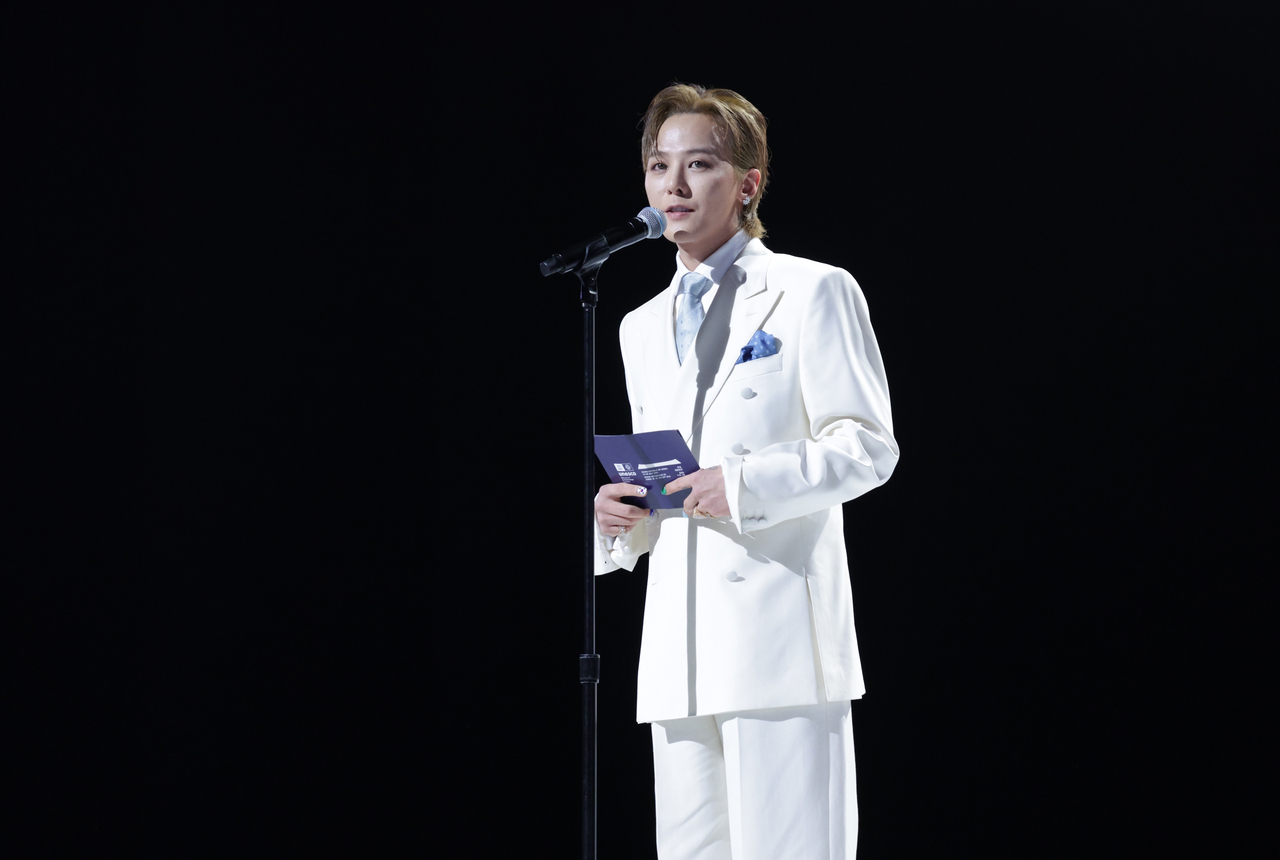
K-pop star G-Dragon, an honorary ambassador for the session, highlighted the role of art in protecting cultural heritage and promoting peace.
“Protecting heritage is not simply about preserving the past, but about building peace for the future,” he said at the opening ceremony. “I believe art can also be a powerful force in protecting what will become the world heritage in the future.”
Ahead of the opening ceremony, Lee met with UNESCO Director General Khaled El-Enany.
“I hope UNESCO will continue to play a significant role in education, science, culture and many other areas around the world, and South Korea will also strive to fully contribute to those efforts,” Lee said during the meeting.
