

The U.S. ranks as the 19th most dangerous country for women, 11th in maternal mortality, 30th in closing the gender pay gap, 75th in women’s political representation, and painfully lacks paid family leave and equal access to health care. But Ms. has always understood: Feminist movements around the world hold answers to some of the U.S.’ most intractable problems. Ms. Global is taking note of feminists worldwide.
Afghanistan
+ Two killed and several injured at protests over arrests of women and girls accused of violating dress code
In Afghanistan, the Taliban regime is continuing its violentcrackdown on women and girls. Following a wave of arrests in early June targeting women and girls for violating the restrictive dress code requiring them to wear a burka or chador with a face mask imposed by Taliban authorities, a rare street protest broke out in the western province of Herat on June 9.
In response to the demonstration, Taliban forces opened fire on the crowd of around 70 people before later calling in reinforcements to disperse the gathering, witnesses told TheGuardian. Protesters were holding signs and chanting “Education, work and freedom.”
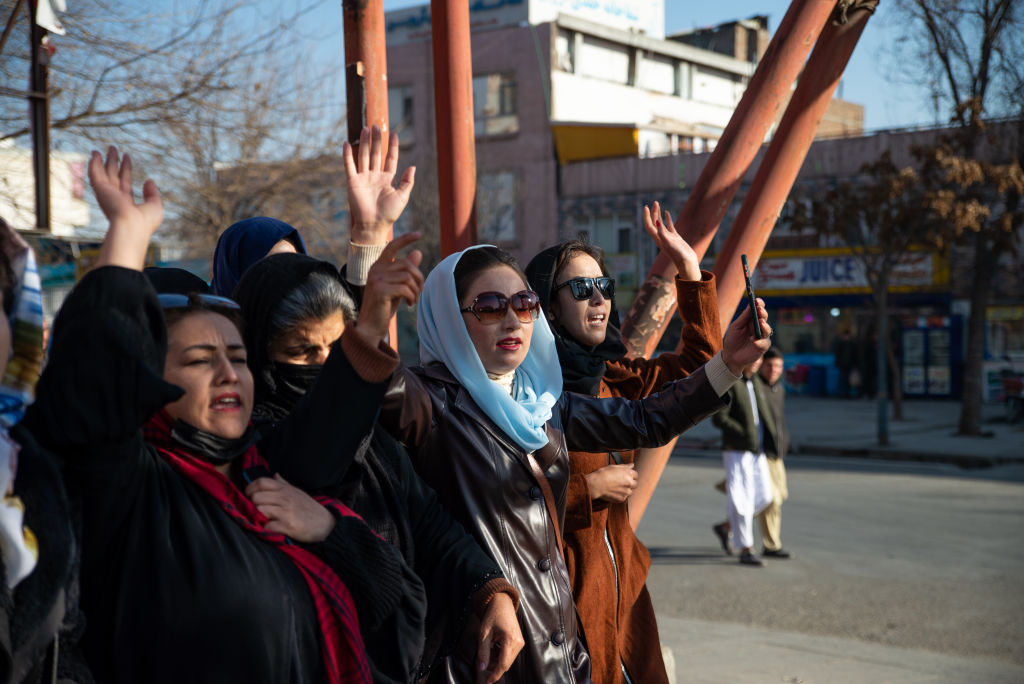
In a press release on June 10, the United Nations Assistance Mission in Afghanistan confirmed several attendees suffered injuries from being beaten by officials and that at least one person, a boy, was killed by gunfire. Medics at the scene reported a second fatality as well.
Sayed Masoud Hosseini, spokesperson for the Herat Provincial Police Command, said to the state-run Bakhtar News Agency that protestors “created tensions” and disturbed public order by failing to wear the Islamic hijab, which he described as a divine obligation.
U.N. experts condemned the Taliban over the reports of excessive force by law enforcement in a press release on June 11, and said, “Use of force in law enforcement is strictly restricted under international law.”
They urged the Taliban to conduct an investigation into the use of forces by officials promptly, independently and transparently to ensure that Afghanistan is fully aligned with its obligations under international human rights law.
According to Rukhshana Media, an Afghan women-led feminist news organization that reports on Afghanistan, the rules require women to wear head-to-toe covering whenever they leave their homes and dictate that “Islamic hijab must be observed with full commitment.” The hijab must be made of thick, non-decorative and unperfumed material.
Sudan
+ Hundreds of thousands displaced and 50,000 more at risk as paramilitary forces fight to capture city of el-Obeid
The genocide and humanitarian crisis in Sudan warns of a new city to keep eyes on: the city of el-Obeid. During a war that has caused “the world’s largest displacement crisis,” 11,000 have already fled el-Obeid, more than half of whom are children. The city has 500,000 citizens, and over one-fifth of the population are previously displaced Sudanese. The crisis has caused an estimated hundreds of thousands of deaths in a country that had nearly 16 million in need of aid before it began.
El-Obeid has previously been under the control of the Sudanese Armed Forces, but its location makes it an important logistical hub—and both sides are fighting for control of the strategically beneficial city. Aid workers are describing drones flying over el-Obeid every day, hitting schools and gas stations, that have already killed at least 50 people.

As the Sudanese paramilitary force Rapid Support Forces (RSF) expands its pressure around the city, and the army fights to hold control, it is eerily reminiscent of the fall of el-Fasher to the rebel group in October 2025 after a year-and-a-half siege.
El-Fasher’s siege by the RSF left civilians trapped inside or forced to flee, destroyed basic human services and made it impossible for humanitarian aid to enter—sites of massacre were seen by satellite—and citizens, especially women and children, faced malnutrition and displacement while hundreds of thousands were trapped within the city. In just three days, the RSF killed 60,000 civilians in el-Fasher.
Amnesty International has called the RSF’s capture of el-Fasher an ethnic cleansing and declared that the RSF committed crimes against humanity, including murder, torture, slavery and rape against civillians and directly targeting children. Women were publicly and collectively raped, and the use of sexual slavery and gendered violence was widespread during the siege of el-Fasher.
With hundreds of thousands displaced, el-Fasher serves as a warning that el-Obeid may also fall into similar cataclysm if citizens end up trapped inside and if fighting escalates. The fate of hundreds of thousands of civilians depends on whether the army can maintain control of the city, despite a wave of displacement that has already occurred as civilians flee.
When children are displaced, they are also taken out of school, whisked away from safe healthcare systems and are not guaranteed access to clean drinking water or support networks.
In February, the U.N. determined that this crisis is following a “genocidal path.” The warnings about el-Obeid cannot be ignored: Shortages of basic necessities are deepening and paths for humanitarian aid may be disrupted. The battle for el-Obeid leaves hundreds of thousands of civilians in the path of a potential genocide against non-Arab Sudanese people.
According to Al Jazeera, U.N. High Commissioner for Human Rights Volker Turk said, “The signs from el-Obeid are clear and unmistakable: Another human rights catastrophe is unfolding in Sudan. … This is not a drill. It is a red alert that needs to land on the desks of heads of state and government around the world.”
South Africa
+ Trump withdraws funding for HIV research, leaving young Black South African women in dire situation
Young women are some of the first to feel Trump’s complete withdrawal of the $400 million from South Africa’s USAID programs that have saved 20 million lives in the country’s battle against HIV and AIDS. South Africa is the country with the highest number of people living with HIV, approximately eight million, which is nearly 13 percent of its population.
As Trump continues to worsen relations with South Africa, his removal of USAID support and PEPFAR funding is leaving millions at risk and halts lifesaving research in the fight for medication and treatments for HIV and AIDS. The pandemic has been one of the deadliest in history, and the Trump administration has now shown the world it does not intend to support those affected by it.
The withdrawal inhibits research the world depends on: One study had just one week before clinical trials of a vaccine for HIV were supposed to begin when they received the email to “stop all work.”
Experts warn that many young people may default on HIV medication leading to their eventual death as lifesaving treatment becomes inaccessible. USAID contributes 17 percent of the funding for PEPFAR, which would make a lot of its work impossible. PEPFAR has been credited for saving 26 million lives around the world.
Back in 2025, a USAID funding freeze gave insight into how complete funding withdrawals will function. At the time, the freeze prevented various groups from receiving treatment, which pushed patients to public facilities that were already overburdened. Besides providing treatment and medicine, USAID support also helped expand HIV testing to more remote areas and villages, which saved lives.
The social stigma attached to HIV also prevented many from going to public medical facilities, which aid groups were able to overcome by reaching out to patients themselves. More than 96 percent of those living with HIV in South Africa are Black, one in three pregnant women in the country has HIV, and among young adults, twice as many women than men are living with HIV. This leaves young Black women the most affected by funding cuts to the research, treatment and medicine that saves lives.
Trump’s reasoning for his withdrawal of all financial aid to South Africa was rooted in white supremacy: He accused the country of “genocide” against the white population and cited his disagreement with Black Economic Empowerment policies. He also berated South African officials for their support of Palestine and naming Israel’s actions as against Palestinians as genocide. These reasons were used to justify withdrawing lifesaving care from eight million South Africans.
Venezuela
+ Devastating double earthquakes kill thousands and leave Northern Venezuelans vulnerable
On June 24, Northern Venezuela was hit with twin earthquakes with respective magnitudes of 7.2 and 7.5 within just two minutes. Latest updates from various newss of July 20. The tragedy marks the strongest recorded earthquakes in Venezuela in over 125 years
Over 17,000 have been left homeless and nearly the same number are injured in the wake of the earthquakes. It is difficult to imagine many areas of the world that could have withstood the level of harm received by the earthquakes, but Venezuela’s strained infrastructure and fragile humanitarian situation were particularly vulnerable. Estimates say 50,000 Venezuelans are missing.

Venezuelans toldAl Jazeera that the government has not provided any tools for recovering loved ones and are beginning to demolish ruined buildings before they can look for the bodies of their family members.
In such tragedies, people are forced to find homes and emergency shelter. Women-led organizations are helping the survivors of earthquakes, to help with both the traumatic aspects of survival and loss in the aftermath but also immediate needs, such as hygienic ones.
One organization, Tinta Violeta, is providing support for people affected by gendered violence. In just the first three days in these emergency displacement shelters, they identified 22 cases of sexual violence which underscores the extra risk for women and girls seeking emergency shelter in already devastating situations.
Pakistan/U.S.
+ Court sentences father and uncle of a young girl from New York to life in prison for honor killing
On June 20, a Pakistani court sentenced a father and his brother-in-law to life imprisonment for murdering Hira Anwar, a 14-year-old Pakistani American girl from Yonkers, N.Y.
In late January, Hira was shot to death while on a vacation with her father to his hometown, Quetta, Pakistan. Although initially telling police that a random attack by unidentified men had taken his daughter’s life, Hira’s father, Anwar-ul-Haq Rajpoot, later confessed to organizing the trip with his brother-in-law, Muhammad Tayab, with the intention of killing her.
According to The New York Times, Rajpootsaid to investigators, “Hira’s clothing choices, lifestyle and social relationships” had brought their family shame. Rajpoot also named Hira’s “objectionable” posts on social media platform TikTok as part of the reason he killed her, police told the BBC.
Authorities have called Hira’s death an “honor killing,” which refers to the murder of a family member by relatives under the pretense that they have brought dishonor or shame to the family name through their behavior or personal choices. Most often, women and girls are the victims of honor killings.
Since October 2016, individuals convicted of honor killings will automatically be sentenced to life in prison under Pakistani law. Previously, there was a loophole: Killers could avoid sentencing if pardoned by the victim’s family. Now, such forgiveness will only save them from the death penalty.
In Pakistan, honor killings are a serious and persistent issue. In a 2024 report from the nonprofit Human Rights Watch, human rights defenders estimated that roughly 1,000 women and girls are murdered in honor killings each year, a number which is likely an undercount.
Japan
+ Shoko Kawata becomes nation’s first mayor to take maternity leave
In May, Shoko Kawata, mayor of Yawata, announced her decision to take maternity leave. The first woman to be elected mayor of the city and youngest woman ever elected mayor in Japan’s history, Kawata is the first to take maternity leave in the nation’s history.
Although many have voiced their support for Kawata’s decision to go on maternity leave, others—especially men—have responded with anger, calling her irresponsible for stepping away from her public duties and accusing her of prioritizing her personal life above serving her constituents.
The mixed response has prompted a still ongoing national debate about the hurdles women still face generally in the workforce—whether a regular working civilian or an elected government official.
When word of her pregnancy spread in Japan’s media, Kawata held a news conference to explain her decision. At the meeting, she informed reporters that she planned to take eight weeks before and after childbirth, following the city’s ordinance provisions on city employees’ leave.
Kawata also announced that Deputy Mayor Shigeto Nose will serve as the acting mayor during her leave. He will have all mayoral authority and report to Kawata on major matters weekly.
Discrimination against mothers is so common, there is a Japanese word for it: “matahara,” which means maternity harassment. Many women in Japan choose not to take maternity leave for fear their careers will suffer.
During the news conference, Kawatasaid, “I hope that this decision to take maternity leave will serve as an opportunity to accelerate discussions on developing a better institutional design,” highlighting the need to change the current system to accommodate mothers involved in politics and thus allow for more representation.
Kawata also acknowledged the importance of breaking this barrier. “At a time when women’s active participation is being emphasized, I hope by showing that even those in managerial or top leadership positions can properly take maternity and childcare leave, this will help create a society in which women feel more encouraged to take on challenges,” the mayor said to The Asahi Shimbun on May 20.
Europe
+ Climate change causes extreme heat and simultaneous wildfires throughout Europe, killing more than 10,000
A heatwave in Spain, France and Portugal—coupled by the wildfires it’s caused—has caused 10,000 extra reported deaths and impacted 100 million. Thousands of cities saw all-time temperature records broken. Now, citizens are paying the cost: 68,000 homes in France are left without electricity. In just one week, France reported an additional 2,025 deaths.
The heatwave also highlights social vulnerabilities: It is increasingly impossible for many to find reprieve when air conditioning units are banned from many rentals and police are not allowing blow-up pools for children France. Al Jazeera reported individuals having to jump into canals in which swimming is prohibited just to stay cool.
Aging infrastructure and a lack of air conditioner have canceled trains, school and even surgeries. Citizens blame their government for not preparing for the rapid rate of climate change that creates problems hydration and shade cannot fix.
Simultaneously, wildfires are raging across the region. One in Spain burned double the size of Manhattan in just two days during the first week of July, worsened by the high temperatures. Portugal lost 13,000 hectares of land to the fire, and in France, emergency shelters are preparing for those who must flee from wildfires in southern France.
Heatwaves hit women harder than men, affecting their cardiovascular systems differently. Simultaneously, the socioeconomic implications leave women more affected, such as lower pay and thus worse housing conditions or having to give care to others before themselves.
Vatican City
+ The Vatican rejects proposal to let laypeople give sermons, excluding Catholic women from the practice
According to long-standing tradition within the Catholic church, only ordained priests or deacons may give sermons. This practice excludes women from congregational leadership, since only men can achieve priest or deacon status within the Catholic faith.
However, in March, president of the German Bishops’ Conference Bishop Heiner Wilmer proposed to broaden this practice by allowing “in exceptional circumstances, a duly commissioned lay member of the faithful to preach in place of the homily during the celebration of the Eucharist.”
In a press release published on June 23, the Vatican’s Dicastery for Divine Worship and the Discipline of the Sacraments rejected the request. The Dicastery is the primary Vatican department responsible for regulating and promoting the sacred liturgy, overseeing worship for the world’s 1.4 billion Catholics.
Although the ruling doesn’t explicitly address women, the ruling effectively denies Catholic women the capacity to preach the homily at Mass since the Catholic Church does not allow women to be ordained as priests or deacons. Laypeople, however, are allowed to give sermons outside of Mass.
Though recognizing the pastoral concerns that motivated the request, the Dicastery said that “the reservation of the homily to a priest or deacon is not a merely disciplinary norm but derives from the very nature of the liturgy,” and therefore the church rules cannot be altered.
Although Pope Leo XIV indicated support for women’s leadership within the Catholic Church at the beginning of his tenure, this ruling indicates that there are limits to which changes the Vatican is willing to make during his pontificate—at least in terms of changing some of the foundational structures that exclude women from key practices in the Catholic Church.
A note from Ms. editors: We want to hear from you for The Majority, a new campaign collecting stories about how reproductive freedom has enabled readers to build the lives they want and need. Poll after poll shows a majority of Americans support reproductive healthcare access. Yet public debate overlooks the lives shaped by abortion access, contraception, IVF, miscarriage care, maternal healthcare or comprehensive sex education—countless women who chose to pursue an education, have children, not have children, protect their health and chart their own future. Add your voice and complete the sentence: “Access to reproductive choices gave me the freedom to….” Together, these stories will help show not only why reproductive freedom remains a majority value, but also what it makes possible.
Tagged: Afghan Women, Africa, Asia, Europe, Global Health, Global South, Global Women’s Rights, HIV/AIDS, Ms. Global (Series), Sexual and Reproductive Health
About Maya Olson and Rebecca Quist Larsen
Maya Olson is an editorial intern at Ms. and an alum of Pitzer College. She won first place for “Best Editorial” from the California College Media Association and co-founded The Outback Newsprint Magazine. But mostly, she is a New Yorker.
Rebecca Quist Larsen is an editorial intern at Ms. and a rising junior at Tulane University, with majors in communication and English and minors in political science and gender and sexuality studies. Originally from Denmark, she is currently based in Connecticut.
