

Kooora.com
28 Oct 2026 17:15-05:00
Translated by
Morocco did not steal the Africa Cup of Nations: the law is clear
Failing to recognise the CAS decision would damage the image of the African continent before the world
The 2030 World Cup final must be held in Morocco: enough racism
Morocco is capable of beating Brazil and Argentina, and central defence is our weak point
Wahbi is influenced by Barcelona’s style, and 40 million Moroccans support Yamal
Mustapha Hadji was no ordinary wearer of the Moroccan shirt. He carried the ambitions of the Atlas Lions onto the world’s biggest pitches and left his mark on the memory of African football.
Crowned African Player of the Year in 1998, Hadji shone for Morocco at the France World Cup. He played 58 internationals between 1994 and 2002, scoring 12 goals and providing 6 assists, the model of a Moroccan player who could thrive at the highest level in Europe.
His professional career took him across a string of European clubs, most notably Aston Villa and Deportivo La Coruna. Hadji then returned to the national team through coaching, serving on the backroom staff between 2014 and 2022. From close quarters he watched the Atlas Lions grow into the side that reached the semi-finals of the 2022 World Cup in Qatar.
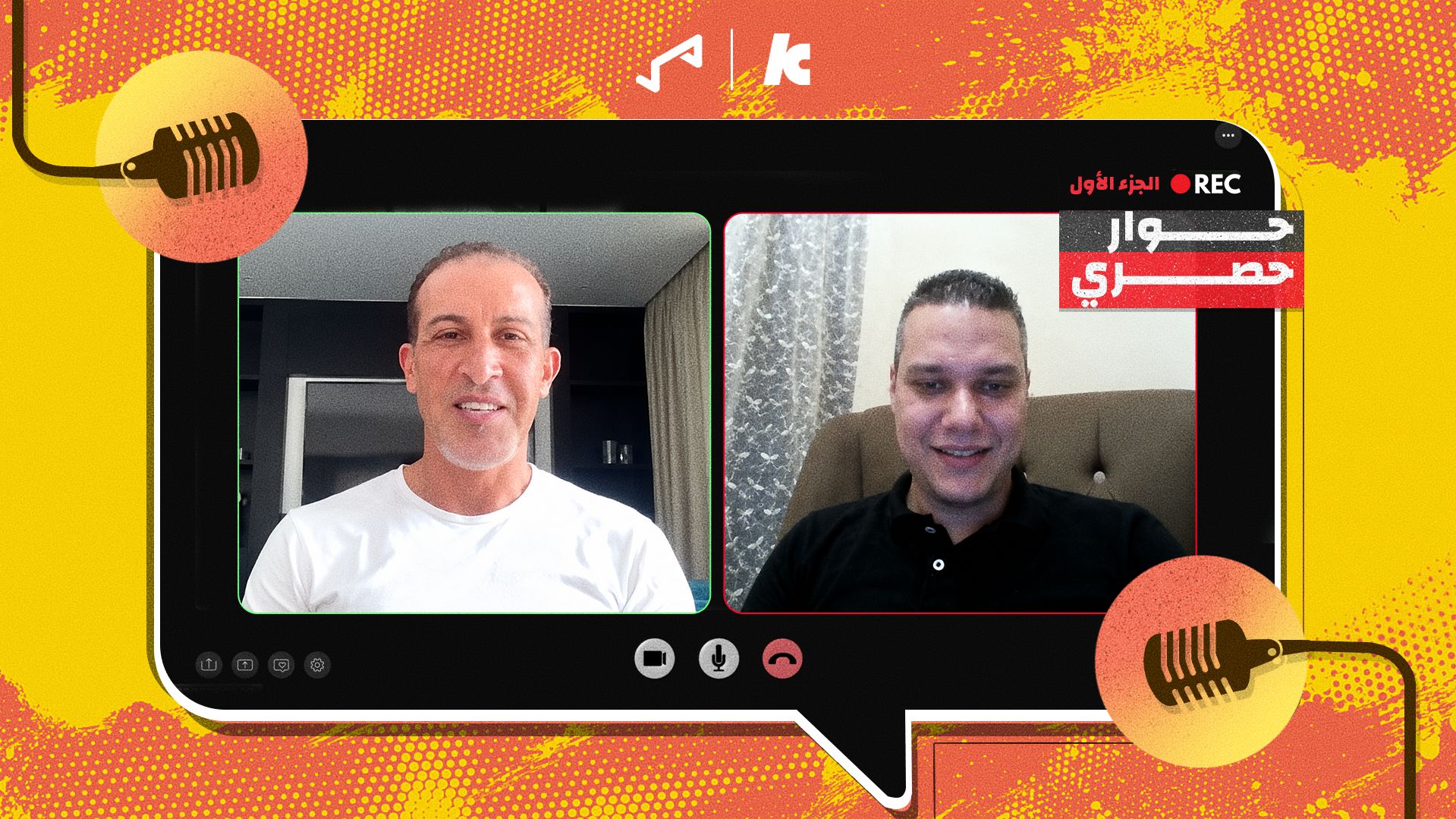
In the first part of his lengthy interview with “Kooora”, Hadji opens up some thorny files at the top of the Moroccan and African football scene. He discusses the legal dispute between Morocco and Senegal over the Africa Cup of Nations final, his stance on the row about hosting the 2030 World Cup final, and his take on the rivalry with Spain and the talk of racism.
The former Morocco star also delivers a technical reading of the current side. He compares the 2022 and 2026 generations, assesses the work of Walid Regragui and Mohamed Wahbi, names the teams he believes can stop the Atlas Lions, and picks out the squad’s biggest strengths and weaknesses.
Lamine Yamal features too, and his choice to represent Spain rather than Morocco. Hadji reveals how Moroccans view the Barcelona star despite that decision, before turning to Morocco’s attacking options, naming the man he wants leading the line and giving his view on Soufiane Rahimi and what he brings to the national team.
To the first part of the interview:
-
The Court of Arbitration for Sport (CAS) held a hearing in the presence of representatives of Morocco and Senegal, and confirmed that the final decision will be announced in November. What are your expectations for the ruling?
Football is governed by laws, and the law states that if players walk off the pitch there is a penalty. The rules are clear at FIFA and CAF, and in general I hope this crisis will not recur for the sake of the future of African football.
-
But could the ruling come in Morocco’s favour?
God willing, Morocco did not commit any error, whereas Senegal’s players left the pitch. The rule, therefore, states that Morocco has the right to reclaim the Africa Cup of Nations title.
Had Morocco’s players been the ones to walk off, Senegal would have deserved to be crowned champions of the Africa Cup of Nations at that very point, even before they scored the winning goal of the match.

AFPMorocco say that the Senegal players leaving the pitch amounts to a withdrawal, and therefore the regulations should be applied. On the other side, however, Senegal say that the referee completed the match and ratified the final result. In your view, which takes priority: the literal application of the regulation, or the referee’s authority and what happened on the pitch?
The referee made a serious mistake when he chose to complete the match after the Senegal players had left the pitch. What’s strange is that the VAR official and the CAF officials left him to make the call on his own, without stepping in.
-
It is said behind the scenes that the head of the referees’ committee at CAF pressured the referee to complete the match.
I hope such a mistake isn’t repeated in the future, and that CAF officials make the right calls in these situations.
-
The question that now imposes itself: what if the ruling comes in Senegal’s favour? Do you expect the Moroccan public to accept the decision, or will there be objections and demands for an appeal?
I hope the final ruling applies to everyone, whoever they may be, but God willing the decision will be in Morocco’s favour.
We are talking about the laws of football. We did not steal the trophy unjustly, we won it by the rules in accordance with the events that took place on the pitch.
I believe it is difficult to go any further than this in this case, especially as that would harm the future of the game in Africa. I want the world to know that there is a law governing African football.
-
Would you yourself recognise Senegal as champions of Africa if the referee had ruled in their favour?
The Senegalese know the rules, and they know exactly what happened. Yes, they won the match on the pitch. But they also know the referee made his call to get the game finished without bigger problems. CAF and FIFA laws are clear: if players leave the pitch for more than 10 or 15 minutes, a penalty must follow. Those players should have been booked.
-
We turn to another controversial matter concerning the stadium that will host the 2030 World Cup final. The Spanish media are waging a strong campaign to host the match, and Portugal’s Jose Mourinho says that “the World Cup final must be held at a legendary stadium like the Santiago Bernabeu”. What is your view?
Of course I want the final to be held in Morocco, in Casablanca or Rabat, especially as we have the capabilities that qualify us for that. I also want to see the World Cup final held in Africa for a second time, after the first time in South Africa in 2010. I believe the time has come to raise the African flag.
-
What do you say to the Spanish media, which is calling for the hosting of an important match such as the World Cup final amid the widespread controversy over racism there?
Yes, honestly I believe there is racism, and they also practise racism when they demand that the match be moved away from Africa, despite it having been held more than once in Europe and the United States.

Getty Images SportSpeaking of Spain, there was a different kind of Spanish-Moroccan battle over Lamine Yamal. What would you say to him after he chose to represent Spain over Morocco?
Although Yamal represents Spain today, we as Moroccans love and support him, and we consider his blood to be Moroccan. He was young when he made the decision, and he plays for Barcelona, the biggest club in the world, and he faced pressure. It was difficult to turn down the chance to play for the senior Spain national team at such a young age.
-
But Yamal’s presence with Morocco would have made a big difference.
Yes, but it was difficult for him to choose Morocco at that time. We had hoped to see him with the Moroccan national team, but praise be to God in any case, and today 40 million Moroccans are supporting him with Spain.
-
Beyond the final match, is Morocco capable of delivering a World Cup edition that surpasses the 2022 World Cup in Qatar, which some rank among the best in history?
Yes, Moroccan football officials have worked across more than one front since 2012 to develop the game, and today we hold all the credentials. Dual-nationality players plying their trade in Europe’s leagues are now asking to represent Morocco.

Getty Images SportMorocco achieved two feats at the last two World Cups, but is the current side genuinely stronger than the 2022 generation, or have the results raised expectations higher than the true level?
Nobody saw Morocco’s run to the 2022 World Cup coming. The picture looked very different in 2026. By then the whole world knew exactly how good the Atlas Lions were, and that made the job far tougher. Playing against teams who have studied your every technical strength is never simple.
Morocco named several young players at the 2026 World Cup who can carry the banner through to 2030, chief among them Ayoub Bouaddi, who joined the squad at just 18. Experienced heads such as Achraf Hakimi, Nassir Mazraoui and Brahim Diaz will be there to guide them.
-
But which of the two generations is stronger in your view, the 2022 one led by Regragui or the 2026 one with Wahbi?
We cannot say that one generation is stronger than the other, but in 2022 the national teams did not respect us on the pitch, whereas in 2026 the respect was considerable. Teams did not want to face us because we have a side that possesses strength on both the defensive and attacking levels and leaves no spaces.
Compare the generations of 2022 and 2026 from a technical standpoint and you find that Walid, a top-class tactical coach, would change the team’s style of play three times in a single match in 2026.
Regragui, whom we thank for everything he gave to Moroccan football, played with a single approach from the first match in 2022 right through to the end. The players knew that as soon as they won the ball we would rely on counter-attacks.
-
Morocco are ranked seventh in the world, the gap with the major teams has narrowed, and everyone takes them very seriously, but tell me the names of three teams capable of beating the Lions at the current time.
France are a very tough side, and so are Spain, even though we beat them in 2022. The third team is England.

Getty Images SportDoes this mean that the Moroccan national team can defeat teams like Brazil and Argentina?
Brazil are no longer the side that terrorised defences in the late nineties and early 2000s. Ronaldinho, Ronaldo and Rivaldo are long gone. They don’t frighten anyone right now. This is an ordinary team, and Morocco can beat them.
Argentina, meanwhile, have lost 90% of their strength since Lionel Messi retired. Messi did everything, from the goals to the killer passes. The rest of the players don’t strike me as anything special, so Morocco are more than capable of beating them too.
-
In your view, what is the biggest weakness in the Morocco national team at the moment, one that a strong opponent could exploit in a knockout match, for example?
Centre-back is the priority, especially with only Issa Diop and Nayef Aguerd in that position and back-ups who don’t come close to their level. We need strength in depth there, just as we have in midfield and attack. My hope is that we’ll have six top-class defenders in the future.
-
Did Morocco miss Romain Saïss after his international retirement?
Yes, because he was a top-level player, a leader on the pitch, and now we have Diop and Akrad.

Getty Images SportYou said that the Moroccan national team has an abundance of players in midfield and attack, but do you think there is a crisis in the out-and-out striker position after the decline in the level of En-Nesyri and El Kaabi, especially since Wahbi relied on Sibari as a false nine at the World Cup?
We have young attacking options who shone at the U-20 World Cup, among them Yasser Zabiri, who plays in the Spanish league, and I do not see that there is a crisis in this position for the Moroccan national team.
True, Sebari led the attack at the World Cup even though he is not a classic striker. But Mohamed Ouahbi can set up his players in more than one way. He draws on Barcelona’s style, and he can turn to a false nine just as Pep Guardiola did in the past, and as Hansi Flick does now. Sebari, too, can fill more than one role up front, whether as the number 9 striker, the number 10 playmaker, or out on the flanks.
-
But if I asked you to recommend just one name to play as a centre-forward for the Morocco national team, who would it be?
Ismael Saibari, because he can make the difference at any moment.
-
Why has Soufiane Rahimi not been mentioned, despite his consistently brilliant form with Al Ain of the UAE, and why is he most of the time confined to a substitute’s role with the Morocco national team?
Rahimi is a “joker” player, I love him dearly. He fights and plays with his heart, and gives 200% of his ability even if he only plays for two minutes.
-
Despite that, it did not select him to lead the Moroccan national team’s attack over Saibari.
Replacing Saibari in the starting line-up is a tall order for him, in my view.

AFPDo you think that Regragui’s departure from Morocco a few months before the 2026 World Cup was the right decision, or did the stability that achieved the 2022 feat deserve another chance?
Regragui has gone far, changing the image of the Morocco national team before the world, just as he changed the Moroccan mentality and allowed Moroccans to dream of winning the World Cup. That isn’t easy. I’m not talking about tactical aspects here. Before the 2022 World Cup, every Moroccan’s ultimate dream was to get past the first round. After the tournament everyone is talking about the ambition of winning the title. Even players from Europe have come to wish to join Morocco in order to achieve this dream.
-
But in your view, why did he leave at that time?
El-Regragui is the finest coach ever to take charge of the Moroccan national team. Yet after roughly four years in the job, and under enormous pressure, he chose to take a break and step away. That left Wahbi in a bind. He inherited the role at a delicate moment, just months before the 2026 World Cup, with everyone expecting a repeat of the 2022 run. Winning the fans’ trust was never going to be easy.
My hope is that El-Regragui returns to coach Morocco somewhere down the line.

