

Tayebwa urges developing nations to stop exporting raw minerals
“Exporting unprocessed minerals is, in effect, exporting jobs, industries and wealth. We must process our minerals atroducts if we are to create employment, increase revenue and transform our economies,” Tayebwa said
Speaking on Friday at the 121st Session of the Organisation of African, Caribbean and Pacific States (OACPS) Council of Ministers at Egmont Palace in Brussels, Belgium, Tayebwa said developing nations will remain trapped in poverty unless they stop exporting unprocessed resources and begin manufacturing higher-value products.
The deputy speaker of parliament, Thomas Tayebwa, has called on African, Caribbean and Pacific (ACP) countries to end the export of raw minerals and instead invest in value addition and industrialisation, arguing that processing resources locally is critical to creating jobs, increasing revenues and accelerating economic transformation.
Speaking on Friday at the 121st Session of the Organisation of African, Caribbean and Pacific States (OACPS) Council of Ministers at Egmont Palace in Brussels, Belgium, Tayebwa said developing nations will remain trapped in poverty unless they stop exporting unprocessed resources and begin manufacturing higher-value products.
Tayebwa, who is serving as president of the OACPS and co-president of the OACPS–European Union Joint Parliamentary Assembly, urged member states to place trade, industrialisation and value addition at the heart of their development strategies.
“We must place trade, industrialisation and value addition at the centre of our development agenda if we are to catch up with our peers in the developed world,” Tayebwa told the gathering.
He echoed President Yoweri Museveni’s long-standing position that Africa cannot achieve meaningful prosperity by exporting raw materials while importing finished products.
“Exporting unprocessed minerals is, in effect, exporting jobs, industries and wealth. We must process our minerals at source, build regional value chains and manufacture higher-value products if we are to create employment, increase revenue and transform our economies,” Tayebwa said.
Many African countries are intensifying efforts to retain more value from their vast reserves of critical minerals, including cobalt, lithium, graphite, rare earth elements and gold, which are increasingly in demand for electric vehicles, renewable energy technologies and digital infrastructure.
According to Tayebwa, Africa possesses an estimated $29.5 trillion (shs108.97 trillions) worth of mineral re of its minerals are exported in raw or minimally processed form
He said this long-standing practice has denied the continent opportunities to develop manufacturing industries, create skilled employment and increase export earnings.
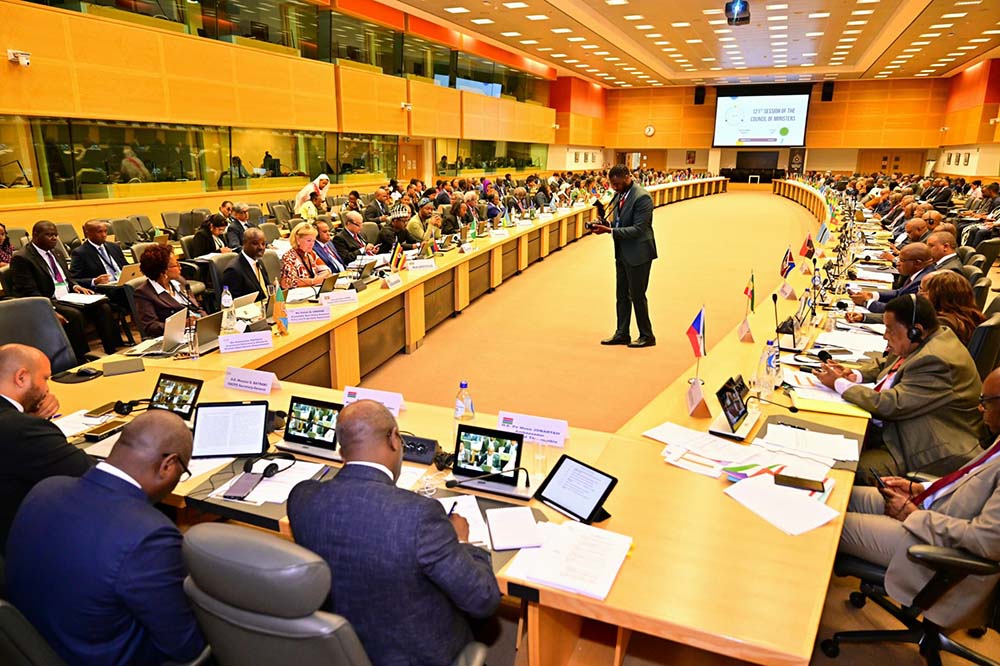
The OACPS brings together 79 countries from Africa, the Caribbean and the Pacific, and works with international partners, including the European Union, on issues ranging from trade and investment to sustainable development and climate change.
Tayebwa argued that African countries should establish domestic processing plants and strengthen regional manufacturing value chains capable of producing finished and semi-finished products instead of shipping raw commodities abroad for processing.
He cited the Democratic Republic of Congo as an example of the beneficiaries of value addition, saying the country has significantly increased revenues through local cobalt processing.
Uganda, he added, has also made progress in promoting value addition in the gold sector, demonstrating that developing countries can capture greater value from their natural re
“This should inspire a collective shift across the African, Caribbean and Pacific towards policies that promote mineral beneficiation, industrialisation and economic transformation,” he said.
The Deputy Speaker said industrialisation should become a central pillar of cooperation among OACPS member states if the organisation is to remain relevant to its more than one billion citizens.
“For years, we have spoken about making the OACPS more relevant to our citizens. But we cannot achieve that unless we focus on practical issues that directly improve livelihoods,” he said.
The OACPS brings together 79 countries from Africa, the Caribbean and the Pacific, and works with international partners, including the European Union, on issues ranging from trade and investment to sustainable development and climate change.
Tayebwa said deeper cooperation among member states could accelerate industrial growth by promoting regional markets, technology transfer and investment in manufacturing.
His address also reinforces Uganda’s broader industrialisation agenda, which seeks to increase local processing of the country’s agricultural produce, petroleum re and expand exports
Uganda is positioning itself to benefit from growing global demand for critical minerals by encouraging domestic value addition instead of relying solely on exports of raw materials.
With global competition for critical minerals intensifying, Tayebwa said OACPS countries have an opportunity to transform their economies if they collectively embrace policies that prioritise industrialisation over the continued export of raw commodities.
He urged member states to translate years of discussion into concrete action, saying value addition is no longer an option, but a necessity for sustainable development and shared prosperity across the developing world.
Help us improve! We’re always striving to create great content. Share your thoughts on this article and rate it below.
Tags:
ExportsUnprocessed mineralsThomas TayebwaAfricanCaribbean and Pacific
