

- News
- OpenAI CFO Sarah Friar to companies questioning return on their AI investments: Don’t rush to the cheapest AI model, buy AI tools that …
OpenAI CFO Sarah Friar to companies questioning return on their AI investments: Don’t rush to the cheapest AI model, buy AI tools that …
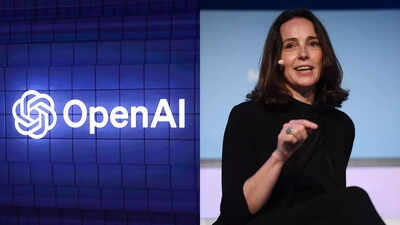
As tech company executives grow increasingly anxious over whether their massive artificial intelligence (AI) bills are actually paying off, OpenAI CFO Sarah Friar is pitching a new corporate scorecard to measure the technology’s real success. In a new company blog post (via Axios), Friar urged leaders to stop focusing on sticker prices and token costs. Instead, she argues that businesses should not rush to the cheapest AI models on the market, but should buy the AI tools that maximise performance and value.The framework arrives as Silicon Valley faces a massive enterprise ‘AI cost reckoning’, with corporate CFOs demanding clearer returns on their investments. In response, OpenAI is attempting to shift the global conversation from what AI costs to the actual volume of work it successfully completes.
‘Useful intelligence per dollar’ is the new metric
To help companies navigate their tech budgets, Friar proposed a new enterprise metric called “useful intelligence per dollar.” Rather than measuring AI value by standard benchmark scores or simple usage spikes, Friar outlines four crucial questions every business leader should ask four questions.The first is whether AI completes work that matters. Companies should track real outcomes, like customer issues fully resolved, software code shipped, or legal contracts reviewed, instead of just tallying up how many times employees log into the system.The second question is what does each successful task actually cost. CFOs need to measure the complete cost of a finished task. This includes AI usage and automated retries, but adds the financial cost of any required human review, rather than just looking at raw data token prices.The next is how often does the AI get the work right? Accuracy is a major cost driver. The fewer corrections or escalations to human staff an AI requires, the higher the ultimate financial return. Finally, does each AI dollar produce more value as usage grows? Businesses should monitor whether their AI systems are completing higher-quality work over time without triggering exponential cost increases.“The basic economic question facing CFOs and other business leaders is whether the value of the work AI completes grows faster than the cost of producing it,” Friar wrote.
Flying blind in the AI boom
The push for a standardised metric comes as many corporate finance chiefs admit they are flying completely blind when it comes to managing their AI cloud computing expenses. The industry was recently rattled by reports of one corporate executive who accidentally ran up a staggering half-billion-dollar bill with rival AI startup Anthropic’s “Claude” model in just a single month. Even OpenAI CEO Sam Altman recently acknowledged that managing costs has become the second-biggest complaint he hears from enterprise clients, right behind the logistical difficulties of deploying the technology.
Latest Mobiles
Photostories

