-
From the Stimson Center
Powering Peace: Can Renewable Energy Help End Africa’s Conflicts?
May 4, 2026 By
When armed groups began threatening a community in the Democratic Republic of Congo (DRC) that had recently gained access to solar-powered electricity, something unexpected happened. Rather than flee, residents rushed to protect their mini-grid. They put themselves at risk to keep the lights on
That story, shared at a three-day convening in Nairobi in March 2026, captures a thesis that experts across the renewable energy, finance, government, and peacebuilding worlds are increasingly taking seriously: that energy access and conflict are deeply intertwined, and that access to clean energy can help to reduce conflict. The gathering brought together more than 45 participants from across the energy, finance, government, and peacebuilding communities to wrestle with that thesis and the conditions under which it can become a reality. Ultimately, participants agreed that access to clean energy can be a tool for peace, provided the work is done intentionally, with communities at the center, and backed by a new generation of financial tools.
A New Way of Thinking About an Old Problem
Conflict is now at its highest level since World War II, driven by the breakdown of the international rules-based system, climate degradation, inequality, and demographic pressure—forces that are particularly acute across sub-Saharan Africa. At the same time, some 600 million people on the continent still lack access to electricity, with rural and conflict-affected areas bearing the heaviest burden. Those two crises are usually addressed by different agencies, funding streams, and professional communities. The argument that emerged in Nairobi is that treating them separately is a mistake.
In eastern DRC, the Virunga National Park Foundation spent years watching mountain gorillas killed not by trophy poachers, but by people clearing forests for charcoal—a primary energy source for the city of Goma. That charcoal trade was also bankrolling armed groups, including the FDLR, responsible for some of the region’s worst violence. The foundation’s response was to invest around $250 million in hydroelectric plants, eventually generating 60 megawatts. The result was significant: for every megawatt brought online, between 800 and 1,000 jobs were created; and 11% of new workers were young men and women who had left armed groups to take them.
Renewable energy can really contribute to the making of peace, said one government participant. By bringing electricity, we create jobs, especially for youth, who can get drawn into armed groups given high rates of unemployment
Conflict-Sensitive Design Is Not Optional
The conversation was far from triumphalist, however. Practitioners were quick to note that renewable energy projects, when poorly planned, can also make conflict worse. In one DRC case, a community mini-grid lacked capacity to serve two neighboring villages, and the decision to prioritize one triggered tension between them. In Nigeria, a 350kW solar mini-grid was shut down after armed vigilantes attacked the community, killed several people, and burned down a nearby warehouse. The company eventually returned—but only after community leaders engaged local authorities to address the underlying security situation.
These cases point to a central lesson that practitioners have learned the hard way: conflict-sensitive design is not an optional add-on. It must be built in from the start. That means understanding who the conflict actors are, which groups feel excluded, and who might be spoilers or champions. It means ensuring that the benefits of a project—jobs, electricity, productive assets—help address grievances rather than reinforce them. And it means monitoring not just energy connections, but changes in community cohesion and economic interdependence over time.
Peacebuilders stressed the importance of working with existing local peace processes rather than parachuting in with technical solutions. Experience from Darfur and the Sudan-South Sudan borderlands showed that even in active war zones, local agreements can create functioning markets and that energy infrastructure woven into those processes can genuinely shift incentives, including for combatants.
The Finance Problem
Clean energy in fragile settings is expensive to develop, risky to invest in, and hard to make economically sustainable. A developer building a mini-grid in eastern DRC or northern Nigeria faces currency risk, regulatory uncertainty, insecure supply chains, and customers with very limited ability to pay. Standard commercial investors won’t touch projects like these without significant risk-sharing from public and philanthropic sources.
Capital is not the problem—there is plenty of money out there, one participant noted. The problem is the pipeline. Are there bankable projects? The global infrastructure capital market alone is valued at over $2 trillion, but mini-grids and distributed solar systems are rarely structured in ways that attract it
One idea that is gaining traction is to frame mini-grids explicitly as infrastructure investments in order to unlock new sources of backing for these projects. Infrastructure investors understand long-term, asset-backed returns and have experience with political risk insurance and concession agreements. If renewable energy projects in fragile settings were consistently packaged as infrastructure deals, they could access a much larger pool of capital.
Another concept with real momentum is the “peace premium”—a results-based financing instrument that would pay a bonus to developers delivering energy in conflict-affected areas, in recognition of the additional costs and risks involved and the broader peace dividends their work generates. The analogy is to climate finance, where carbon credits and green bonds have mobilized enormous capital by pricing environmental co-benefits. Instruments like Peace Renewable Energy Credits already exist in early form, but much more is needed to incentivize significant new project development in fragile settings.
Africa’s Moment to Lead
Africa is not simply a recipient of global energy and climate policy; it is the place where the most important work is happening, and where a new global model is being built. It hosts 60% of the world’s best renewable energy resources. Wind alone, participants noted, could theoretically power the continent 250 times over. Yet only 2 percent of global energy investment flows there. In 2023, global clean energy investment reached $2.1 trillion, of which Africa received a fraction.
Participants noted that the continent’s practitioners have built mini-grids in South Sudan, financed solar systems in Somalia, and navigated the DRC’s regulatory landscape, and have accumulated knowledge that would directly benefit interested investors. The goal is not for Africa to catch up. It is for Africa to lead
That framing shaped the gathering’s most ambitious commitment: delivering renewable energy access to 30 million people in conflict-affected regions of Africa by 2030. The figure is calibrated against the World Bank and African Development Bank’s Mission 300 initiative, which aims to bring electricity to 300 million Africans by that year—with participants setting a goal of channeling 10 percent of that total specifically to conflict and fragility-affected areas.
What Comes Next
Participants left Nairobi with a concrete agenda for the next twelve months. On the project pipeline, priorities include developing a shared definition of fragility and conflict-affected areas to guide investment targeting and testing a first peace premium financing instrument. South Sudan, DRC, and Nigeria were identified as priorities for a Mission 300 proposal that would explicitly incorporate the peace dimension, potentially the first national energy compacts to do so.
On finance, the group committed to identifying champions within major institutions, including the African Development Bank and World Bank, who could embed peace as an impact metric in their reporting. One near-term step: engaging the Africa Mini-grid Developers Association to add a “Contribution to Peace” indicator to its annual industry report
None of the participants came to Nairobi with illusions. They know money doesn’t flow to conflict zones without good reason. They know solar panels don’t automatically create peace. But the story of residents rushing to defend their mini-grid kept coming up—as a reminder that when people have something worth protecting, they find reasons to protect it together
That’s not the end of a conflict. But it might be a beginning
Andrew Hyde is a Senior Fellow in the Stimson Center’s Strategic Foresight Hub
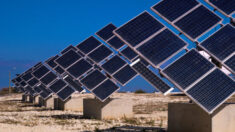
Photo Credits:View of the solar panels at the UN Interim Force in Lebanon (UNIFIL)’s Camp Green Hill, in Naqoura. Courtesy of Andrew Hyde
Topics:Africa,
climate finance,
conflict,
energy,
From the Stimson Center,
just energy transition,
livelihoods,
meta,
peace parks
Powering Peace: Can Renewable Energy Help End Africa’s Conflicts?
 By Markel Zilla