

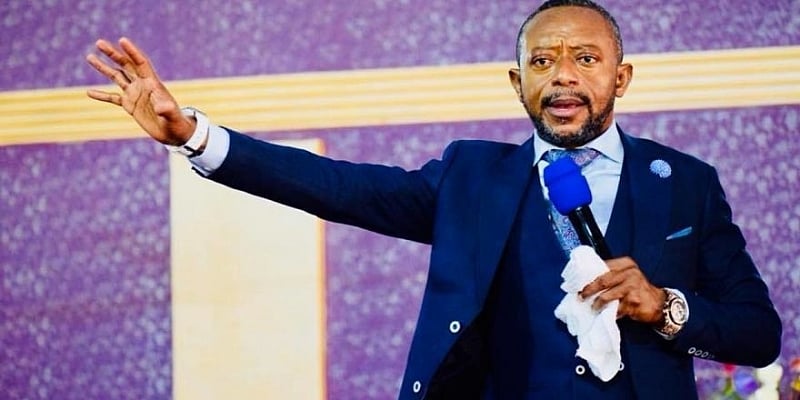

One moment, Prophet Isaac Owusu Bempah publicly warned that electing Mr. John Dramani Mahama as President of Ghana would bring disaster upon the nation. The remarks attracted widespread attention and fueled intense political and religious debate across the country.
At another moment, the same prophet publicly declared that God had chosen Mr. John Dramani Mahama to become Ghana’s next President after Nana Addo Dankwa Akufo-Addo. The nation watched as prayers were offered and blessings pronounced upon the then-presidential candidate.
Months later, Ghana continues to face significant national challenges. Floods have devastated communities, destroyed homes and businesses, and claimed lives. Economic concerns remain at the centre of public discussion, while political disagreements continue to shape the national conversation.
These developments raise an important question that many Ghanaians are asking:
When politics, prophecy, and public leadership intersect, where should citizens place their trust in predictions, in politicians, or in accountable leadership?
Ghana has long been recognised as one of Africa’s most religious nations. Every day, churches, mosques, and traditional religious institutions pray for peace, unity, prosperity, and national development. Religious leaders often call on God to bless the country, protect its people, and guide those entrusted with leadership.
Prayer has always occupied an important place in Ghanaian society. It provides hope during hardship, comfort during national crises, and strength during difficult times. Millions of Ghanaians sincerely believe that divine guidance plays a role in national affairs.
Likewise, prophets regularly deliver messages that they believe have been revealed to them concerning elections, national leadership, and the future of the country. Some of these prophecies have generated significant public interest, while others have sparked controversy and debate.
At the same time, politicians’ campaign on promises of economic transformation, improved healthcare, quality education, infrastructure development, job creation, and good governance. Election campaigns often reassure citizens that better days lie ahead.
In many respects, pastors, prophets, and politicians all speak the language of hope.
They speak about peace.
They speak about progress.
They speak about national development.
Yet many ordinary Ghanaians continue to ask whether those aspirations are translating into tangible improvements in their daily lives.
The recent floods that struck parts of Accra once again exposed long-standing concerns regarding urban planning, drainage systems, sanitation, and environmental management. Families lost loved ones. Businesses suffered heavy losses. Homes were submerged. Communities were left counting the cost of another natural disaster.
Beyond the floods, many households continue to grapple with economic pressures, rising living costs, unemployment, and the uncertainty that accompanies financial hardship.
Political tensions have also remained part of the national landscape. The recent detention of New Patriotic Party (NPP) activist Miracles Aboagye by the Economic and Organised Crime Office (EOCO), and the public reactions that followed, generated renewed discussions about governance, accountability, political freedoms, and the rule of law.
Like many democratic societies, Ghana occasionally experiences disagreements between political actors and state institutions. Such moments often test public confidence in democratic governance and the impartial application of the law.
Regardless of political affiliation, citizens generally expect public institutions to operate transparently, fairly, and within the framework established by the Constitution.
These realities bring the nation back to an even larger conversation.
Should national progress be measured by political speeches alone?
Should leadership be evaluated primarily by campaign promises?
Or should governments ultimately be judged by measurable improvements in the lives of the people they serve?
Similarly, religious leaders occupy an important place in Ghanaian society. Their influence extends beyond the walls of churches and into national conversations. Many citizens look to them for moral guidance, encouragement, and hope during uncertain times.
However, public policy is ultimately shaped through institutions of government, legislation, planning, accountability, and implementation.
Faith may inspire people.
But effective governance requires planning.
Infrastructure requires investment.
Justice requires independent institutions.
Economic growth requires sound policy.
Disaster prevention requires enforcement of existing laws.
Perhaps this is where the responsibilities of each institution become clearer.
Religious leaders provide spiritual guidance.
Politicians provide political leadership.
Public institutions administer justice, protect rights, and implement national policies.
Citizens, in turn, have a responsibility to remain informed, participate peacefully in democratic processes, and hold every leader accountable regardless of political party, religious affiliation, or public status.
History has consistently shown that nations do not achieve sustainable development through speeches alone.
They advance through strong institutions.
Transparent governance.
Respect for the Constitution.
Responsible economic management.
Environmental stewardship.
And leadership that places the national interest above partisan considerations.
As Ghana continues its democratic journey, perhaps the country should not only ask who prayed the loudest or who made the boldest political promises.
Perhaps the more important question is who delivered measurable results.
Who strengthened institutions?
Who improved the lives of ordinary citizens?
Who promoted national unity?
Who respected the rule of law?
Who prepared the country for future challenges?
At the end of the day, history will not remember every political speech or every public prophecy.
History will remember whether Ghana became safer.
Whether its economy became stronger.
Whether justice prevailed.
Whether lives improved.
And whether future generations inherited a nation built upon integrity, accountability, peace, and responsible leadership.
Those are the standards by which every leader religious, political, or public will ultimately be judged.
A word to the wise is enough.
