

Redtech, a financial technology company backed by Mr Tony Elumelu’s Heirs Holdings, has intensified its pan-African expansion strategy as it extends its payment infrastructure beyond Nigeria and leverages recent global recognition to strengthen its footprint across the continent.
The fintech firm was named in the payments category of the World’s Top Fintech Companies 2026 ranking by CNBC and Statista. It is among the only 11 African companies recognised in this year’s edition.
Developed by CNBC and Statista, the annual ranking identifies 500 leading fintech companies from a pool of more than 3,500 businesses worldwide. Serving as a data-driven benchmark, the ranking highlights companies shaping the future of financial services through technology, innovation and scalable digital solutions.
The company said it is accelerating its push into new African markets with the rollout of digital banking and payment solutions.
As part of this expansion, the UBA RedPay mobile application is now operational in Benin, Burkina Faso, Côte d’Ivoire, Mali and Senegal, marking the company’s first significant digital banking presence outside Nigeria.
It has also introduced virtual account services in Ghana through a partnership with UBA, broadening its payment collection capabilities in West Africa.
The company said the move aligns with its long-term ambition to build a unified payment infrastructure that enables businesses to collect, process, reconcile, disburse and manage funds seamlessly across African markets.
Commenting on the company’s growth strategy, the chief executive of Redtech, Mr Emmanuel Ojo, said Africa’s increasingly interconnected digital economy requires payment infrastructure that can support cross-border commerce.
“Recognition from CNBC and Statista reflects the growing relevance of African Fintech companies on the global stage and validates our ambition to build Redtech into Africa’s payment infrastructure company.
“We are building the technology that enables businesses of every size to collect, pay and manage money seamlessly across channels and markets. As African commerce becomes increasingly digitally connected across multiple market borders, businesses need payment infrastructure that is reliable, secure, interoperable and designed for the realities of operating across the continent.
“Our goal is to help power that growth by making payments simpler and more connected for African businesses, while building solutions that reflect global standards.”
Redtech continues to scale its operations, with available numbers showing that the fintech has processed approximately N45.84 trillion ($33.21 billion) in transaction value through its flagship RedPay platform and deployed more than 55,000 point-of-sale terminals serving merchants across sectors including banking, fintech, retail, hospitality, energy and utilities.
Looking ahead, the company said it plans to expand its collections and financial infrastructure capabilities across all 54 African countries, enabling businesses and financial institutions to manage transactions across multiple markets through a single technology platform.
CREDICORP Expands Consumer Credit for Locally-assembled Digital Devices With C.L.I.C.K.D.

Technology
CREDICORP Expands Consumer Credit for Locally-assembled Digital Devices With C.L.I.C.K.D.

To expand affordable consumer credit for locally assembled laptops and devices for digital workers, the Nigerian Consumer Credit Corporation (CREDICORP) has launched the C.L.I.C.K.D (Credit for Laptops, Internet, Connectivity and Knowledge Digital Devices) scheme.
This initiative is in partnership with the federal government through the Three Million Technical Talent (3MTT) Programme.
It was designed to democratise access to consumer credit, expand economic opportunity and empower millions of Nigerians to improve their quality of life through responsible borrowing.
At the unveiling of the scheme on Tuesday in Abuja at the Afreximbank African Trade Centre (AATC), the chief executive of CREDICORP, Mr Uzoma Nwagba, said the initiative focuses on fellows’ training through the Learn2Earn platform, many of whom are acquiring in-demand digital skills without access to the devices needed to complete their training and transition into employment or entrepreneurship.
Delivered in collaboration with Fidelity Bank as credit administration partner and NASENI and Imose Technologies as device manufacturers, it will provide 1,000 locally assembled laptops to eligible fellows across Nigeria, with 77 beneficiaries in Abuja receiving their devices at the launch ceremony as the first phase of a nationwide rollout.
Assembling the devices in Nigeria shows how consumer credit can expand digital inclusion, strengthen local manufacturing and deepen the country’s technology ecosystem.
“C.L.I.C.K.D. transforms digital devices from a barrier into an opportunity. By embedding affordable consumer credit into a national talent programme like 3MTT, starting with locally assembled laptops, we are giving qualifying Nigerians a responsible pathway to the tools they need to learn, work and earn, while advancing the federal government’s vision for industrial development and job creation on both sides,” Mr Nwagba averred.
Also commenting, the Minister of Communications, Innovation and Digital Economy, Mr Bosun Tijani, said, “Nigeria’s digital economy can only thrive when our people have both the skills and the tools to succeed.
“Through C.L.I.C.K.D., we are helping qualifying Nigerians participate more fully in the opportunities created by the 3MTT initiative while strengthening local manufacturing through the use of locally assembled devices.”
C.L.I.C.K.D. is CREDICORP’s flagship device financing initiative, open to working Nigerians nationwide, with the 3MTT programme as launch partner for this first phase. Interested Nigerians can register at www.credicorp.ng/clickd.
Technology
Designing Secure Digital Workflows: Why Verification Matters in Modern Technology
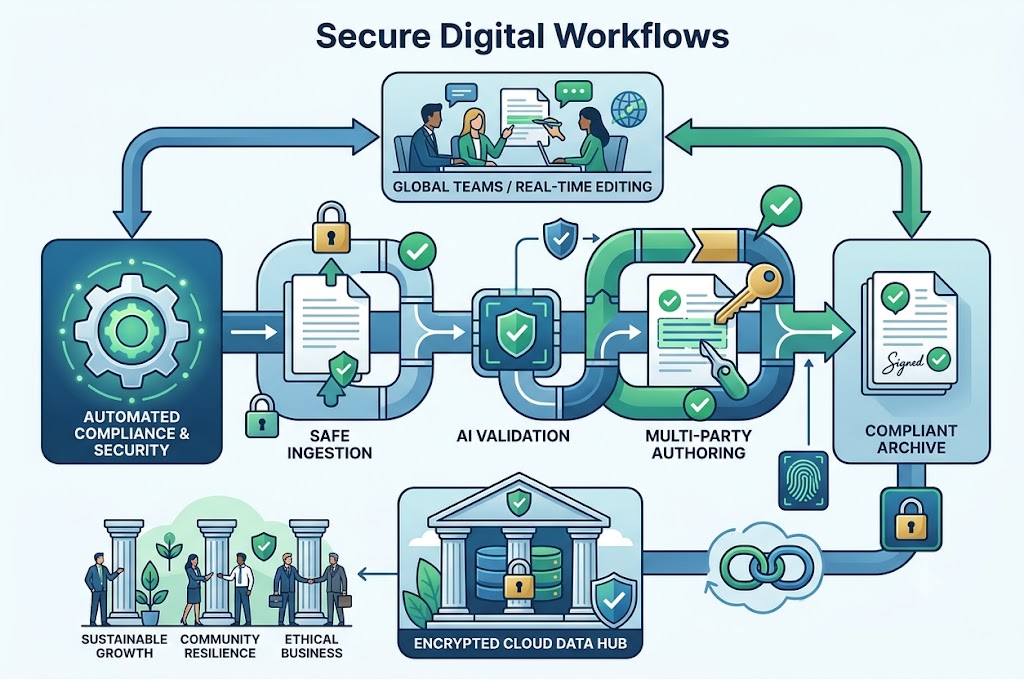
Innovation has transformed the way engineers, designers, developers, and makers collaborate. Cloud-based CAD platforms, AI-assisted design tools, collaborative manufacturing software, and digital marketplaces have streamlined product development, but they have also increased the importance of protecting user accounts. As organizations rely on connected platforms throughout the design process, secure authentication has become an essential component of modern digital workflows.
Whether accessing engineering software, managing design repositories, or collaborating with distributed teams, professionals regularly create accounts across multiple online platforms. Protecting those accounts starts with strong security practices, including password management, multi-factor authentication, and reliable verification methods. Reports covering global cybersecurity developments continue to demonstrate how evolving cyber threats are encouraging organizations to strengthen identity verification across their digital infrastructure.
Many online platforms require SMS verification before activating new accounts or unlocking specific features. For legitimate verification scenarios that require a temporary number, BotCode SMS Free Online provides a practical solution for receiving verification codes while helping users maintain greater privacy during supported account registrations.
Why Identity Verification Supports Better Digital Security
Verification serves a much broader purpose than simply confirming account ownership. It helps technology providers reduce fraudulent registrations, protect platform integrity, and improve trust among legitimate users.
- Reducing automated bot registrations.
- Confirming user authenticity during onboarding.
- Supporting secure password recovery.
- Helping detect suspicious login activity.
- Strengthening platform-wide account security.
As digital collaboration expands across industries, these safeguards become increasingly valuable.
Security Challenges Facing Technology Professionals
Engineers, product designers, and developers often manage numerous software subscriptions, cloud platforms, testing environments, and collaboration tools. Each additional account increases the need for organized credential management.
Recent insights discussing enterprise cybersecurity trends emphasize that businesses continue investing in stronger identity management strategies as hybrid work environments and cloud-based services become standard across technical industries.
Common Account Management Challenges
| Challenge | Recommended Practice |
| Multiple online accounts | Use a password manager |
| Shared project environments | Apply role-based permissions |
| Remote collaboration | Enable multi-factor authentication |
| Frequent software access | Review login activity regularly |
| Sensitive project files | Keep recovery methods updated |
Building More Secure Engineering Workflows
Security should be integrated into every stage of a digital workflow rather than treated as an afterthought. Organizations that prioritize authentication and access control often reduce operational risks while improving long-term reliability.
Strengthen Authentication
Unique passwords and multi-factor authentication remain among the most effective methods for protecting professional accounts. Combined with secure verification processes, these measures significantly reduce unauthorized access.
Manage Access Carefully
Project administrators should periodically review user permissions to ensure former collaborators, contractors, or inactive accounts no longer retain unnecessary access to sensitive information.
Monitor Security Updates
Software vendors regularly release security patches that address newly discovered vulnerabilities. Keeping engineering applications updated protects both users and project data from emerging threats.
Verification in Cloud-Based Collaboration
Modern engineering rarely happens in isolation. Cloud platforms allow geographically distributed teams to collaborate on CAD models, manufacturing documentation, software development, and product lifecycle management.
Secure verification plays an important role by helping:
- Confirm legitimate user registrations.
- Protect shared design environments.
- Prevent unauthorized account creation.
- Improve trust across collaborative platforms.
- Reduce abuse of cloud-based services.
As remote collaboration continues expanding, verification systems become increasingly important to maintaining platform integrity.
Practical Security Habits for Technical Professionals
Technology professionals already understand the value of system reliability. Applying that same mindset to account security helps create stronger digital environments.
Consider adopting these habits:
- Use unique passwords for every platform.
- Enable login notifications whenever available.
- Remove inactive third-party integrations.
- Verify software downloads from official sources.
- Regularly audit account permissions.
- Review recovery information before it’s needed.
These practices require minimal effort while offering meaningful long-term protection.
Security and Innovation Can Work Together
Innovation often focuses on creating faster, smarter, and more efficient technologies, but sustainable innovation also depends on trust. Secure verification systems, responsible authentication practices, and informed users all contribute to healthier digital ecosystems where professionals can collaborate confidently.
As engineering platforms, cloud applications, and collaborative design tools continue evolving, organizations that balance usability with strong account security will be better positioned to support innovation without compromising user protection. Thoughtful verification practices remain a fundamental part of building secure and reliable digital experiences.
Technology
Nigeria Urges Africa to Align Ahead of Global Telecom Policy Talks
<img src="https://businesspost.ng/wp-content/uploads/2022/09/NCC-International-Termination-Rate.jpg” alt=”NCC International Termination Rate”>
The Nigerian Communications Commission (NCC) has pushed for greater collaboration among African countries on telecommunications and digital economy policies, stressing that the continent must present a unified voice at major global regulatory forums.
The executive vice chairman of the NCC, Mr Aminu Maida, gave this charge on Monday in Abuja, while declaring open the 7th Ordinary Session of the Conference Preparatory Committee (CPC-26) of African Telecommunications Union (ATU) ahead of the ATU Conference of Plenipotentiary (CPL-26), where the committee will also consider reports for the International Telecommunications Union (ITU) Plenipotentiary conference which will take place in Doha, Qatar in November 2026.
The NCC chief said the continent needs greater alignment ahead of the ITU Plenipotentiary Conference, a practical mechanism for collaboration between former conferences and a stronger commitment to sustained technical participation in ITU processes.
“Africa must prepare together, work together between meetings and arrive at a global forum from positions that are both coherent and technically compelling,” he said.
He noted that CPC-26 will determine the direction and priorities of the continental union, while ITU PP26 will determine the direction, leadership, and priorities of the global union.
He said, “Our work here must serve purposes, clearly strengthening ATU as Africa’s coordinating institution while ensuring that Africa is well-prepared to participate effectively at the ITU.
“Africa’s influence in the international forum does not depend on the size of our delegations or the number of interventions we make, but it depends on the quality of our preparations, the coherence of our positions and the consistency with which we advance them.
“We must reconcile different perspectives and build technically sound positions. Africa’s voice carries greater weight, but if that preparation is delayed our influence will inevitably reduce.”
Mr Maida explained that issues around telecommunications and the digital economy are increasingly complex and interconnected; therefore, Africa must demonstrate capacity in spectrum harmonisation across borders, the governance of Artificial Intelligence (AI) and autonomous systems, and a data protection framework that can support African digital trade.
He also emphasised universal access in communities where commercial investment alone may not be sufficient and urged concerted efforts to address cybersecurity threats that cross national boundaries.
“No administration can address these challenges effectively in isolation. Our regulatory cooperation must become more continuous, more technical and more institutionalised. Coordination should not begin only when a conference agenda is circulated, and it should not end when delegates leave the room.
“Our objective as Africa is not to resist global standards; it is to help shape standards that are globally sound and sufficiently informed by African realities. Africa is one of the world’s most dynamic digital regions. The scale of mobile adoption, the innovation we have seen in digital financial services and the number of young people coming online mean that decisions on spectrum, digital identity, AI, connectivity and digital trust will have profound consequences across our continent, he said.
The NCC boss commended the Secretary General of ATU, Mr Joseph Omo, for coordinating Africa’s positions during his eight-year tenure, where he supported a more coherent voice within the ITU and other international forums, adding that such achievement came through diligent work patiently built and through the difficult work of reconciling national perspectives around common continental interests.
He assured that Nigeria remains a consistent and dependable partner of the ATU, and pledged the country’s continued contribution in technical expertise and shared regulatory experience.
