

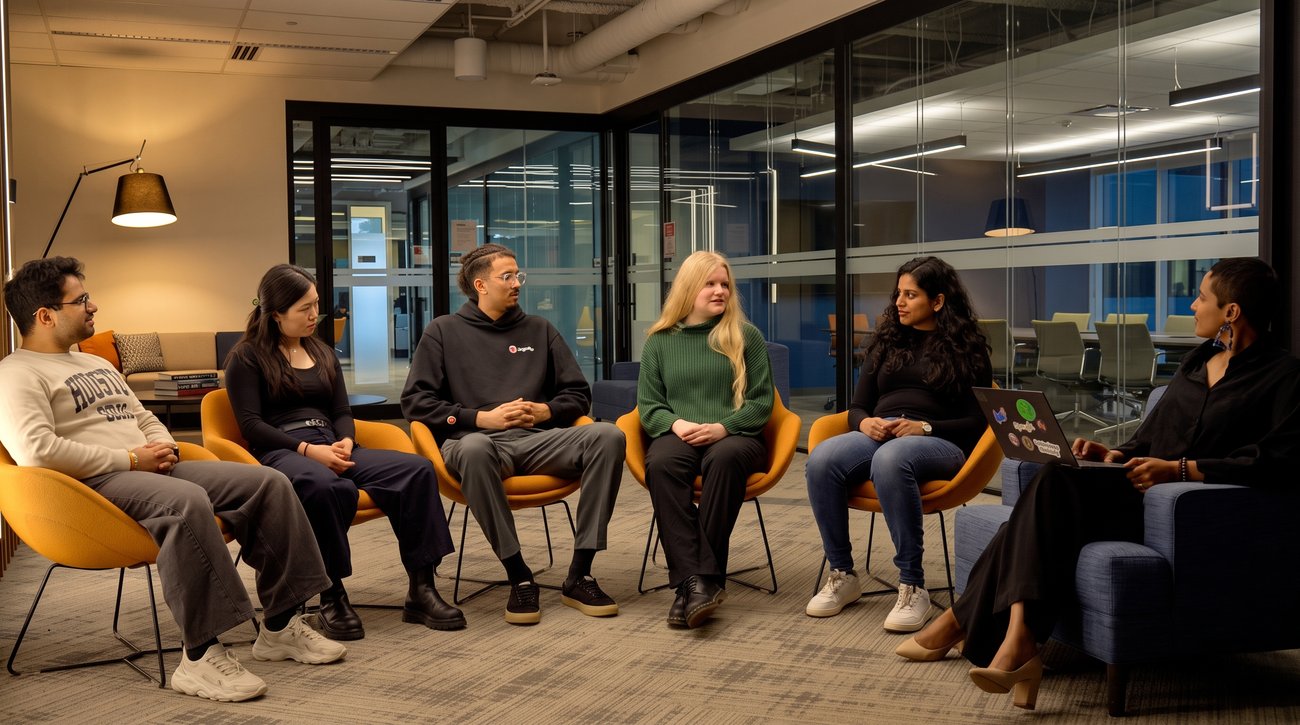
One year in, the Futures Lab — a partnership between Google and the University of Waterloo — is helping students from diverse majors build real-world AI tools and develop the skills they need for the jobs of tomorrow.
Director of User Experience Research, Technology & Society
Your browser does not support the audio element.
Listen to article[[duration]] minutes
This content is generated by Google AI. Generative AI is experimental
As artificial intelligence reshapes entry-level work, universities face a critical question: How do we ensure graduates remain resilient, adaptable and “work-ready” in an automated world?
To help find answers, Google partnered with the University of Waterloo to create the Futures Lab program. The workshop, held in eight-week sessions, teaches students from diverse majors practical technical skills they can use to tackle real-world problems. Students also work with Google mentors to design real-life AI prototypes that address everyday learning challenges. (Past projects have included SignFluent, an American Sign Language learning tool that gives you real-time feedback, and Kanji Garden, an app that teaches Japanese through AI-generated stories and visuals.)
After completing a year of Future Labs, we wanted to assess the program’s real-world impact and map out its future. We sat down with the lab’s first alumni, faculty leaders and administrative staff to understand what worked and why. These conversations highlighted how the program uniquely sets graduates up for career success — and sparked a blueprint for how to extend its reach.
Here are five ways the Futures Lab delivers real-world value:
Hands-on “vibe coding” experience: By offering a low-pressure environment to build real technology, the program delivers an experience that non-technical majors find uniquely empowering.
Practical application of design thinking: The program gets students to step away from their screens to conduct testing with actual users, and implement that feedback.
Collaboration in interdisciplinary teams: Students from diverse disciplines — such as biology, finance and environmental conservation — learn to work together, mirroring real-world working environments.
Crucial communication skills development: The program helps participants gain confidence on stage, master rapid storytellingconcepts for non-technical audiences
Increased career readiness and credibility: Students use their projects as powerful talking points during co-op interviews, gaining a competitive advantage.
The Futures Lab has shown us that the future of higher education lies in agility over tradition. By transforming a moment of anxiety into an opportunity for hope and preparation, the program invites students to move beyond the fear of automation and develop their own confident stories about how AI fits in their lives and careers.
Hear Future Labs students and faculty share their key insights:
