

‘Shock 2.0’ narrative flawed in concept – Chinadaily.com.cn
‘Shock 2.0’ narrative flawed in concept
Since the second half of 2025, some Western media outlets, politicians and scholars have been promoting the so-called “China Shock 2.0” narrative, portraying China’s progress in new energy, electric vehicles, biomedicine and other sectors as a threat. Behind this rhetoric is a familiar purpose: to provide a new justification for protectionist policies.
The phrase may sound new, but the argument is old. “China Shock 2.0” is merely the latest version of the “China overcapacity” theory and the “China threat” narrative. Twenty years ago, some in the West spoke of a “China Shock 1.0”, claiming that China’s low-cost, labor-intensive goods had disrupted developed markets. But a broader look at world economic history shows that every major technological revolution and industrial shift has produced anxiety among vested interests. British machine production replacing Indian handloom weaving in the 19th century, the rise of the United States auto industry relative to Europe’s in the 20th century and the effect of Japanese cars on Detroit in the 1980s all followed this pattern. What is now called a “shock” is, in essence, a normal adjustment of dynamic comparative advantage.
At the center of the “China Shock 2.0” argument is the claim that China’s new energy sector suffers from “overcapacity”. Yet by the standards of industrial economics, overcapacity usually refers to a sustained capacity utilization rate below 70 to 75 percent, accompanied by widespread industry losses. China’s new energy vehicle sector does not fit that description. Its capacity utilization rate has remained above 70 percent, with some domestic brands approaching 100 percent. By contrast, the average utilization rate of European auto plants is about 55 percent, and some companies are even below 50 percent. The data show clearly where the real imbalance lies.
Nor does China’s export structure support the accusation. More than 80 percent of China’s automobile output is sold at home, while exports account for less than 20 percent. In 2025, China produced more than 16 million electric vehicles, of which only 2.61 million were exported. The vast majority were absorbed by the domestic market. To equate a trade surplus with overcapacity is to confuse two distinct concepts.
What the “China Shock” narrative deliberately ignores is that Chinese-made photovoltaic modules, power batteries and electric vehicles have substantially reduced the cost of global green transition. The International Energy Agency has repeatedly noted that without China’s large-scale and sustainable manufacturing capacity, the global energy transition would come at a much higher economic cost.
China’s new energy industry did not rise by accident, nor did it grow through unfair means. Its success is the result of decades of research and development, complete industry chains and intense market competition. China’s photovoltaic industry, after more than a decade of technological progress, has reduced the cost of solar power generation by more than 80 percent, helping clean energy reach households and businesses around the world. China’s electric vehicle industry, driven by breakthroughs in battery technology, intelligent driving and related fields, is reshaping the global auto industry.
These achievements are the result of the hard work of Chinese companies, engineers and researchers. Some Western companies have lost ground in this competition. But instead of reflecting on their own lack of innovation or weak cost control, they blame China for developing too fast. This logic is hard to defend. In a race, when a runner is overtaken, the answer is to run faster, not to demand the runner in front to slow down.
China’s manufacturing has brought the world not disruption, but real economic and green dividends. For many years, China has contributed more than 30 percent of global economic growth. Amid rising deglobalization, China’s complete industrial system has helped stabilize global industry and supply chains. Its vast domestic market continues to create important opportunities for companies around the world.
In green transition, Chinese wind and solar products have been exported to more than 200 countries and regions. Over the past decade, China has helped push down the global cost of wind power by more than 60 percent and solar power by more than 80 percent. Without China’s contribution, global climate governance would be far less advanced than it is today.
This year, the European Union has shown a more negative tendency in its attitude and policies toward China-EU economic and trade relations. Yet China has consistently pursued mutually beneficial cooperation with Europe. China has long been one of the EU’s largest trading partners, and bilateral trade has reached historically high levels in recent years. European companies have earned substantial returns from the Chinese market. More than one-third of Volkswagen’s sales come from China. BASF, Airbus and other European giants have also continued to expand their investment in China and share in the dividends of the country’s development.
The essence of China-EU trade is complementarity and mutual benefit, not one side “shocking” the other. Some European countries have followed the US in hyping the “China Shock” narrative, but this only harms their own interests. Protectionism may give certain industries temporary breathing space, but in the long run, it will leave European companies at a disadvantage in the competition for green transition.
China’s new energy technologies and products are helping Europe accelerate its clean energy deployment, which is essential to meeting its carbon neutrality goals. Political forces calling for “de-risking” are in fact increasing risks to Europe’s green future. Through cooperation with Chinese companies, European automakers such as Volkswagen and BMW have greatly shortened their development cycle of new models and improved their international competitiveness.
The real shock to the global trading system does not come from Chinese manufacturing, but from Western protectionism. The US frequently uses tariffs as a political weapon, and the EU has followed suit. Such unilateral actions seriously violate World Trade Organization rules and openly undermine the multilateral trading system.
History has shown that attempts to preserve dominance through tariff barriers, technological blockades and “small yards with high fences” cannot succeed. US protectionist measures against Japanese cars in the 1980s did not stop Japanese automakers from expanding globally. Today’s efforts to contain China will likewise fail to halt the steady rise of Chinese manufacturing in global value chains.
Some Western politicians are playing up the “China Shock” narrative to turn domestic problems into external ones. They seek to blame China for their own industrial hollowing-out, unequal distribution of gains and other structural difficulties, using an external target to divert domestic pressure. This is neither responsible nor effective.
“China Shock 2.0” is, in essence, the “China threat” theory repackaged in a new industrial wrapper, with a policy agenda aimed at industrial containment and trade protectionism in the name of national security.
China’s manufacturing rise is the natural result of market competition and technological progress under economic globalization. China’s best response is to continue expanding its opening-up, deepening reform and advancing high-quality development, while firmly safeguarding its legitimate rights and interests within the multilateral trading system.
Certain forces in the West should face reality, abandon their Cold War thinking and ideological prejudice and cooperate with China on the basis of fair competition. Only then can global trade develop in a healthy direction and the world economy move toward a stronger recovery.
Smearing China will not slow China’s development. Protectionism will not stop the wheel of history. The idea of “China Opportunity 2.0” will ultimately replace the myth of “China Shock 2.0” and become the broader consensus of the international community.
The author is dean of the China Institute for WTO Studies at the University of International Business and Economics.
The views do not necessarily reflect those of China Daily.
If you have a specific expertise, or would like to share your thought about our stories, then send us your writings at opinion@chinadaily.com.cn, and comment@chinadaily.com.cn.
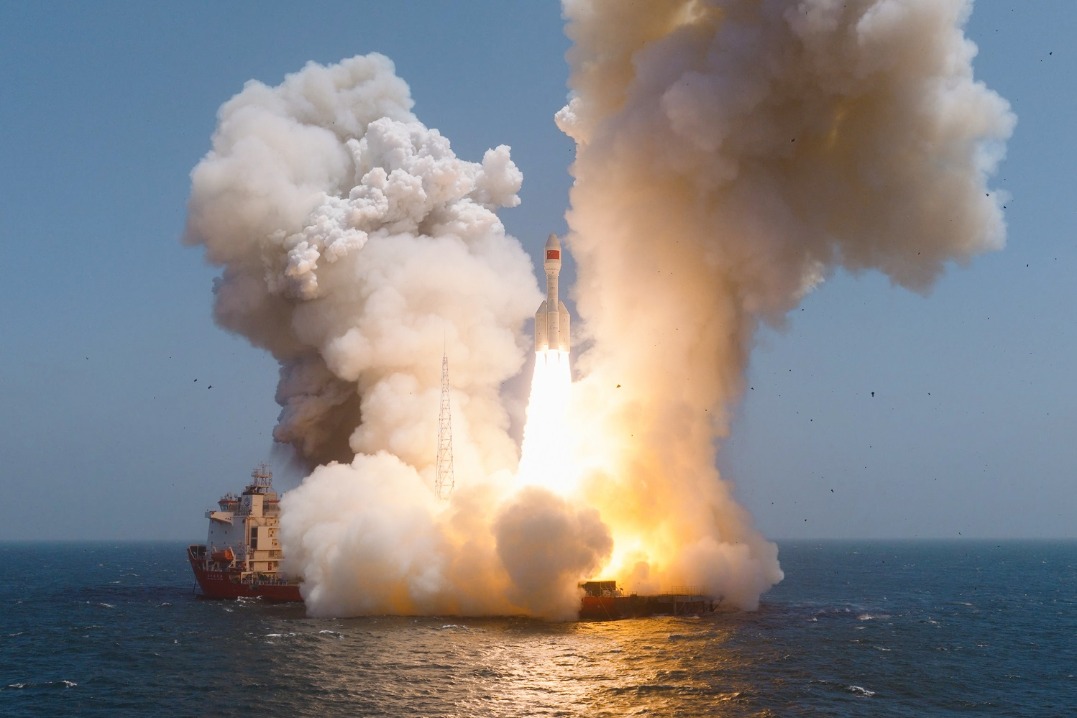
Orienspace launches first private rocket in East China Sea

Report reveals blooms of beautiful countryside

Hopes, doubts and demands as Burnham takes power
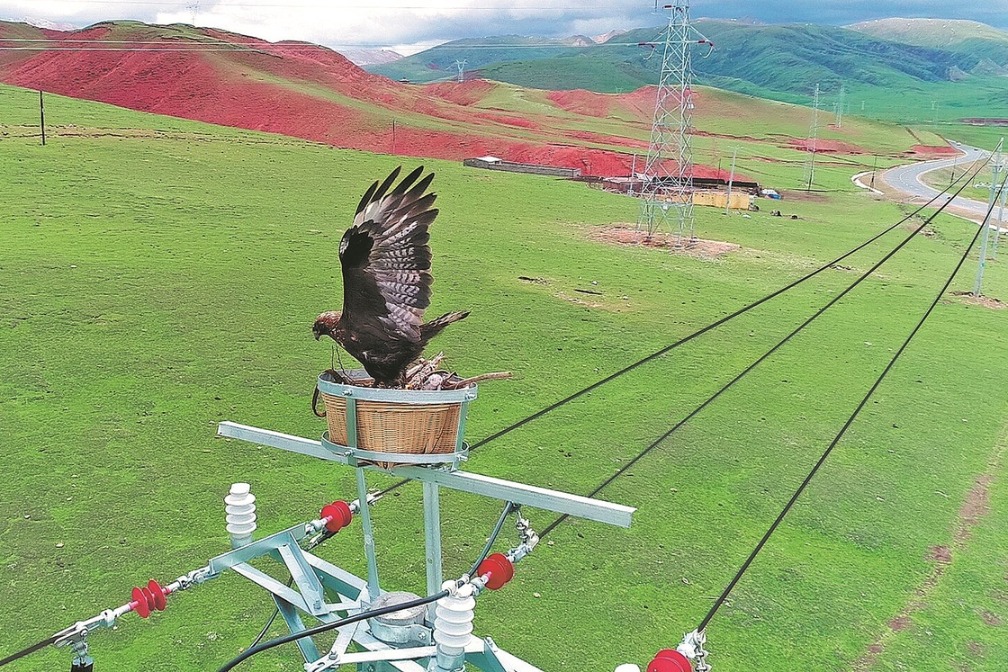
Artificial nests protect birds, power grids of plateau

Shooting stars — why GBA is China’s snooker hub
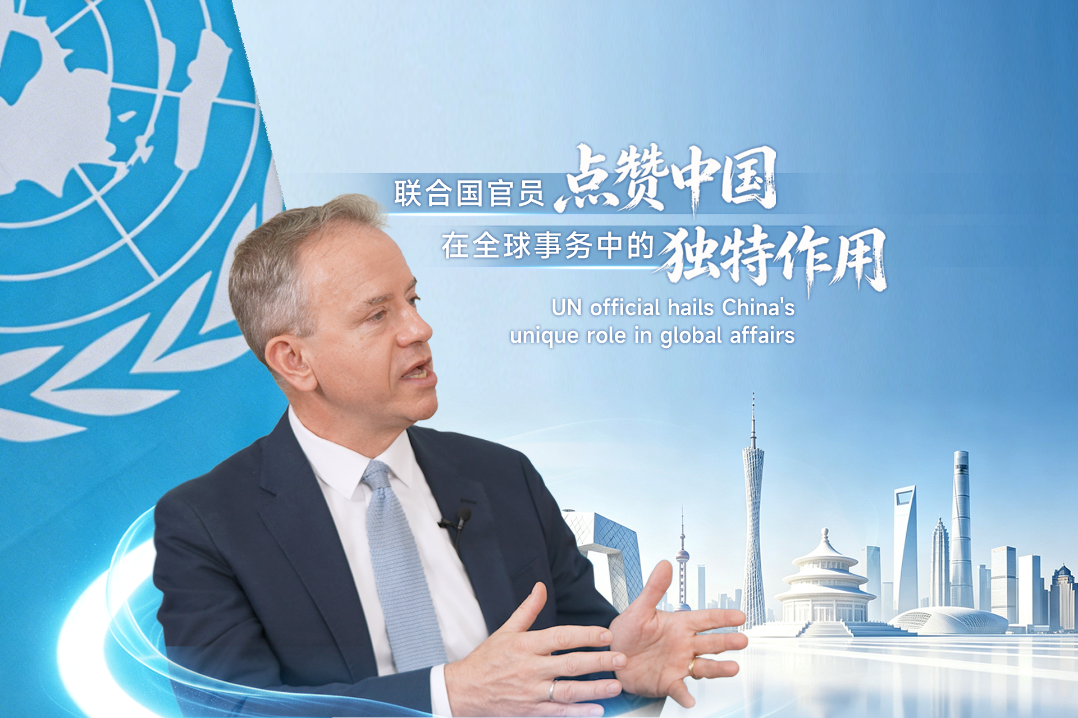
UN official hails China’s unique role in global affairs
Most Popular
Columnists

EU fines AliExpress 550m euros under Digital Services Act

So much food in my fridge, but am not complaining!

High costs of the Gulf tensions rippling across the world
Editor’s Pick

Airbus-China partnership drives a

Molly’s 20th anniversary exhibition kicks off in Shanghai
Special




Russia-Ukraine conflict: Three years on
Global Edition
Copyright 1994 – . All rights reserved. The content (including but not limited to text, photo, multimedia information, etc) published in this site belongs to China Daily Information Co (CDIC). Without written authorization from CDIC, such content shall not be republished or used in any form. Note: Browsers with 1024*768 or higher resolution are suggested for this site.
- 中文
- Desktop
BACK TO THE TOP
China Edition中文


Copyright 1995 – . All rights reserved. The content (including but not limited to text, photo, multimedia information, etc) published in this site belongs to China Daily Information Co (CDIC). Without written authorization from CDIC, such content shall not be republished or used in any form. Note: Browsers with 1024*768 or higher resolution are suggested for this site.
License for publishing multimedia online 0108263


