

After a deadly accident in an off-limits mine in South Africa earlier this month, one leading Catholic bishop is calling for accountability.
Tens of thousands of so-called “artisanal” miners work illegally in disused gold and platinum mines formerly operated by mining outfits, or else dig their own mines in search of deposits, often working without proper safety equipment.
Many of the miners who work these dangerous sites are undocumented immigrants.
Sometimes, miners spend weeks underground.
Fourteen such workers died on August 10, after a disused mine gave way in the Nkaneng informal settlement near Rustenburg and Marikana, South Africa.
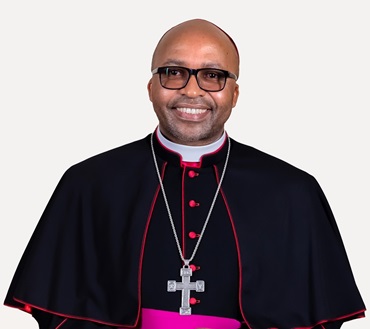
The liaison bishop for the Justice and Peace Commission of the Southern African Catholic Bishops’ Conference (SACBC), Thulani V. Mbuyisa of Kokstad, says writing the victims off as “illegal miners” is a moral failure that allows the true culprits to escape scrutiny.
“Regardless of their nationality, immigration status or involvement in illegal mining,” Mbuyisa tells Crux Now, “these were human beings whose lives had value.”
“We must enforce the law, certainly, but a society cannot be satisfied simply to label the dead as ‘illegal miners’ and then move on,” he says.
“We must ask what conditions repeatedly drive desperate people into places where death is an entirely foreseeable possibility,” the bishop also says.
With an estimated value between $2.5 trillion and $3.5 trillion, South Africa’s extraordinary mineral wealth has long been the backbone of its economy, yet the communities sitting atop the minerals remain trapped in extreme poverty and crippling unemployment.
Mbuyisa believes the Nkaneng collapse is symptomatic of a deeply fractured social contract.
The following are excerpts fromCrux Now’s conversation with Bishop Thulani V. Mbuyisa of Kokstad, South Africa, liaison bishop for the SABC’s Justice and Peace Commission, edited for length and clarity…
Crux Now: Bishop, 14 people lost their lives recently in a disused mine in Nkaneng, Rustenburg. When you first heard the news of this collapse, what went through your mind?
Bishop Thulani V. Mbuyisa: My first thought was about the human beings who had died and the families who would receive the terrible news that their loved ones were not coming home.
Fourteen people have died and eight survived this tragedy. Human life is sacred. One person who dies from illegal mining is one person too many. Regardless of their nationality, immigration status or involvement in illegal mining, these were human beings whose lives had value.
I also found myself asking: how many more people must die in abandoned or disused mining areas before we recognize that something deeper is wrong?
We must enforce the law, certainly, but a society cannot be satisfied simply to label the dead as “illegal miners” and then move on. We must ask what conditions repeatedly drive desperate people into places where death is an entirely foreseeable possibility.
You called on South Africa to confront “deeper questions about its mining economy.” What are those deeper questions?
The deeper question is this: Who ultimately benefits from South Africa’s extraordinary mineral wealth, and who carries its human and environmental costs?
For more than a century, mining has generated enormous wealth, but many mining communities continue to live with unemployment, poverty, damaged environments and dangerous abandoned mining infrastructure.
Nkaneng therefore forces us to look beyond the immediate question of illegal mining. We must ask why disused mining sites remain accessible.
Who is responsible for rehabilitation and security?
Why do people living alongside enormous mineral wealth remain desperately poor?
Who finances and profits from illegal mineral extraction, and is our mining economy genuinely serving the common good, or merely the interests of the shareholders and the international criminal networks?
The Department of Mineral And Petroleum Re has itself said that this tragedy occurred within the boundaries of an area for which a valid mining permit exists, although the permit concerns a surface opencast operation and does not include an underground shaft
That makes a thorough investigation into responsibility, compliance, security and rehabilitation particularly vital.
Why are vulnerable people still being driven into dangerous, abandoned spaces?
We have to begin with high levels of unemployment in the country, which itself generates a deep sense of desperation.
Nobody should romanticize illegal mining. It is dangerous, unlawful and, in many places, connected to organized criminal networks. But we must also ask why somebody is prepared to enter an unstable shaft or dig through dangerous mine workings knowing that he may not return.
For some people, the decisions on whether or not to participate in illegal mining is made under circumstances of severe economic hardships.
When legitimate economic opportunities disappear, desperate people become easy targets for criminal syndicates that recruit labor while those higher up the value chain make the real profits.
That is why arresting the person underground, while leaving untouched those who finance, organize, process, transport and purchase illegally extracted minerals, will never solve the problem.
South Africa’s wealth was built on the backs of miners, yet historically the mining sector treated Black workers as disposable. Has anything changed?
The apartheid-era mining industry developed a migrant labor system in which Black mineworkers carried an extraordinary burden.
The migrant labor system was essentially a system of disposable labor.
Generations of men were separated from their families through migrant labor, housed in compounds, exposed to dangerous working conditions and diseases, and inadequately compensated for the human cost of producing the country’s mineral wealth.
It is true that much has changed legally since apartheid.
Workers today possess constitutional and labor rights that their predecessors were denied. However, the deeper question is whether the old idea of disposable labor has entirely disappeared.
When former mineworkers struggle for compensation for occupational disease, when mining communities remain poor after decades of extraction, or when desperate unemployed people become expendable labor at the bottom of illegal-mining networks, we should be cautious about claiming that the underlying mentality has disappeared.
The forms may have changed.
The question of whose life is valued within the mineral economy remains.
Why do communities such as Nkaneng remain poor despite sitting alongside extraordinary platinum wealth? Is the social contract broken?
In every mining town in South Africa, one finds a moral contradiction: the existence of immense wealth in the midst of immense poverty.
This contradiction should trouble our consciences. You can stand in a community surrounded by some of the richest mineral deposits on earth and still find households without decent employment, young people without prospects and communities struggling for basic services.
There is something ethically wrong when enormous wealth can be extracted from beneath a community while poverty remains entrenched above the ground.
If communities experience mining principally through blasting, pollution, unemployment, and abandoned infrastructure, while the economic benefits seem to travel elsewhere, then there is clearly a breakdown in the social contract between those at the point of mineral extraction and those at the point of wealth accumulation.
Generally, in the mining sector in Africa, we seem to have a social contract driven by greed: corporate greed, the greed of criminal syndicates, and the greed of the corrupt political elite.
What is the physical reality of abandoned mine sites for surrounding communities?
An abandoned mine does not simply disappear when commercial extraction ends. It remains physically present.
There may be shafts, unstable workings, contaminated water, mine dumps, polluted soil, and other environmental and safety hazards. Where rehabilitation and security are inadequate, these sites can become magnets for informal and illegal mining.
They can, therefore, become dangerous spaces situated directly beside communities in which people are already struggling with unemployment.
That is why mine closure cannot mean simply removing profitable minerals and walking away. Closure and rehabilitation are part of the moral and legal responsibilities associated with mining.
How do integral ecology and the tragedy at Nkaneng fit together?
Integral ecology teaches us that the cry of the earth and the cry of the poor cannot be separated. When mining damages land, contaminates water, or leaves dangerous infrastructure behind, the consequences are not merely environmental.
Human beings live in that environment.
The poor are usually the least able to escape those consequences.
Nkaneng illustrates this connection very painfully.
We have damaged or disused mining spaces on one side and vulnerable human beings entering those spaces in search of something from which they can survive, on the other.
Environmental abandonment and human abandonment begin to mirror one another.
We should not forget that a mining economy that treats land as disposable will eventually find it easier to treat people as disposable as well.
Who bears moral and legal responsibility for the Nkaneng tragedy?
We should be careful not to pronounce legal responsibility before the investigation is complete.
The DMPR has confirmed that the incident occurred within the boundaries of an area where a valid mining permit exists, while clarifying that the permit concerns a surface opencast operation and does not include an underground shaft.
The Department is reviewing compliance with applicable laws and permits, and police investigations are continuing. Therefore, the legal responsibility must be established by evidence.
That being said, we should not shy away from making a pronouncement about moral responsibility.
There are different layers of moral responsibility.
We must examine the moral responsibility of those who owned, operated, closed or were required to rehabilitate and secure the site; the responsibilities of regulators; and the criminal networks that organise and profit from illegal mining.
We must also examine ourselves as a society when unemployment and inequality become so extreme that entering a potentially lethal mine becomes somebody’s livelihood.
Is illegal mining primarily a law-enforcement issue?
Law enforcement is necessary.
Illegal mining cannot simply be tolerated. Criminal syndicates must be investigated, and the trade in illegally extracted minerals must be disrupted.
But if our entire policy response consists of police operations and sealing shafts, we will be dealing with symptoms while allowing the conditions that produce them to remain.
South Africa needs a much broader response: proper auditing and rehabilitation of abandoned mines; accountability for mine-closure obligations; stronger regulation of the entire illegal-mining value chain; economic opportunities in mining communities; and serious consideration of properly regulated artisanal and small-scale mining.
We must ask not only, “How do we stop people going underground?” We must also ask, “Why are they going underground in the first place, and who is making money from sending them there?”
Where does the Justice and Peace Commission fit into the mining debate? Are you simply issuing statements?
As the Justice and Peace Commission, we have, over decades, been issuing statements on mining injustice. But statements are only one part of our work.
The Justice and Peace Commission works directly with communities affected by mining and with former mineworkers seeking justice. We do what we call “pastoral accompaniment.”
Particularly, we have accompanied sick mineworkers in their struggle for compensation and reparation, supported community organization and advocacy, and worked with affected communities to challenge the wider structures that allow mining wealth to coexist with poverty, occupational disease and environmental damage.
Our approach is pastoral in nature, which means walking with affected communities, rather than simply speak about them.
In some way, what we are engaged in is synodality in action: listening to and journeying with the communities suffering human rights harms as a result of mining.
This means listening to former mineworkers and their families, supporting their efforts to access justice, engaging mining companies and government, using litigation and advocacy where necessary, and helping communities organize around their rights.
For us, this is fundamentally part of the Church’s mission. It is an integral part of evangelization.
Justice and Peace cannot stand at a distance from people who are suffering and merely issue moral observations.
The Church has to be present where people carry the wounds of the mining economy.
Our concern at Nkaneng therefore belongs to a much wider commitment: A mineral economy in which workers and communities are treated as human beings with dignity, not simply as instruments of extraction.
You are reading this Crux Now article for free. You can register for our free daily newsletter here, and you can become a Crux Now supporter for full access to all our premium content here. To find out more about why becoming a Crux Now supporter is a great idea, go here.

