

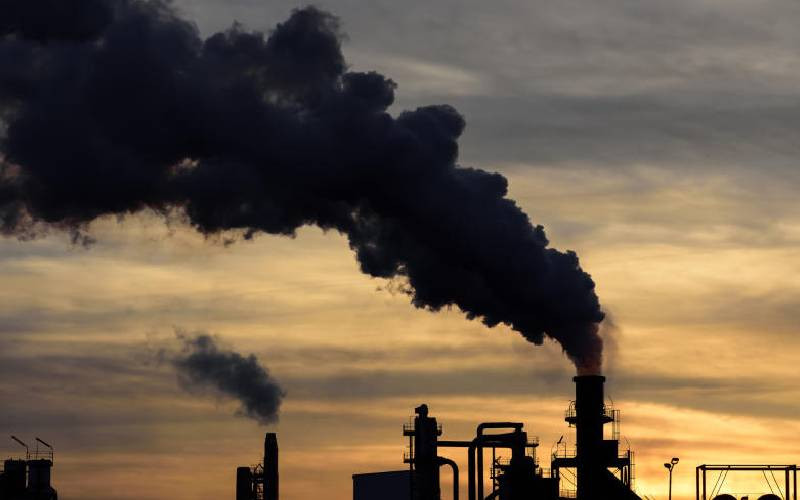
Recently, the world has witnessed extreme weather events, from the heavy rainfall in West Africa that has left a trail of death and destruction to heatwaves in Europe with temperature hitting 41 degrees due to climate change. While countries have made ambitious commitments to cut emissions under the Paris Agreement, the Global Methane Pledge, and other international frameworks, emissions from super pollutants continue to rise. According to the current unconditional pledges, the projected warming remains closer to 2.8 degrees Celsius, which validates the urgency of shift to mitigation focus.
As a continent that is inappropriately impacted by climate change even when it produces negligible emissions, Africa can benefit from the Super Pollutant Country Action Accelerator programme by getting help to cut methane, HFCs, and other short-lived climate pollutants faster, which can deliver quick gains for climate, air quality, health, agriculture, and economic resilience. It would help countries turn mitigation plans into implementation, with stronger institutions, better coordination, and more access to finance.
The programme focuses on the main sources of super pollutants, especially methane, HFCs, and black carbon. In Kenya, agriculture, energy, waste, and cooling/refrigeration sectors will be key because they are among the highest-emitting sources of methane globally and offer cost-effective reduction options. With rapid urbanisation and rising temperatures, demand for cooling systems across Africa is growing, it will support countries implementing the Kigali Amendment by accelerating the transition away from harmful HFCs toward energy-efficient cooling technologies.
Pollutants including methane, black carbon, hydrofluorocarbons (HFCs), nitrous oxide, and tropospheric ozone contribute up to 45 per cent of current global warming. Unlike carbon dioxide, many of these pollutants are short-lived, meaning rapid reductions can deliver immediate climate benefits while also improving air quality, food security, and public health. This makes super pollutant mitigation one of the clearest opportunities to achieve rapid climate gains while improving livelihoods and protecting vulnerable communities in Africa.
The beauty of this programme is that it aligns with Africa’s own priorities, like the Addis Ababa Declaration, adopted by African ministers in 2023, which explicitly called for climate finance that is scalable, predictable, and rooted in justice. It demands support for national adaptation and mitigation plans, and emphasises the importance of agriculture, clean cooking, waste management, green industry, and resilient infrastructure in all sectors deeply intertwined with methane.
While many African nations are signatories to the Global Methane Pledge and recipients of official development assistance, implementation has often been slowed by fragmented financing, weak institutional support, and limited technical capacity. The SPCAA directly addresses these barriers by supporting country-led programmes that integrate climate, health, and development priorities.
During COP30, the programme was launched marking an important shift in how climate implementation support is delivered. With initial funding of $25 million, the initiative will support countries through multi-year programming, embedded technical expertise, and coordinated policy implementation across multiple sectors. Unlike traditional short-term projects, the SPCAA is designed to strengthen long-term institutional capacity, streamline access to finance, and help governments implement national climate commitments more effectively.
In Africa, Nigeria and South Africa, among the 30 countries selected in the first cohort, have benefited from the programme. Nigeria has benefited by using the cooling agenda to tighten air-conditioner efficiency standards and link cooling policy to its NDC, which helps cut both electricity demand and refrigerant emissions which means lower grid pressure, lower consumer bills, and a stronger market for efficient appliances.
The programme builds conditions for future investments by strengthening governance systems, regulatory frameworks, and institutional capacity and will promote integrated climate action that aligns with Africa’s broader development agenda. This is particularly important for African countries seeking to attract climate finance and private-sector investment.
The Environmental Investigation Agency recommends the creation of a dedicated super pollutants fund, potentially through the UNDP Multi-Partner Trust Fund model, to pool recan countries access more predictable and coordinated financing for climate action
Africa has the opportunity to shape this agenda by demanding equitable financing, stronger implementation partnerships, and greater inclusion in initiatives such as the SPCAA and make Africa a global leader in fast, effective, and people-centered climate solutions.
Patricia Kombo, Communications Consultant
Center for Environmental Justice and Development, Kenya
Africau2019s Climate ChangeExtreme Weather EventsMethane EmissionsSuper Pollutant ReductionPrevious articleJudiciary must make its e-filing portal reliable to reduce delays
Next articleA growing population of digital natives is Africa’s silver bullet for the future
.
Latest Articles
Inside Kenya’s Ebola defences as seven Americans enter quarantine
Health & ScienceBy Eunice Omollo
2026-07-17 16:33:43
Report: Cancer strikes women earlier than men
Health & ScienceBy Stecy Atieno
2026-07-17 06:30:00
Premium
Kenya’s new health policies are abandoning infertile Wanjiku
Health OpinionBy Mogeni Richard Mogaka
2026-07-17 06:00:00
Uganda begins 42-day watch to be declared Ebola-free after discharging last patient
Health & ScienceBy Eunice Omollo
2026-07-16 21:18:44
Ebola spreading in DRC ‘faster than any previous outbreak’: WHO
Health & ScienceBy AFP
2026-07-16 17:38:22
