

For years, the water sector spoke of an approaching turning point. Awareness of scarcity, climate risk and sustainability grew, but the structural change needed for long‑term resilience lagged behind. Over the past decade, this has shifted. Water is no longer seen only as a utility or environmental issue, but as strategic infrastructure, closely linked to industrial continuity, economic growth and geopolitical stability. The evolution of Almar Water Solutions over this period reflects that wider change in the sector.
The end of water as a secondary utility
Ten years ago, the debate about water sat largely within environmental policy, sustainability plans and engineering circles. Scarcity was recognised as a rising risk, especially in the Middle East, North Africa and parts of Latin America. Even so, it was seen mainly as a future concern, not an immediate economic limit. Most industries treated water as a reliable utility input, not as a factor that could restrict growth.
Water is no longer simply an environmental issue; it is becoming a strategic economic constraint that shapes where capital can be deployed
That view has shifted sharply. Today, access to water often decides where industrial projects can proceed, where cities can expand and where capital can be deployed. In mining, energy, manufacturing and agriculture, water security has moved beyond ESG reporting or regulatory duty. It has become a core operating condition, closely linked to cost, resilience and continuity.
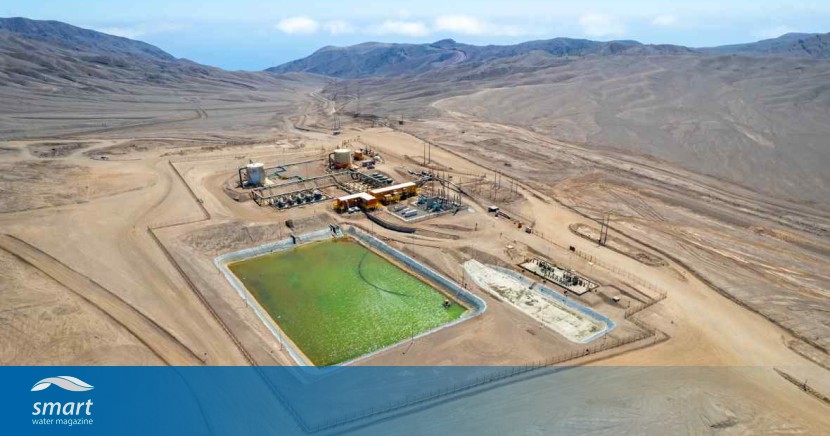
The change is most visible in regions where growth and scarcity now collide. In northern Chile, mining expansion depends increasingly on seawater pipelines and non‑traditionalale desalination and advanced treatment, run through long‑term, complex operating models. Similar pressures are appearing across parts of Asia, Africa and southern Europe as climate volatility tightens supply
Expectations of the water sector have also changed. For decades, the industry focused on delivery: designing plants, building assets and expanding capacity. Technology was often presented as the answer. Desalination, reuse and advanced treatment remain vital. But experience has shown that technology on its own cannot resolve deep‑seated water constraints.
Water infrastructure now demands long‑term, integrated approaches that link engineering, finance, operations and industrial planning within durable infrastructure systems.
Building a company around a long-term partnership
The real challenge lies not only in technology, but in how water systems are financed and managed over decades of operation
Almar Water Solutions was founded in 2016 within Abdul Latif Jameel’s Environmental Services platform, at a point when the water sector was beginning to change. Engineering and project delivery were central to its activity, but the company was shaped around a broader vision than that of a traditional EPC contractor or technology supplier. Its model combined development, financing, operations and asset management within long‑term structures designed to address rising complexity and resource constraints.
In its early years, Almar became closely associated with desalination and other non‑conventional water systems, particularly in regions where scarcity was already structural. Over time, both the market and the company evolved, moving beyond the development of large municipal water projects towards a broader range of services delivered through the creation of regional services platforms.
Today, Almar accumulates credentials across Europe, the Middle East, North Africa, Latin America and Asia. Its model brings together infrastructure development, project finance, long‑term operations, asset management and regional services platforms serving municipal and industrial sectors. Alongside desalination, its activities now cover industrial water treatment, reuse and conveyance, as well as adjacent environmental services linked to water‑intensive industries, including waste management, mineral recovery and emerging energy vectors such as hydrogen production.
This evolution reflects a wider shift in client demand. Increasingly, customers look for partners able not only to deliver assets, but to take long‑term responsibility for performance, financing and reliability across complex environmental systems.
In industries such as mining and energy, refor short‑term or transactional approaches. Operators no longer want isolated assets detached from operating realities. They require partners able to address production risk, environmental obligations, capital structure and continuity in parallel
This move from contractor relationships to long‑term partnerships sits at the centre of Almar’s repositioning and brand evolution.
Almar’s repositioning and brand evolution reflect the broader transformation taking place across the global water industry
The company’s recent rebranding is therefore more than a visual update. It reflects the maturity of a model that has shifted from project delivery toward long‑term environmental services partnerships. Almar increasingly presents itself not as a provider of individual technologies, but as a business able to convert complex resource constraints into reliable, financeable and resilient infrastructure systems. That distinction is becoming more relevant as execution, financial discipline, and operational accountability weigh as heavily as technical capability in the sector.
From individual projects to regional platforms
One of the most significant changes within the water sector over the past decade has been the growing importance of regional operational platforms and integrated infrastructure ecosystems. Historically, many companies in the industry operated through isolated projects with limited long-term integration between development, operation and local execution capabilities.
Increasingly, however, the market rewards companies capable of combining global expertise with strong regional presence, long-term asset management and operational flexibility.
Almar’s own evolution reflects this trend. Alongside flagship infrastructure developments, the company has progressively expanded through regional platforms such as Almar Latam and Almar Australia, as well as urban water service platforms in Indonesia and Chile. These platforms allow the company to combine local operational capabilities with global technical, financial and asset management expertise across both owned and third-party infrastructure.
It also reflects another important reality: water challenges are increasingly local in their operational complexity, even when driven by global trends such as climate change, industrialisation or population growth. Successful infrastructure models, therefore, require both global technical expertise and deep local operational understanding.
Industries increasingly require partners capable of guaranteeing long-term operational water resilience across complex systems
This integrated philosophy can be seen in some of the company’s most emblematic projects. In Chile, the Nueva Centinela seawater conveyance system, developed together with Transelec, supports one of the country’s largest mining expansions through a long-term BOOT model securing seawater supply for future copper production in one of the world’s most water-stressed regions. The project includes more than 140 kilometres of parallel pipelines connecting the Pacific coast with the Centinela mining complex in northern Chile.
Similarly, the Zuluf water treatment plant developed for Saudi Aramco illustrates the growing integration of advanced water infrastructure within long-term energy production systems under complex operational models. Structured under a 25-year BOOT contract, the project will provide 185,000 m³/day of treated water to support upstream operations at one of Saudi Arabia’s flagship energy developments.
These projects also demonstrate how financing and operational models are becoming as important as the physical infrastructure itself. Increasingly, the value of water projects lies not only in treatment capacity or engineering sophistication but also in their ability to provide long-term operational certainty under complex environmental, industrial, and regulatory conditions.
The sector’s next chapter
Long-term partnership models are reshaping the relationship between operators and water companies, moving beyond transactional contracting
The water sector is now entering a new phase, defined less by awareness and more by execution. For years, the industry succeeded in bringing water scarcity into the global debate. Governments, companies and financial institutions increasingly recognise water as one of the main challenges of the coming decades. But recognition is no longer enough. What matters now is the ability to deploy scalable infrastructure models that can secure a reliable water supply under increasingly complex economic and environmental conditions.
That shift will require substantial investment, stronger public‑private cooperation and infrastructure models able to operate effectively over decades, not just political or investment cycles. It will also require a different kind of water company.
The next generation of sector leaders is unlikely to be defined only by the number of plants they build or the technologies they deploy. They will be defined by their ability to combine engineering, finance, operations and long‑term partnership into resilient infrastructure systems that can support industries, cities and regions over time.
After ten years of growth and international expansion, this is increasingly the space Almar aims to occupy. Its new positioning reflects not only the evolution of one company, but the direction in which the sector itself is moving: from isolated projects to integrated systems, from transactional relationships to long‑term partnerships, and from water as a utility to water as strategic infrastructure.
