

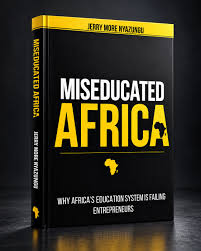
For over six decades, African nations have enthusiastically celebrated political independence, lowering colonial flags, adopting new national anthems, and drafting sovereign constitutions. Yet, beneath the ceremonial symbols of self-determination, the foundational architecture of the continent — from elementary schoolrooms and university lecture halls to corporate boardrooms and civil service bureaucracies — remains quietly anchored in colonial blueprints. The European powers that carved up the continent at the 1884–1885 Berlin Conference did not introduce formal, Western-style schooling to enlighten indigenous populations, foster scientific self-reliance, or seed the ground for future industrial powerhouses. On the contrary, colonial education was a deliberate, low-cost administrative instrument. It was an institutional assembly line engineered to produce a steady supply of compliant clerks, translators, storekeepers, and low-tier functionaries trained to follow orders, record transactions, and maintain the smooth operation of foreign extraction engines.
“Colonial education was never designed to unleash human creativity or build sovereign industries; it was engineered to produce a compliant class of administrative clerks trained to obey foreign authority without question.”
Today, this historical legacy manifests not as a historical artifact, but as a living, daily impediment to African development. It has fostered a deeply entrenched culture of workplace feudalism where authority goes unchallenged, where critical thinking is policed as insubordination, and where paper credentials are prized over applied technical competence. Furthermore, this educational misalignment directly reinforces a broken economic pyramid inherited from colonial labor frameworks — one that lavishly rewards administrative elites while consigning the vast majority of productive workers and retirees to systemic poverty. When an entry-level public servant or an elderly pensioner under Ghana’s Social Security and National Insurance Trust (SSNIT) receives a monthly payout that sits dramatically below basic living costs and minimum wage thresholds, it is not merely a budgetary failure; it is the logical outcome of a nation operating on an un-decolonized economic and educational blueprint. To break free from perpetual economic dependency, resource exploitation, and systemic underdevelopment, Africa must move beyond cosmetic curriculum tweaks. It must systematically dismantle colonial pedagogy and reconstruct an educational paradigm centered on technical mastery, critical inquiry, economic alignment, and sovereign industrial self-reliance.
The Architecture of Colonial Instruction: Designing the Compliant Subject
To understand why modern African enterprises, government ministries, and research institutions frequently struggle with innovation and agility, one must first examine the specific pedigree of the continent’s schooling system. When British, French, Portuguese, and Belgian colonial authorities established school systems in Sub-Saharan Africa during the late 19th and early 20th centuries, their objectives were strictly pragmatic and resource-conscious. Direct rule by foreign administrators was expensive and numerically unsustainable across vast territories. The solution was the creation of a thin layer of educated native intermediaries.
This schooling model relied heavily on intense rote memorization, strict physical and psychological discipline, and total deference to institutional authority. Curriculum content was stripped of local context, indigenous technology, and practical economic applications. African history was erased or framed as a Dark Age preceding European enlightenment; local languages were banned from school grounds, often under threat of corporal punishment; and traditional agricultural, metallurgical, and architectural knowledge was dismissed as primitive.
Instead, students were drilled in foreign geography, colonial languages, European history, and basic arithmetic. The primary metric of academic success became the student’s ability to faithfully replicate European paradigms and demonstrate absolute obedience to the instructor. The ultimate reward for academic excellence was entry into a small, privileged class of white-collar civil servants — a group that enjoyed social prestige, clean attire, and an exemption from manual labor, yet possessed zero authority to alter the overarching system they served.
The Modern Workplace Manifestation: The “Yes Sir / Yes Madam” Trap
Decades after the formal departure of colonial governors, the psychological mechanics of this pedagogical model remain fully intact within African workplaces. The transition from the colonial classroom to the modern corporate and public sector hierarchy has been seamless. The authority once held by the colonial district commissioner or mission school principal has simply been transferred to the modern Managing Director, Chief Executive Officer, University Vice-Chancellor, or Chief Director of a government ministry.
- The Unchallenged Boss: In many African corporate offices, academic faculties, and civil service institutions, management operates not through collaborative leadership or open intellectual exchange, but through autocratic decree. The workplace dynamic is characterized by a pervasive “Yes Sir / Yes Madam” mentality. Subordinates are conditioned from early childhood to view superiors as infallible authorities rather than colleagues engaged in a shared enterprise.
- The Policing of Initiative: In this environment, pointing out an operational inefficiency, questioning a flawed strategy, or proposing a novel alternative is rarely met with appreciation. Instead, it is routinely interpreted as personal disrespect, arrogance, or direct insubordination. Employees quickly learn that self-preservation requires passive compliance rather than proactive problem-solving. Initiative is effectively punished, while silent acquiescence is rewarded with career stability and promotions.
- The Tyranny of Paper Credentials: Because colonial education prioritized formal certification as the sole ticket to social mobility, modern African societies have developed an unhealthy obsession with academic titles, certificates, and diplomas — a phenomenon social scientists refer to as “Credentialism.” Millions of young Africans pursue theoretical degrees in fields with negligible market demand simply to obtain a paper certificate. Meanwhile, practical capability, technical skill, and creative output are secondary considerations. An individual possessing a master’s degree in administrative management is routinely accorded higher social and institutional standing than a master machinist, a skilled welder, or an agricultural innovator whose work directly generates productive capacity.
“In many African corporate and public institutions, pointing out an operational flaw or offering a novel solution is not viewed as problem-solving; it is policed as personal insubordination against an unchallenged boss.”
Comparative Global Analysis: The Asian Pivot Away from Administrative Rote
The economic consequences of maintaining a pedagogy of subservience become glaringly obvious when Sub-Saharan Africa’s development trajectory is contrasted with nations that consciously overhauled their educational systems in the mid-20th century.
South Korea’s Educational Re-engineering—In the 1950s, following the devastation of the Korean War, South Korea possessed an agrarian economy with a per capita GDP comparable to, or lower than, that of newly independent Ghana or Nigeria. However, South Korean policymakers recognized that natural resources were absent and that administrative education would not build a modern state. Under consecutive national development plans, South Korea radically transformed its educational paradigm. The state deliberately dismantled traditional, elite-oriented academic models and channeled massive public investments into Science, Technology, Engineering, and Mathematics (STEM) alongside rigorous Technical and Vocational Education and Training (TVET). Education was directly tied to national industrial planning: universities were mandated to partner with industrial conglomerates (chaebols, like Samsung, Hyundai, and LG) to solve practical engineering challenges. Crucially, South Korean workplace culture, while respecting seniority, heavily prioritized meritocratic technical competence and rapid adaptation over bureaucratic deference. Within three decades, South Korea transitioned from a recipient of foreign aid to a high-tech manufacturing giant dominating global electronics, shipbuilding, and automotive industries.
Vietnam’s Vocational Focus—Similarly, post-1980s Vietnam recognized that economic sovereignty required a fundamental pivot from ideological and administrative schooling to technical mastery. Despite enduring decades of war and economic isolation, Vietnam restructured its national basic education to emphasize foundational mathematics, applied science, and vocational technical skills from an early age. By aligning its workforce capabilities with global manufacturing needs and encouraging practical problem-solving in the classroom, Vietnam turned itself into a primary destination for high-tech global supply chains, dramatically reducing poverty and building a resilient, export-oriented industrial base that far outpaces many resource-rich African nations.
The Sub-Saharan African Contrast
In contrast, Sub-Saharan Africa spends approximately $50 billion annually on education, representing one of the highest percentages of national GDP expenditure globally. Yet, the returns on this investment remain tragically low. According to data from UNESCO and the African Development Bank (AfDB):
Fewer than 20% of tertiary students in Sub-Saharan Africa pursue studies in STEM fields, with an even smaller fraction enrolled in dedicated technical and vocational streams. Over 70% of university graduates are produced in the humanities, social sciences, business administration, and law — fields that, while valuable, directly replicate the administrative focus of the colonial era without generating the technical capacity required to process raw materials, build infrastructure, or develop sovereign technologies. The result is a devastating paradox: high youth unemployment coexisting with a severe shortage of skilled technicians, engineers, agronomists, and digital architects across the continent.
SECTION 2: Wage Inequality, Pension Distress, and the Cost of Economic Blindness
The Feudal Wage Pyramid: Inheriting Colonial Labor Distortions
The un-decolonized educational framework does not exist in a vacuum; it directly fuels and legitimizes an exploitative economic and compensation structure inherited directly from colonial administration. During the colonial period, compensation was explicitly structured around racial and administrative lines: European officers received exorbitant salaries, lavish housing allowances, fully funded healthcare, and generous pensions designed to guarantee a luxurious lifestyle, while African laborers, teachers, and minor clerks received bare subsistence wages.
When independence was achieved, the incoming political and administrative elites did not dismantle this predatory salary structure; they inherited it. They moved into the residential estates previously reserved for colonial governors, maintained the same system of state-funded allowances, and preserved the vast compensation gap between the top tier of government and the rest of the working population.
Today, this colonial legacy manifests in an extreme economic pyramid across much of Sub-Saharan Africa:
- Elite Compensation: Political office holders, heads of state enterprises, Supreme Court justices, and top-tier bureaucrats command compensation packages that rival or exceed those in developed Western nations when adjusted for purchasing power parity. These packages often include state-provided housing, free utilities, luxury vehicles, security details, and diplomatic travel allowances.
- Worker Exploitation: Meanwhile, the essential workforce — teachers who educate the next generation, nurses who staff under-resourced hospitals, agricultural extension officers who secure the food supply, and factory workers — are paid wages that barely cover basic nutritional and housing needs. This distortion reinforces the colonial lesson: productivity and technical contribution are penalized, while proximity to administrative and political power is lavishly rewarded.
“Independence did not destroy the colonial salary pyramid; it merely replaced European officers with African elites who preserved the massive compensation gap between administrative rulers and productive workers.”
The Pension Crisis: A Case Study in Institutional Neglect
There is no clearer manifestation of this structural economic blindness than the plight of retirees under formal social security systems across the continent. Having dedicated their active working lives to national development within a low-wage economy, retired workers are routinely pushed into severe poverty by social safety net frameworks that operate completely detached from economic realities on the ground.
The Ghanaian SSNIT Disconnect
A stark, empirical illustration of this institutional failure exists in Ghana’s current pension dynamics, managed by the Social Security and National Insurance Trust (SSNIT).
- The Minimum Wage Baseline: The national daily minimum wage yields a monthly baseline income floor of approximately GH₵653. This figure represents the absolute legal floor calculated by organized labor, employers, and the state as necessary for basic survival.
- The Pension Floor: Following statutory indexation adjustments by SSNIT, the minimum monthly pension payout for thousands of retired workers stands at GH₵409.56.
- The Reality on the Ground: A veteran worker who paid monthly contributions to the national social security scheme throughout 30 or 40 years of active service receives a monthly pension floor that is nearly 37% lower than the mandatory minimum wage guaranteed to an un-skilled, entry-level worker.
In an economic environment marked by food inflation, escalating utility tariffs, and high out-of-pocket costs for essential medications, a monthly payout of GH₵409.56 (equivalent to roughly $25–$28 USD) is not a pension. It is a sentence to structural pauperization. While active civil servants and political appointees regularly negotiate salary adjustments, allowances, and per diems to cushion themselves against economic shocks, retirees on fixed pension floors are left to absorb the full weight of currency depreciation and inflation. The system effectively treats retired citizens as discarded economic surplus once their active labor can no longer be extracted.
International Comparative Matrix: Pension Models and Safety Net Performance
The inadequacy of the social protection framework in many Sub-Saharan African nations is not an inevitable consequence of low national wealth. It is a choice of policy design and institutional priority. A comparative examination of social protection frameworks across developing and emerging economies reveals vastly different approaches to safeguarding vulnerable citizens.
- Chile: Mixed Contributory + Solidary Floor. Legislative mandate ensuring that no retiree’s income falls below the Pensión Básica Universal (PBU), dynamically indexed to the consumer price index. Prevents market-driven retirement poverty by using general tax revenues to top up low-earner pensions to a humanely dignified survival threshold.
- Namibia: Universal Social Assistance — Non-contributory universal basic grant for elderly citizens, indexed-linked to maintain purchasing power against basic goods. Pays about $88 equivalent monthly. Achieves near-universal coverage (over 90% of eligible seniors), acting as a primary driver of rural household poverty reduction.
- Botswana: Universal Non-Contributory Grant (Tandabala) — Universal Old-Age Pension paid to all citizens 65+. Funded directly from state revenues (diamond royalty dividends). Provides the equivalent of $106 monthly. Guarantees a universal floor that covers basic nutritional needs without requiring prior formal sector payroll contribution.
- Uruguay: Integrated Social Protection System — Strict statutory linkage between minimum pension floors and the national minimum wage (Salario Minimo Nacional). Maintains the lowest elder-poverty rate in Latin America (<2%), ensuring retirees automatically share in broader national wage growth and economic adjustments.
- Ghana: Non-Contributory Social Insurance (CAP30) for a select few and a Contributory Social Insurance (SSNIT). SSNIT minimum monthly pension floor set at GH₵410 (about $25 a month). Indexation based on scheme earnings rather purchasing power and inflation. Minimum payout sits 37% below national minimum wage of GH₵653. Forces low-income retirees into extreme poverty and family dependence.Forces low-income retirees into extreme poverty and family dependence. Many pensioners resort to begging, and many die from stress-related and poor nutritional conditions
Lessons from the Comparative Data
- Resource Distribution Choice: Botswana and Namibia demonstrate that African nations can construct functional, dignity-preserving social safety nets when national resource rents (such as diamonds, minerals, and oil) are strategically leveraged for universal social protection rather than consumed by administrative elites.
- Indexation and Law: Latin American models like Uruguay and Chile prove that pension collapse is preventable when national legislation strictly prohibits social security payouts from dropping below basic living wage floors or real inflation indices.
- The Cost of Inaction: When an educational and economic system fails to teach citizens how wealth is generated, retained, and distributed, citizens accept broken institutions as normal. The result is a perpetual cycle where the elderly starve, the young flee, and the state continues to function as an extraction machine for a privileged few.
[NOTE: To be finalized in Part 2:The Technical Paradox, Institutional Hypocrisy, and the Blueprint for Sovereignty]

