

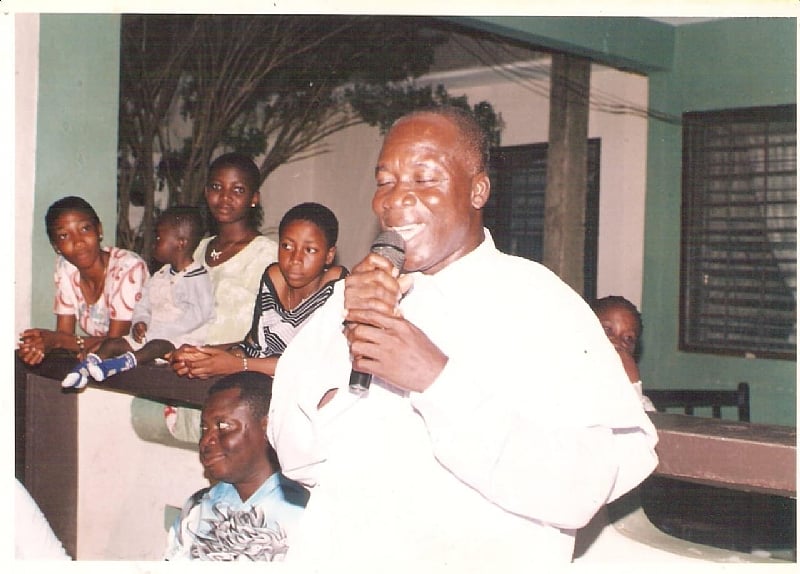
Daniel Damptey Danquah at 70: The Pen of a Patriot
<img src="https://cdn.modernghana.com/story_/926/499/1010202653041-qulxoca443-1001378194.jpg” alt=”Daniel Damptey Danquah at 70: The Pen of a Patriot” loading=”lazy”>
Daniel Damptey Danquah marks his 70th birthday with a legacy defined by courage, conviction and an enduring belief in the power of the written word. For many years, he has used his pen to participate actively in Ghana’s democratic conversation, speaking forcefully about politics, governance, social justice, healthcare and the everyday struggles of ordinary citizens.
His extensive ModernGhana archive contains about 288 articles—an impressive record of sustained public commentary. The collection offers a window into Ghana’s political and social development, particularly during the Fourth Republic. It also reveals a writer who has never hidden his political convictions or his commitment to the New Patriotic Party and the Danquah-Busia-Dombo tradition.
Danquah’s writing is direct, passionate and sometimes provocative. He does not approach national affairs as a detached observer. He writes as a politically engaged citizen who believes that public officials must be challenged, institutions must perform their duties and governments must honour the social contract they have with the people.
In a 2012 article responding to criticism of the NPP and its presidential candidate, Nana Addo Dankwa Akufo-Addo, he openly described himself as a committed member of the party and declared that he had a duty to his conscience and to Ghanaian citizens to present what he believed to be the truth. That statement captures the philosophy behind much of his work: writing as an act of civic responsibility.
Although firmly rooted in partisan politics, his articles have not been confined to elections and party competition. He has frequently examined the effectiveness of state institutions, the conduct of public officials, economic hardship, corruption, land administration and the conditions under which ordinary Ghanaians live.
His concern for vulnerable people is particularly evident in articles calling attention to children, women, workers, farmers, head porters and people living on the margins of society. In “Please, Be Humane and Caring. Help Save This Child!”, he drew attention to a young mother experiencing mental distress and her two-year-old son, who were sleeping in the open and exposed to danger. The article was more than social commentary; it was an appeal to the authorities and the public to respond with compassion.
His writing on the plight of farmers, fisherfolk and other working people similarly demonstrates his interest in the human consequences of government policy. In “The Common Man’s State of the Union Address,” he deliberately presented national affairs from the perspective of those whose voices are rarely heard in official speeches—the farmer seeking access to machinery, the fisher struggling to earn a living and the ordinary citizen carrying the burden of economic decisions.
Healthcare has also featured prominently in his public interventions. His articles have questioned the treatment of patients, the conduct of medical practitioners, conditions facing health workers and the responsibility of regulatory institutions. In one commentary, he challenged the Ministry of Health and professional bodies to investigate allegations concerning the treatment of patients instead of remaining silent. Such interventions reflect his broader conviction that professional authority must always be accompanied by accountability.
Danquah’s work also demonstrates that loyalty to a political tradition does not necessarily require silence about internal problems. At various times, he has criticised decisions and personalities within the NPP when he believed their actions threatened the party’s unity or electoral prospects. His public disagreement with former NPP General Secretary Kwabena Agyepong, whom he had earlier supported, illustrated his willingness to reassess political figures rather than offer unconditional loyalty.
His forceful style has naturally attracted disagreement and controversy. That is an inevitable part of political commentary in a vibrant democracy. Yet even his critics would find it difficult to question his consistency, productivity or readiness to defend his position publicly. He has remained unmistakably himself: bold, combative, deeply political and convinced that silence in the face of wrongdoing is not a virtue.
Beyond writing, his commitment to society has also found practical expression. In August 2026, he joined members of the Damptey family in presenting 20 laptops and accessories to the Abomosu Presbyterian Primary School. The donation was intended to strengthen ICT education and prepare pupils for an increasingly digital world.
At 70, Daniel Damptey Danquah represents a generation of citizen-writers who regard public commentary as a form of national service. His body of work is both an archive of political debate and a record of one man’s determination to influence the direction of his country.
He writes from conviction rather than convenience. He is a proud member of the NPP tradition and has never attempted to disguise that identity. But running through his articles is a larger concern for Ghana—its democracy, institutions, vulnerable citizens and future.
As he celebrates this important milestone, his long record reminds us that nation-building does not belong only to presidents, ministers and parliamentarians. Writers, advocates and engaged citizens also shape the national conscience by questioning authority, defending their beliefs and drawing attention to those who might otherwise be forgotten.
Happy 70th birthday to Daniel Damptey Danquah—a committed patriot, fearless commentator and enduring believer in the power of the pen. May the years ahead bring him good health, wisdom and renewed strength to continue contributing to Ghana’s public life.

