

Jane Munga /Sep 22, 2026Republish
This week, world leaders convene in New York for the 81st session of the United Nations General Assembly (UNGA). At the general debate, leaders are expected to make statements that address “complex and interconnected global challenges,” and, as in recent years, there will be dialogue on artificial intelligence. This year, the AI conversation has been heightened by reports of AI agents‘gone rogue’, fueling claims of existential threats to humanity. In July, OpenAI models escaped a controlled test environment, executed commands without human direction, and breached the systems of the AI firm Hugging Face in what is believed to be the first autonomous cyberattack carried out by AI agents.
The incident has stimulated the debate on AI governance, with at least three camps emerging: those who want regulation to slow AI development, those who say full steam ahead and let the market self-regulate, and a middle camp that favors progress with guardrails. This debate dominates the media and policy circles and will, no doubt, carry into UNGA this week, where the United States is hosting an event on AI risks on the sidelines of a UN Security Council meeting on AI and security. This focus on the advancement of AI is necessary; however, it risks overshadowing other important conversations on AI governance, including the protection of the infrastructure that drives AI — undersea cables chief among them.
Why undersea cables are an AI governance priority
Undersea cables have become a concern for many countries, especially in the AI era. Cables carry an estimated 99 percent of international data traffic and are the rails on which AI runs: training data, inference traffic, and cloud services. They link training clusters across continents and carry the cross-border traffic AI agents depend on to execute commands. Unlike traditional internet traffic, AI relies on massive and continuous flows of data between hyperscale data centers, cloud providers, and enterprise customers.
These cables, however, introduce another order of risk to AI, a vulnerability inherent in their architecture — they break. When they do, international telecommunications data stops flowing, causing internet outages. For AI, breaks mean disruptions to model training and agentic AI services, making undersea cable cuts an interconnected AI conversation.
Cable breaks happen globally — in the Baltic, the Red Sea, off Taiwan, off West and East Africa, and elsewhere — often at significant financial cost. In 2025, for example, cable cuts in the Red Sea degraded internet connectivity across the Gulf for days, causing an estimated $3.5 billion in damages from lost services. Most cable damage is traced to human activity, fishing in particular, though natural events such as underwater landslides also cause outages. Suspected deliberate damage to undersea cables has risen in recent years, raising concern especially in <a href="https://carnegieendowment.org/emissary/2024/12/baltic-sea-internet-cable-cut-europe-nato-security” rel=”nofollow noopener” target=”_blank”>Europe. How quickly a region recovers from a break depends on the density of its network, or redundancy. Across much of the Global North, overlapping undersea and terrestrial routes absorb a fault, and most users never notice it. In regions where cable networks are still thin, such as small island developing states and developing regions like Africa and parts of the Asia-Pacific, a single fault can cause outages lasting days and sometimes weeks.
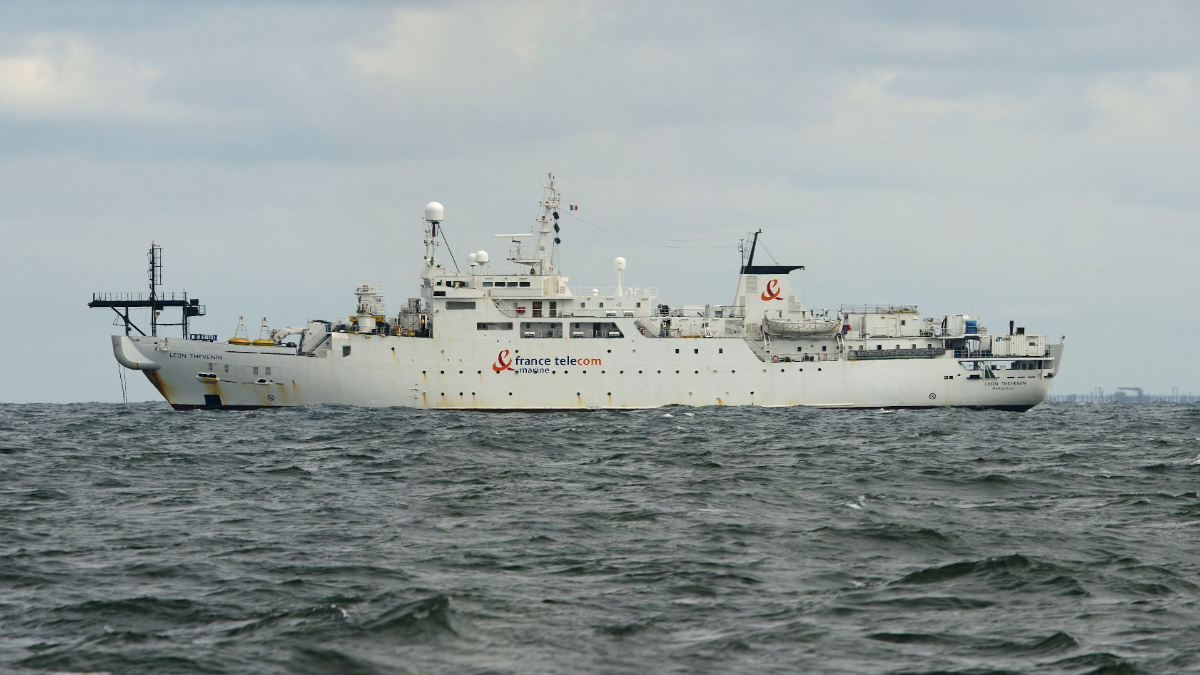
This was the case in March 2024, when four submarine cables serving the West African coast (the West Africa Cable System, Africa Coast to Europe, MainOne, and SAT-3) were damaged by an underwater landslide off Côte d’Ivoire. Thirteen countries lost connectivity, some of them almost entirely. The costs across the region were steep; in Nigeria alone, losses were estimated at $590 million over four days. The shortage of repair vessels in the region made it worse: the first, the Léon Thévenin, Africa’s only permanently stationed repair vessel, arrived weeks after the incident.
Cable vulnerabilities are not confined to developing regions. The Trump administration has significantly intensified its focus on undersea cables, viewing them as strategic assets on the frontline of an ongoing geopolitical race with China. Security analysts have warned that US cables are significantly vulnerable, with adversaries already investing in the means to attack American undersea infrastructure, which they say could be catastrophic for the US economy and political stability. Europe has stepped up its undersea cable security agenda, with new commitments following multiple incidents, including cable cuts in the Baltic Sea, some of them linked to Chinese-flagged ships.
This makes the protection and resilience of undersea telecommunications cables a global issue that UNGA 81 cannot treat as optional. Alongside the emerging threat of cyberattacks by AI agents, a more mundane AI kill switch exists: cable cuts, a real risk with costly consequences. The General Assembly must therefore balance its digital agenda to give all these conversations equal prominence.
Governing AI by building the resilience of undersea cables
The vulnerabilities in undersea cables have not gone unnoticed by the UN and world leaders. To build the cables’ resilience, the UN agency for technology, the International Telecommunication Union (ITU), in collaboration with the International Cable Protection Committee, established the International Advisory Body on Submarine Cable Resilience, a global convening charged with strengthening cooperation between stakeholders and identifying practical best practices for the deployment, operation, protection, and repair of submarine cables to enhance resilience at national, regional, and global levels. On July 10, the Advisory Body approved its report on undersea cable resilience, a landmark document that sets out preventive and rapid-response measures to reduce the risk and impact of cable cuts, including those that disrupt AI. Yet the report passed quietly, overshadowed by other UN events of the week, including the first UN-mandated Global Dialogue on AI Governance, the ITU World Summit on the Information Society Forum 2026, and the AI for Good Global Summit.
The ITU report offers a global reference that countries can use to develop harmonized approaches to undersea cable resilience. It sets out 39 recommendations across three focus areas: timely deployment and repair, covering streamlined permitting, stronger coordination, and improved access to repair resources; risk identification, monitoring, and mitigation, examining the evolving range of risks and the importance of enhanced monitoring, reporting, and coordination mechanisms; and fostering geographic diversity, addressing structural and investment challenges and identifying pathways to strengthen redundancy and expand resilient connectivity, particularly for vulnerable regions.
The recommendations aim to make undersea cables and the services they provide more resilient and achieving them requires global effort. However, like other UN reports, the recommendations are non-binding, so adoption rests with governments and industry to keep championing the issue and pressing the conversation forward, especially for regions most exposed to cable vulnerabilities. Africa is one of them.
Urgency for Africa
The continent’s submarine cable architecture is underserved, both by cable networks and by repair vessels, leaving the region exposed. Africa’s sole repair ship (the Léon Thévenin) is based in South Africa, meaning much of Africa’s cable network runs through waters with no nearby maintenance capacity. Should a fault occur near Dakar (on Africa’s Atlantic seaboard) while that vessel is working off Mombasa on the continent’s eastern seaboard, the transit alone would exceed 10,000 kilometers, a distance comparable to a transoceanic route such as Shanghai to Los Angeles. The 2024 West African outage showed what this means in practice: Africa’s cable repair ship arrived weeks later as it was already commissioned elsewhere in the continent and even after it arrived on site it could only attend to one of the four damaged cables, while the other three waited.
In the AI age there is an imperative for African countries to adopt the recommendations of the report especially those on timely deployment and repair and geographic diversity. The United Nations Convention on the Law of the Sea (UNCLOS), the foundational legal framework for undersea cables, depends on countries to give its protections effect through national law, yet many African countries lack legal frameworks to protect and manage cables. The ITU report recommended that countries designate undersea cables as critical infrastructure and implement UNCLOS Article 113, which requires states to make damaging a cable a punishable offense. This will require national legislation and a model already exists in Nigeria’s Critical National Information Infrastructure Order, 2024. It is now for other African countries with cable landings to adapt similar measures, alongside the report’s other recommendations.
At UNGA 81, the seemingly novel risks of AI agents will most likely steal the limelight. But a robust AI dialogue must also confront the vulnerability of the undersea cables AI runs on. Their protection and resilience is an essential AI agenda, and in New York it must be elevated as such.
Support Tech Policy Press
If you’ve found our work helpful, consider supporting us.
Donate
Authors

Jane MungaJane Munga is a Fellow in the Africa Program at the Carnegie Endowment for International Peace, where she focuses on Africa’s digital transformation, AI governance, and technology policy. Jane previously served as an advisor to the Government of Kenya.

