

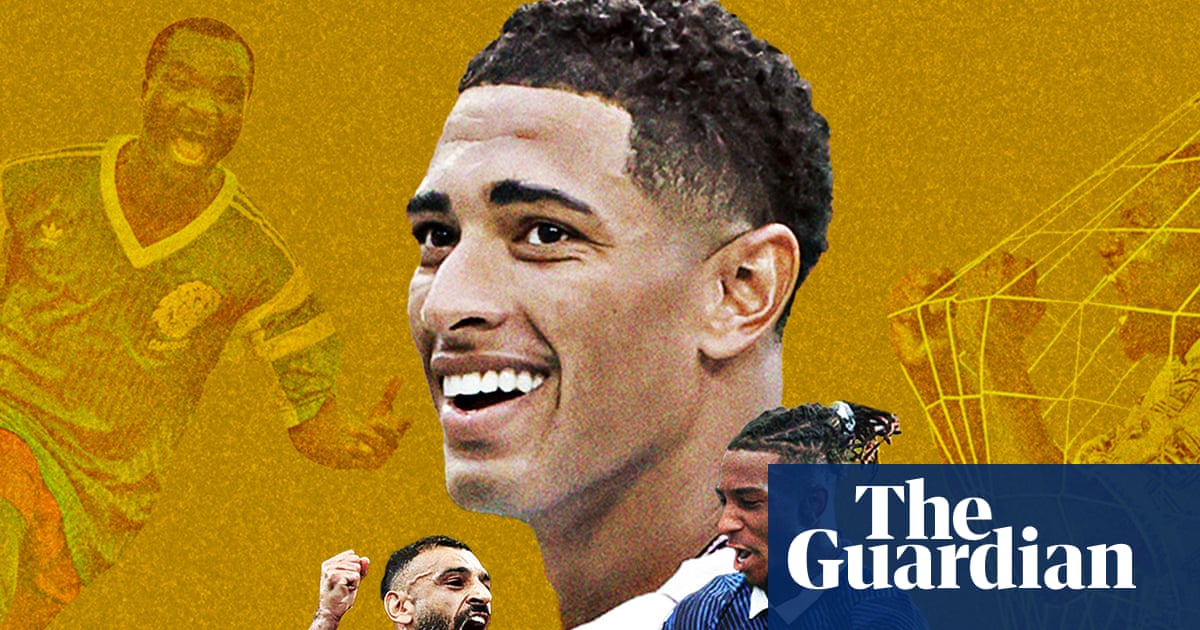
The World Cup used to let us micro-dose politics. Now it is engulfed by it
Whether it is our ‘identity maths’, naked nostalgia or diaspora experience. All seem scarred by the political contexts bearing down on this tournament
-
Don’t already get The Long Wave in your inbox? Sign up here
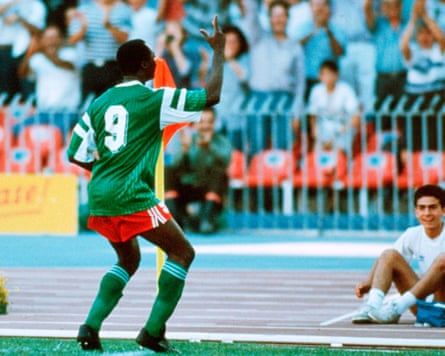
I have measured my life in World Cups. The first blurry moments of childhood memory, the passing into adolescence, starting university. Each tournament marks a season of life. Each one is also associated with potent, formative emotional events: Roger Milla dancing around the corner flag when Cameroon became the first African team to reach the quarter-finals in 1990; Roberto Baggio’s devastating goal that knocked out a Nigeria that had been on a thriller streak in 1994; Zinedine Zidane’s tragically ignominious head-butt in 2006 during his last-ever match. But this World Cup has felt different from the start.
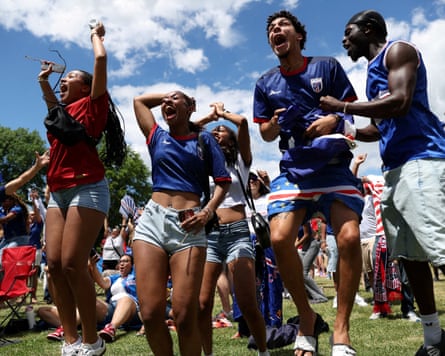
Watching the World Cup as a Black diaspora viewer is a broadly unhinged exercise that still adheres to an elegant logic. You might describe the process of deciding your allegiance as a sort of “identity maths”. You support the African teams until they get knocked out (and thanks to the extended format, this time around we had so many more heroic teams such as Cape Verde and the DRC). Then you move on to a combination of Black diaspora teams from elsewhere, then adopted homelands, and then just adopted teams because you like their vibe or their country’s politics. The last category is really tenuous and involves a lot of projection. Spain is a good example of this, a country that has a sort of unproblematic European outlier aura that imbues it with more political proximity to the post-colonial experience than, say, Norway. Then there’s France, which, despite being an ex-colonial power, has a majority-Black team and therefore trumps Spain. I do not make the rules of identity maths.
This chopping and changing of our loyalties seems to echo a wider state of diasporic orphanhood, and the more that players of African descent come to play for big footballing nations, the more these loyalties become complicated by what individual players come to represent. They, often unwittingly, become avatars of our political frustrations and aspirations, rather than just players we feel we have some affinity with.
Veering between anger and celebration
This World Cup, more than all the others I recall vividly, has the weight of so many political contexts bearing down on it. There is anger at the United States under Donald Trump – a host country whose president has desecrated the tournament by interfering and securing a reversal of a red card for a US player. Anger at Fifa, an organisation that is increasingly seen as irredeemably and nakedly corrupt. And underlying it all, anger at anti-immigration discourse and policy across the United States and parts of Europe, which has formed the backdrop for this tournament.
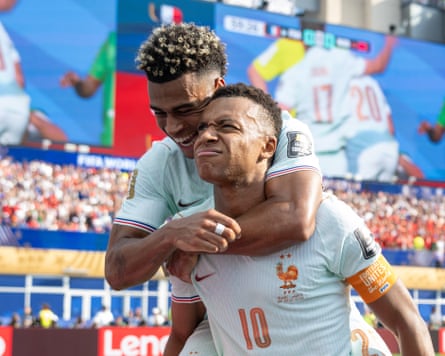
The result is that the identity maths has become notably less frivolous and fun, taking on more political gravity. Figures like Frenchman, Ousmane Dembélé, and his hijabi (low-key niqabi) wife, Rima Edbouche, become not just a totem of multicultural society, but a rebuke of Islamophobia and racism. Kylian Mbappé can’t just play, he has to fend off wildly racist attacks from a Paraguayan senator. The England team is majority Black, representing a country in one of its darkest eras of anti-immigration and far-right politics. The rightwing Reform MP Robert Jenrick posts “Come on England” in one breath, and announces that he wants immigration to be “less than zero” in another. As if these children of immigrants are different to those he maligns – a sort of permissible minority, supported temporarily, for accolade purposes. Black footballers carry the burden of achievement while constantly being subjected to personal abuse and political erasure. And so being a Black diaspora football lover in these contexts is to constantly be veering between anger and concern, happiness and disgruntlement, celebration and resentment. Come on England, yes. But also, how dare you?
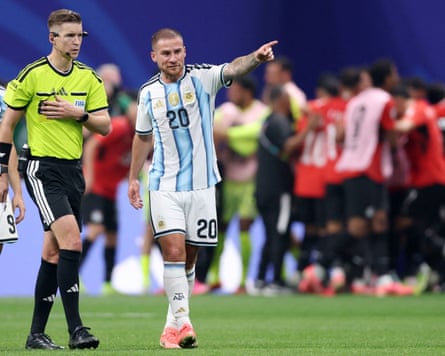
This tournament comes at a unique global moment in which we are suspended in a sort of interregnum of trauma. We are post-pandemic, post-Gaza, post-Black Lives Matter backlash, post-death of the rules-based order. And, of course, post-enshittification of X under Elon Musk. Together, these forces intersect in a swirl of digital and real life conspiracy and intrigue. These dynamics finally curdled last week, when Egypt’s goal against Argentina was disallowed, setting up Argentina’s eventual last-minute victory. It was all a fix, many said, with all sorts of lurid allegations about Fifa backing Argentina and Egypt being punished for its coach’s post-Gaza remarks. I get it. So much trust has rightly haemorrhaged from sporting institutions and political establishments – can you blame people for thinking something sinister was afoot when the actual president of the United States admits he had a word about a red card? When Trump has been awarded a risible Fifa Peace prize?
I’m not being a football purist. The World Cup is fundamentally about, and in fact structured around, political tribes and the nation state. It is the very magic of the tournament that each team becomes a projection of a country. For better or for worse, states are how we are organised and socialised. But the beauty of it all was in the ability to micro-dose the politics, and not become engulfed by it.
skip past newsletter promotion
I love it! I hate it!
All I want is to watch football as I always have: on a laptop, with my back turned to it because I can’t handle the stress. I want to feel sick because the team that I chose only this morning, but who I will now die for, is losing. I want to gulp down tears along with the weeping players because life is beautiful and tragic, and not because a dodgy official or politician decided their fates. I don’t want a seminar after every match. I don’t want a Cup where every game becomes a metaphor for colonialism or the state of geopolitics or where every refereeing decision is scrutinised and overruled and dispatched as motivated. I don’t want our diaspora chemistries and playful underdog solidarities to harden into paranoia and disgust. I hate it!
But still, as the tournament draws to a close, I find myself in awe of the way that the World Cup – despite its inexorable technical optimisations, commercialisations and organisational cynicism – remains stubbornly porous to whatever we are collectively feeling and going through. Because, ultimately, the World Cup is the only event that sees so many of us turn up, bringing our fears, frustrations, hopes and aspirations with us. It is the biggest and also most finely tuned compass for where we are, marking our coordinates, every four years. And this is where we are. I shall measure my life in this one, too.
To receive the complete version of The Long Wave in your inbox every Wednesday,please subscribe here.
Tap in
What have been your highs and lows of this World Cup? Tell us by replying to this, or emailing us at thelongwave@theguardian.com and we may include your response in a future issue.
Explore more on these topicsShare
Reuse this content
