

Energy poverty can feel abstract until you picture an ordinary evening. The sun goes down. A student leans closer to a dim candle to finish homework. A small shop owner stops trading early because the lights are out. A clinic nurse checks a phone battery and hopes it lasts through the night. These are not rare moments. The truth is: about 600 million people lack access to electricity, the vast majority in sub-Saharan Africa.
Energy access is often described as infrastructure, but it is really about life options. It shapes whether people can learn, earn, and stay healthy. It also shapes whether countries can grow in ways that are stable and affordable. Below are five reasons energy poverty cannot be ignored:
1 Energy Poverty Limits Jobs and Keeps Local Businesses Small
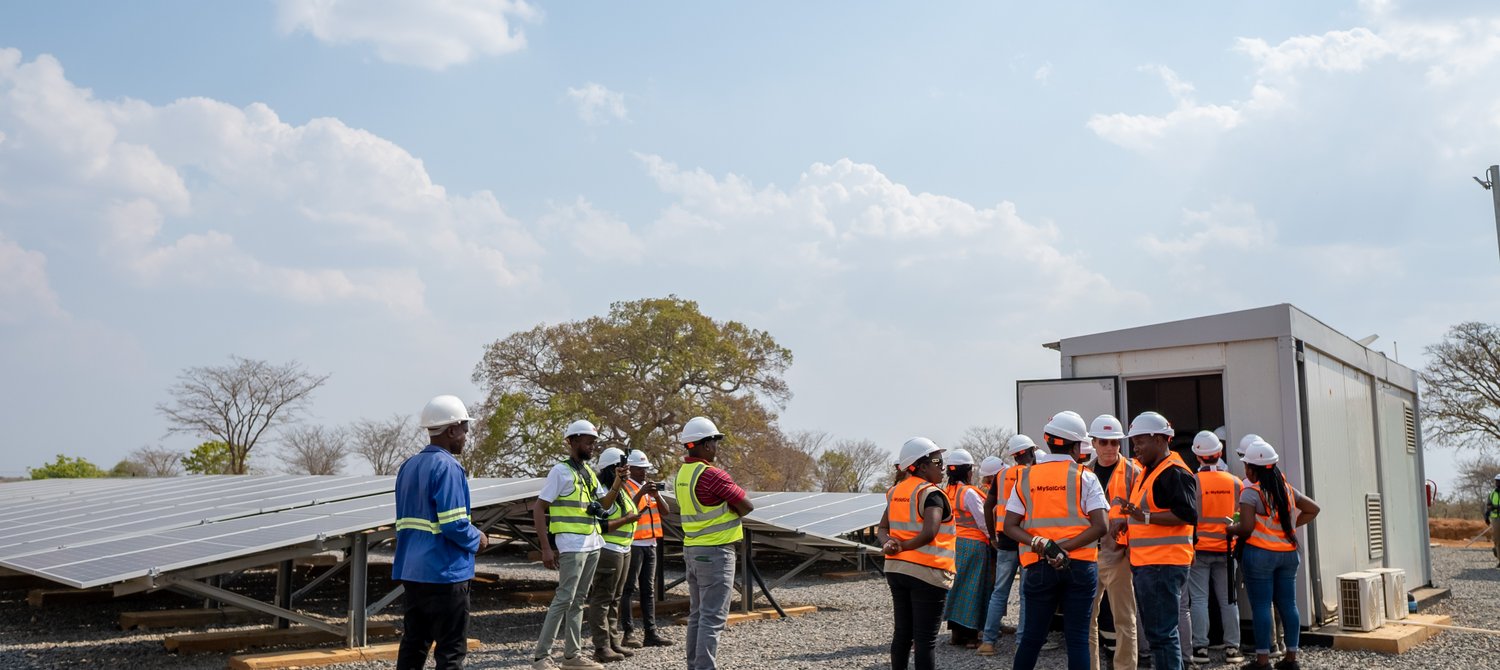
Picture a tailor who can sew only when there is daylight, or a barber who turns customers away when the power fails. Across African economies, unreliable electricity is consistently cited as one of the biggest constraints on small business productivity and job creation. Extending the national grid is often the cheapest way to connect dense populations, but in remote and rural areas it can take longer and cost far more per household. Mini-grids and stand-alone solar systems can often reach remote communities faster and at lower upfront cost than traditional grid-extension — because they avoid the high expenses of long transmission lines and centralized infrastructure. For example, mini-grids powered by solar and batteries can deliver electricity for far less per household than extending national transmission networks into sparsely populated rural areas, and off-grid solar products have been among the fastest growing sources of new connections in recent years, showing these solutions are both cost-effective and scalable.
Policy in plain language Build faster pathways to reliable power for households and the local businesses that create jobs
2 Energy Poverty Raises Health Risks at Home
When there is no reliable electricity, many households rely on polluting fuels and technologies for daily needs, including cooking and lighting. The World Health Organization links household air pollution from polluting fuels and technologies to millions of premature deaths globally each year, and notes that women and children are often the most exposed. Energy access can reduce reliance on kerosene (often known as paraffin), firewood, and charcoal — polluting fuels that drive indoor air pollution, household fires, and hidden costs for families.
Policy in plain language Make household energy safer by expanding electricity access and supporting cleaner options for daily needs
3 Clinics and Schools Cannot Deliver Essential Services Without Reliable Electricity
Now picture a clinic during a storm. A mother arrives in labor. The nurse needs bright light, clean water, and working equipment. Electricity powers the basics in health care facilities, from lighting and communications to clean water supply, and it is crucial for medical equipment needed to safely manage childbirth and to ensure immunization
This challenge is widespread. Close to 1 billion people in low and lower middle income countries are served by health care facilities without reliable electricity access or with no electricity access at all. Schools face a quieter version of the same problem. Without electricity, it is harder to extend learning time, use digital tools, or connect classrooms — leaving students without basic digital skills long before they enter the workforce. When students cannot practice basic digital skills, their future options shrink long before graduation.
Policy in plain language Prioritize electrifying clinics, schools, and water systems because one connection can serve many people at once
4 Energy Access and Climate Goals Need to Move Together
Africa needs more electricity to grow, but the way new connections are delivered matters. Renewable energy like solar and wind, combined with mini-grid and off-grid systems, can often reach communities faster while avoiding long-term fuel price volatility and higher emissions. The IEA tracks how access pathways in Africa include both grid expansion and distributed solutions such as solar home systems. For young people, this is about the kind of future being built. Africa holds some of the world’s best solar resources, meaning cleaner power can support development without locking households into higher fuel costs or pollution.
Policy in plain language Expand access with clean options where they are fastest and most affordable
5 Without Electricity, Other National Goals Struggle to Reach People
Many countries have plans for better health care, stronger education, modern public services, and more economic opportunity. Electricity is what makes these plans real on the ground. Even strong policies can stall if clinics cannot refrigerate medicines, water systems cannot pump reliably, or schools cannot connect students to modern learning tools
The scale of the access challenge remains large, and progress must accelerate to meet access goals as populations grow
Policy in plain language Treat electricity access as a foundation that helps every other public goal work better
How Mission 300 Is Working to Close the Energy Gap Across Africa
Over 600 million people in sub Saharan Africa live without electricity, and Mission 300 aims to change that. Mission 300 aims to connect 300 million people in sub-Saharan Africa to electricity by 2030, led jointly by the World Bank Group and the African Development Bank
Mission 300 is a joint effort led by the African Development Bank Group (AfDB) and the World Bank Group, with support from The Rockefeller Foundation, Global Energy Alliance for People and Planet, and Sustainable Energy for All. AfDB reporting also shows the initiative advancing through National Energy Compacts presented by countries, which are practical plans that outline priorities and actions to expand access.
The idea is simple: pair finance with clear national plans, strengthen delivery capacity, and support grid, mini-grid, and off-grid solutions — with public targets and measurable progress. This momentum reflects years of work by partners to keep energy access high on the global agenda and push for practical, scalable solutions that can reach people faster
We Need to Act Now
Energy poverty is easy to talk about in numbers, but it is lived in moments. It is felt when a child squints over homework as daylight fades, when a nurse listens for the hum of a generator during a power cut, and when a small business closes hours earlier than it should. These moments shape what people can dream of and what they are forced to leave behind
Access to electricity does not solve every challenge on its own. But without it, too many other promises fall apart. Jobs stay out of reach. Health care becomes riskier. Education narrows instead of opening doors. For millions of families across Africa, energy access is the difference between getting by and getting ahead
The solutions are not abstract. We know what works, where progress is lagging, and how quickly lives change when reliable power arrives. What is needed now is the will to move faster, to deliver at scale, and to treat electricity not as a luxury, but as a foundation for dignity and opportunity
Because when the lights come on, it is not just a home that changes. It is what will become possible tomorrow
TopicsSolar EnergyAffordable and Clean EnergyEnergy povertyRockefeller Foundationdefend the planetEnergy Access
