

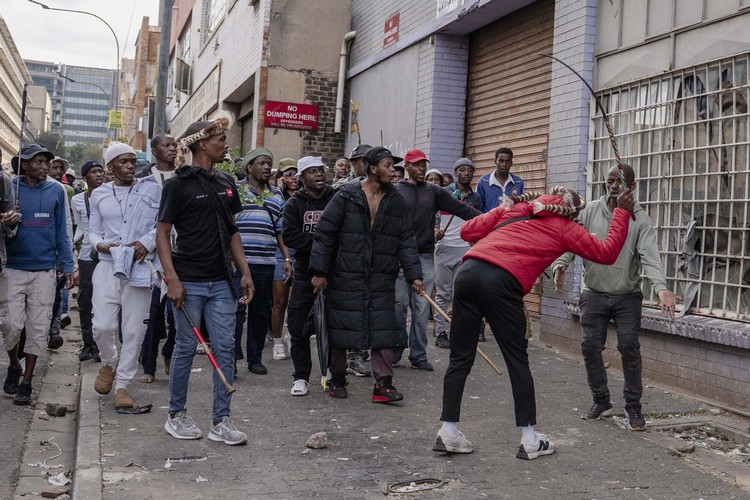
Afrophobia in South Africa is often presented as a problem of ‘foreigners versus locals’, as though it emerges naturally from cultural hostility or competition between poor people. But this explanation hides the deeper political and economic realities that produce anti-immigrant violence and xenophobic mobilisation. The rise of Afrophobia in South Africa cannot be understood outside the context of deep inequality, unemployment, dispossession, political manipulation, and the failures of post-apartheid transformation.
It is not simply about prejudice. It is about how social anger is redirected away from systems of exploitation and towards vulnerable people who are themselves victims of those same systems
South Africa remains one of the most unequal societies in the world. Decades after the end of apartheid, ownership of land and wealth remains concentrated in the hands of a small minority. Approximately 72% of arable land is owned by a very small, predominantly white section of society. In such a context, millions of people struggle daily to secure livelihoods, housing, healthcare, and employment. Yet, instead of addressing these structural inequalities, political elites and sections of capital often channel public frustration towards migrants and refugees.
The politics of attacking migrants
Afrophobia, therefore, functions as a political diversion. Rather than confronting the state’s failures to transform property relations, create decent work, or provide social security, migrants become scapegoats for broader crises produced by capitalism and neoliberalism. The unemployed South African worker is encouraged to blame the Zimbabwean street vendor, the Ethiopian spaza shop owner, or the Somali trader, instead of asking why wealth remains concentrated, why services collapse, and why economic opportunities are so scarce.
The timing of anti-immigrant violence reveals this political dimension clearly: xenophobic attacks often intensify around local and national elections; political factions mobilise communities by promising to remove ‘foreigners’ and redistribute shops or opportunities to locals. In some cases, communities themselves threaten politicians with ‘doing xenophobia’ if promised removals are not carried out. Xenophobia thus becomes a political weapon—a bargaining tool used in struggles over local power and patronage.
Groups such as Operation Dudula and political formations like the Patriotic Alliance have built support by exploiting this anger. But these movements are not spontaneous expressions of working-class frustration; they are carefully cultivated campaigns, tied to broader right-wing networks and funded by sections of capital and elite interests. Their purpose is to redirect legitimate social discontent away from the economic system itself and towards migrants
Accordingly, Afrophobia is not simply produced ‘from below’. Anti-immigrant politics is often driven by middle-class and elite actors. Universities, media organisations, politicians, and commentators play a crucial role in constructing the migrant as a threat. The media repeatedly associates migrants with crime, illegality, and disorder. Once nationality is constantly highlighted in reports about crime or social problems, an association forms in the public imagination: migrant equals criminal; foreigner equals danger.
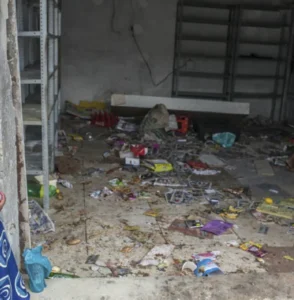
This discourse obscures the reality that many migrants are deeply embedded in local communities and economies. Migrant-owned spaza shops, for example, often thrive because they meet social needs ignored by larger corporations and formal retailers. They sell affordable goods close to where people live, opener” target=”_blank”>extend credit to struggling families, and develop relationships of trust and mutual support with township residents. In places like Hermanus, communities often viewed Ethiopian shopkeepers as assets because they provided accessible and affordable food and services.
At the same time, big business frequently perceives these small-scale migrant traders as competitors. Local authorities and large commercial interests in Hermanus allegedly collaborated to harass and criminalise migrant traders. This demonstrates another important truth: Afrophobia is not only about culture or identity. It is also about economic competition and the defence of entrenched interests
The issue of “illegality” is central to this politics of exclusion. Anti-immigrant campaigns frequently portray migrants as undocumented criminals flooding the country. Yet many migrants initially entered South Africa legally and later became undocumented because of the dysfunction and hostility of the Department of Home Affairs. Applications are lost, permits are delayed, and people are effectively rendered illegal through bureaucratic exclusion. The category of the ‘illegal immigrant’ is therefore often politically manufactured.
Despite the intensity of xenophobic rhetoric, everyday life in working-class communities is more complex and contradictory than media narratives suggest. There are tensions, certainly, but there are also countless acts of solidarity and cooperation between South Africans and migrants. In many townships, locals protect migrants from attacks, organise together for housing and services, and build relationships rooted in shared survival
An example of this solidarity is the story of Ethiopian traders protected by South African women during periods of anti-immigrant violence. These women risked their own safety to shelter and disguise a migrant trader because he had become part of their community. He had sold them blankets on credit, built relationships with them, and become woven into their everyday lives. This story reveals that solidarity is not abstract. It grows through shared struggles, mutual care, and human connection
How we can resist
What, then, can be done to push back against Afrophobia?
First, we must reject nationalist retaliation and cycles of revenge. Responding to xenophobia by attacking South African businesses elsewhere on the continent is reactionary. Such reactions only reinforce the divisions that right-wing forces seek to cultivate. Afrophobia can only be defeated through deeper continental solidarity, not reciprocal hostility
Second, organising must begin where ordinary people actually are. Rather than lecturing communities abstractly about Pan-Africanism, cosmopolitanism and humanism, activists must connect anti-xenophobic politics to people’s immediate struggles—for jobs, housing, healthcare, education, and dignity. Migrants and locals often face the same structural conditions of poverty, unemployment, and dispossession. Effective organising must reveal these shared interests and common enemies
This means ‘fusing struggles’. Campaigns against evictions, unemployment, environmental destruction, and austerity must consciously include migrants, rather than treating them as separate categories. International NGOs sometimes reinforce divisions by isolating migrants as special humanitarian subjects, instead of integrating them into broader community struggles. This can unintentionally deepen resentment rather than solidarity
Third, there is a need for cross-border organising across Africa. Capital already operates across borders, exploiting workers and rent, environmental destruction, and neoliberal restructuring must also build transnational alliances. Pan-African solidarity cannot remain rhetorical; it must be grounded in shared political struggle
From colonial borders to Pan-African solidarity
Such a struggle will have to confront the contradiction at the heart of African governments’ approach to migration. While many states have signed the African Continental Free Trade Agreement (AFCT), very few have ratified protocols guaranteeing free movement for African people. Capital is allowed to move freely, but workers and poor people are criminalised for crossing borders. Challenging Afrophobia, therefore, also requires demanding freedom of movement and opposing the hardening of borders inherited from colonial rule.
Underlying all of this is a broader political vision. Afrophobia is rooted in exclusionary ideas of citizenship and belonging that were shaped by colonialism and reproduced by postcolonial states. To resist it requires imagining African identity differently—not as something fixed by borders or passports, but as an open and evolving process rooted in shared humanity and collective struggle
Finally, young people are central to building this alternative future. Thus, political education and cultural work among African youth is crucial. If Afrophobia is learned through media, politics, and everyday narratives, then solidarity must also be taught and cultivated. Young people need opportunities to think critically about migration, identity, inequality, and Pan-Africanism from an early age
The struggle against Afrophobia is therefore inseparable from the struggle for social transformation itself. It is a struggle against inequality, exploitation, dispossession, and political manipulation. It demands that we refuse the false divisions imposed between ‘locals’ and ‘foreigners’ and instead recognise the shared conditions shaping working-class lives across the continent
In the end, the real question is not whether migrants belong in South Africa. The real question is whether we will allow elites and political opportunists to divide ordinary people, while the structures that produce poverty and inequality remain intact. The answer to Afrophobia lies not in stronger borders or harsher exclusion, but in solidarity, justice, and a genuinely emancipatory Pan-African politics
First
