

Beyond GDP: What Southern Africa Teaches Us About Building Resilient Communities Through Collective Action, Faith, Indigenous Knowledge, and Technology
2026-11-25 · By Shirley Mahlase, Founder, Segolo (Pty) Ltd
Southern Africa’s experience shows why resilience cannot be measured through GDP alone. This article explores how collective action, Ubuntu, faith-based institutions, Indigenous knowledge and fit-for-purpose technology strengthen communities facing climate and economic shocks, arguing for a broader development model that values social capital, inclusion, local knowledge and the ability to adapt.
When drought strikes a farming community in rural South Africa, Zimbabwe, or southern Malawi, resilience rarely begins with an insurance claim or government intervention. More often, it begins with neighbours sharing resources, churches supporting vulnerable families, farmers exchanging knowledge, and community groups addressing local challenges. Long before resilience became a policy priority, Southern African communities were already practising it. However, the region faces mounting pressures. Climate change is increasing the frequency of droughts, floods, wildfires, cyclones and the severity of El Niño-related impacts. Understanding the links between climate change, migration, armed conflict, the legacy of colonization and economic development is becoming increasingly important in Africa. Economic inequality remains high, youth unemployment continues to strain households, and technological change is reshaping livelihoods. These realities invite a deeper conversation about how progress should be defined and measured.
Rethinking Progress:Gross Domestic Product (GDP) remains one of the world’s most widely used indicators of economic performance. It provides useful insights into production, consumption, and growth. Yet GDP reveals little about whether communities can absorb shocks, adapt to change, and create opportunities for future generations. If Southern Africa is to build resilient, inclusive, and sustainable societies, it may need to look beyond conventional economic indicators and recognise frequently overlooked assets, including collective action, social capital, indigenous knowledge, faith-based institutions, and emerging technologies.
Traditional approaches to development often prioritise economic outputs. However, ordinary people experience development through outcomes that directly influence their quality of life such as secure livelihoods, youth employment, the economic participation of women and persons with disabilities, access to opportunity, food security, environmental stability, effective institutions and supportive social networks. Communities that can withstand climate shocks without falling deeper into poverty demonstrate a form of progress that GDP does not adequately capture. Alternative indicators deserve greater attention.
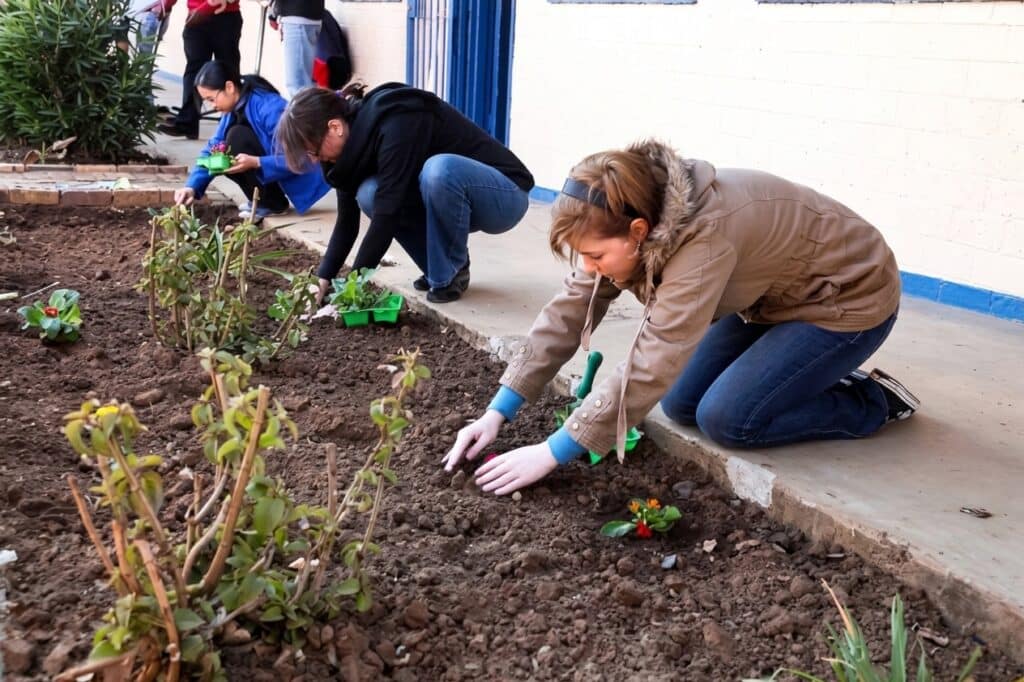
Collective Action:One of Southern Africa’s greatest strengths is its longstanding tradition of collective action. Across the region, communities have historically relied, inter alia, on rural traditional institutions, savings groups, farmer cooperatives, burial societies, and community-based organisations to support livelihoods and strengthen social wellbeing. These structures help people share risks, pool resources, solve local problems, and improve economic opportunities. They also demonstrate that resilience often emerges through local initiative and collective effort. In many rural and urban communities, cooperation remains an essential strategy for navigating uncertainty and building a more secure future.
South Africa’s stokvels offer a particularly compelling example of collective action in practice. Built on trust, mutual accountability, and shared objectives, they enable members to save, invest, and manage financial risks together. Their enduring popularity demonstrates that social trust can function as an important economic asset. Similar lessons emerge from farmer cooperatives across South Africa, Zambia, Malawi, Mozambique, and Zimbabwe. These organisations help producers access markets, strengthen bargaining power, reduce costs, and exchange knowledge. They also encourage innovation and learning among members. By creating networks of support and cooperation, such institutions strengthen resilience while promoting inclusion, empowerment, and local economic development.
Ubuntu and the Power of Social Capital:Closely linked to collective action is the philosophy of Ubuntu (Botho), which emphasises human interconnectedness, dignity, compassion, and mutual responsibility. Ubuntu recognises that wellbeing is shaped not only by individual effort but also by relationships and community support. This principle remains highly relevant in a region where families and communities frequently serve as informal safety nets during times of crisis. Strong social networks allow people to mobilise assistance, exchange information, and respond collectively to changing circumstances. Social capital, represented by trust, relationships, and shared norms, may be one of the region’s most valuable yet least measured assets. Although less visible than physical infrastructure, it often determines community resilience.
Faith-Based Organisations:Any discussion of resilience in Southern Africa would be incomplete without recognising the contribution of churches and faith-based organisations. For millions of people, churches act as centres of worship, community life, sources of moral leadership, and providers of practical support. During periods of hardship, faith communities frequently mobilise volunteers, distribute resources, and offer emotional encouragement to vulnerable households. The COVID-19 pandemic highlighted these contributions as churches supported families facing economic and social distress. Similar efforts continue during drought responses, disaster recovery initiatives, and community development programmes. Faith-based organisations seem to enjoy levels of trust that many institutions struggle to achieve.
Indigenous Knowledge Remains Relevant:Alongside social institutions, Southern Africa possesses a rich heritage of indigenous knowledge. For generations, local communities have developed practical methods for managing water resources, conserving biodiversity, preserving seed varieties, and adapting agricultural practices to changing environmental conditions. These pre-colonial knowledge systems enabled communities to survive uncertainty long before modern forecasting tools emerged. Indigenous knowledge should be viewed as a valuable partner alongside scientific research and technological innovation in developing context-sensitive solutions. Building resilience therefore requires recognising communities not merely as beneficiaries of development but also as holders of valuable expertise.
Technology that is fit for purpose:Technology is also creating new opportunities to strengthen resilience across the region. Mobile connectivity, digital financial services, artificial intelligence (AI), climate information systems, and online learning platforms are expanding access to information and opportunity. Farmers can receive weather forecasts, entrepreneurs can reach wider markets, and learners can access educational resources in their indigenous languages regardless of geographical location. Technology can also improve coordination among governments, civil society organisations, businesses, and communities. When technology is regarded as an enabler and combined with local knowledge and strong social networks, it can help people anticipate risks, improve decision-making, and identify new pathways for growth.
A New Development Narrative:The future of resilience in Southern Africa will also depend on the strength of relationships, institutions, and the ability of communities to act collectively. The region possesses remarkable assets: traditions of cooperation, vibrant faith communities, rich indigenous knowledge, and growing technological capability to help communities navigate uncertainty while advancing inclusive and sustainable development. Looking beyond GDP does not mean rejecting economic growth. Rather, it means recognising that genuine progress is measured by how well people, communities, and institutions can adapt, prosper, and thrive in the face of change while leaving no one behind.
Author’s Note: Portions of the research, drafting, editing, and refinement of this article were supported through the use of Microsoft Copilot. The author reviewed, validated, and takes full responsibility for the final content, interpretations, and conclusions presented.
REFERENCES
- Intergovernmental Panel on Climate Change (IPCC). (2022). Climate Change 2022: Impacts, Adaptation and Vulnerability – Africa Chapter. The report identifies climate change as a major risk to Africa, including increased droughts, floods, food insecurity, poverty, and water insecurity. [ipcc.ch]
- Intergovernmental Panel on Climate Change (IPCC). (2022). Climate Change 2022: Impacts, Adaptation and Vulnerability – Water Chapter. The report concludes that climate change has increased the likelihood and severity of floods and droughts and that water-related risks increase with global warming. [ipcc.ch]
- Masoga, A. (2017) Critical Reflections onSelected Local Narratives ofContextual South African Indigenous Knowledge, Handbook of Research on Theoretical Perspectives on Indigenous Knowledge Systems in Developing Countries,IGI Global. Uses local case studies to illustrate how Indigenous Knowledge is understood and practised in South African Bapedi communities in the Limpopo province.
- Miguel, Edward (2026) Can Africa Escape the Climate-Conflict Poverty Trap?UNU-WIDER Lecture, Toolo, Helsinki, Finland, 30 September, 2026.
- World Bank. (2024). A Framework for Understanding and Measuring Resilience. The framework highlights resilience as the capacity to prepare for, cope with, recover from, and adapt to shocks through economic capacity, institutions, and social cohesion. [worldbank.org], [documents….ldbank.org]
- World Bank. (2023). Leveraging Social Cohesion for Development Outcomes. The paper emphasizes the importance of trust, social cohesion, and collective action in achieving sustainable development outcomes. [documents1…ldbank.org], [openknowle…ldbank.org]
- United Nations Development Programme (UNDP). (2025). Community-Based Resilience-Building: A Guidance Note. The guidance note promotes community-based approaches to resilience, emphasizing participation, inclusion, local ownership, and collective action. [undp.org], [policycommons.net].
- UNESCO (2025). Local and Indigenous Knowledge Systems and Climate Change. UNESCO highlights the role of indigenous and local knowledge in helping communities understand, adapt to, and respond to climate variability and environmental change. [unesco.org].
- UNESCO (2018). Indigenous Knowledge for Climate Change Assessment and Adaptation. The publication demonstrates how indigenous knowledge contributes to climate adaptation and complements scientific approaches. [unesdoc.unesco.org], [digitallib…ary.un.org].
- UNESCO (2018). Indigenous and Local Knowledge and Climate Change. The policy brief notes that indigenous knowledge systems provide valuable insights for monitoring environmental change and informing climate adaptation strategies. [unesdoc.unesco.org]

