

What is WAFCON?
The Women’s Africa Cup of Nations is the continental tournament to find the best women’s international team in Africa. It has existed in some form since 1991 but the current competition’s history really starts in 1998; it has generally been held every two years since then.
Holders Nigeria have won a record 10 titles with only Equatorial Guinea (2012 as hosts) and South Africa (2022) having broken their domination of the tournament.
Originally planned as a 12-team tournament, the African football federation (CAF) added four more teams after qualification. Those four sides had all lost out in the second phase of qualifying but were then reinstated despite CAF earlier denying such changes were afoot. It was a sign of things to come.
Where and when is WAFCON 2026 being played?
For a third successive tournament, WAFCON is to be hosted by Morocco. Specifically, games are to be played in Rabat and Casablanca with a a third city, Fez, dropped from the initial lineup when the fixtures were announced.
Building the game from the ground up
Since pulling out of hosting the men’s AFCON in 2015, Morocco has become the favored African destination for both CAF and global football’s governors FIFA. The North African country, which also hosted the men’s AFCON last year, is to cohost the 2030 men’s World Cup and has been chosen, or been the sole bidder, for a number of continental and international youth tournaments.
The tournament opener, between Algeria and Senegal, is on July 26, with Morocco opening against Kenya later that day. The final is scheduled for August 16 in Rabat.
Why is WAFCON being played straight after the men’s World Cup?
It wasn’t supposed to be. After weeks of rumor, denial and a South African offer to step in as hosts, CAF announced just 12 days before the tournament was due to start in March that it would be postponed. CAF, rather vaguely, cited “unforeseen circumstances” as the reason for the delay.
“It is a combination of factors, and it is not a decision taken lightly,” Luxolo September, CAF’s head of communications, told DW at the time.
“There is a question of the host nation, Morocco, requesting a postponement for a number of reasons. There has been a lot of interaction between Morocco, FIFA and CAF regarding the date. This is not a nice position for us. We have taken no joy from this. We would have loved to play in this window. It is a window we had requested.”
Many teams, fans and players were frustrated by the short notice, with preparations made and money shelled out far in advance. It was not the first time though. Two years earlier, the tournament had been postponed by a year because the tournament clashed with the Olympics in Paris — a key date in the women’s football calendar.
As well as coming hot on the heels of the men’s World Cup, WAFCON 26 will now finish as the season starts in many countries. Germany’s women’s season for example, kicks off with the first round of the DFB Cup on same weekend as the WAFCON final.
Who are the favorites at WAFCON 26?
Hosts Morocco will want to match their men’s side, who won their AFCON tournament in controversial circumstances earlier this year, their maiden title, having lost the previous two finals.
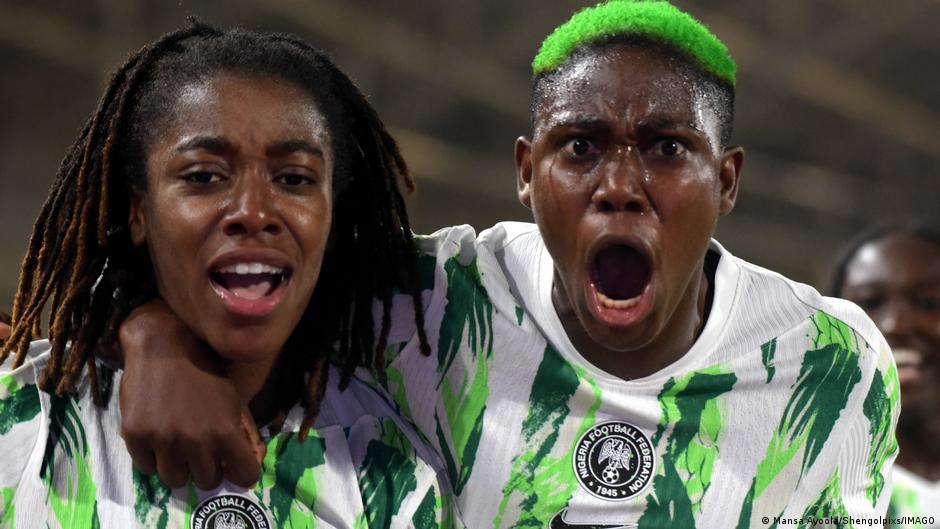
Nigeria wins women’s Africa Football Cup of Nations
Perennial champions Nigeria will once again enter as favorites while the 2022 winners, South Africa, will also fancy their chances. Below that are a host of teams who could cause a few surprises, including Ivory Coast, Egypt and debutants Cape Verde, whose men’s side became one of the stories of the World Cup.
Who are the players to watch at WAFCON 26?
Apart from Zambia’s Barbra Banda and Racheal Kundananji, Nigeria’s Rasheedat Ajibade may be the most highly regarded talent. Named player of the tournament in 2024, Ajibade is a leader for her team, as well as its sharpest attacking threat. At the other end of the pitch, Nigeria will rely on Chiamaka Nnadozie, regarded as the continent’s best goalkeeper.
Hosts Morocco will look to Ghizlaine Chebbak. The top scorer at the last two tournaments, 35-year-old Chebbak may not have too many better chances to win a first major international honor.
Elsewhere, Tabitha Chawinga, of French champions Lyon, will carry the hopes of debutants Malawi, the lowest FIFA-ranked side in the competition. Chawinga’s international career has been interrupted by her club commitments but she has an exceptional 25 goals in her 11 caps to date. Her sister, Temwa, is also in the Malawi squad and plays her club football for the Kansas City Current of the NWSL, the top league in the United States. There, she won the 2025 Golden Boot as top goal scorer with 15 goals in 23 games.

