

[ad_1]

South Africans relocate in the pursuit of paid work (22.9%) and to be closer to family or their spouse (15.5%), according to new research.
A new Migration Report by Wise Move, a technology platform that has been described as the “Uber of moving”, used data on about 15 000 “digitally facilitated” moves in 2024 to compile the report.
Intriguingly, reasons like crime (0.6%), divorce (0.5%) and political instability (0.1%) were among the least cited reasons for relocating, “challenging common assumptions”.
Co-founded by CEO Chante Venter, Wise Move is a tech platform that connect users to vetted and verified movers nationwide. The platform uses AI-powered quoting, algorithmic mover-matching and route optimisation to manage household moves.
“When it comes to why South Africans relocate, the data tells a clear story: it’s all about opportunity and connection,” said Venter. “The top reason for moving – the pursuit of paid work – highlights the economic drivers behind many relocation decisions.”
Key findings of the report include:
- About 70% of all moves are within the same province;
- Most migration is taking place between Gauteng and the Western Cape (see charts below). The Eastern Cape also experienced a net gain, though much smaller than the Western Cape’s;
- Most South Africans prefer to move during school holidays;
- Young professionals dominate the moving landscape (at least through Wise Move’s platform), with the 25-34 age group making up the largest share (31.2%), followed closely by the 35-44 age group (24.4%), suggesting that moves are “driven largely by career changes, lifestyle upgrades and family growth”.
‘Striking trend’
On the migration from Gauteng to the Western Cape, Wise Move said Gauteng “naturally attracts young professionals starting their careers”. However, the data in the report has revealed a “striking trend”: while Gauteng saw a high volume of internal migration, it faced the largest net loss of residents for 2024”.
“It seems that while many South Africans head to Johannesburg to launch their careers, most eventually move on,” the report said.
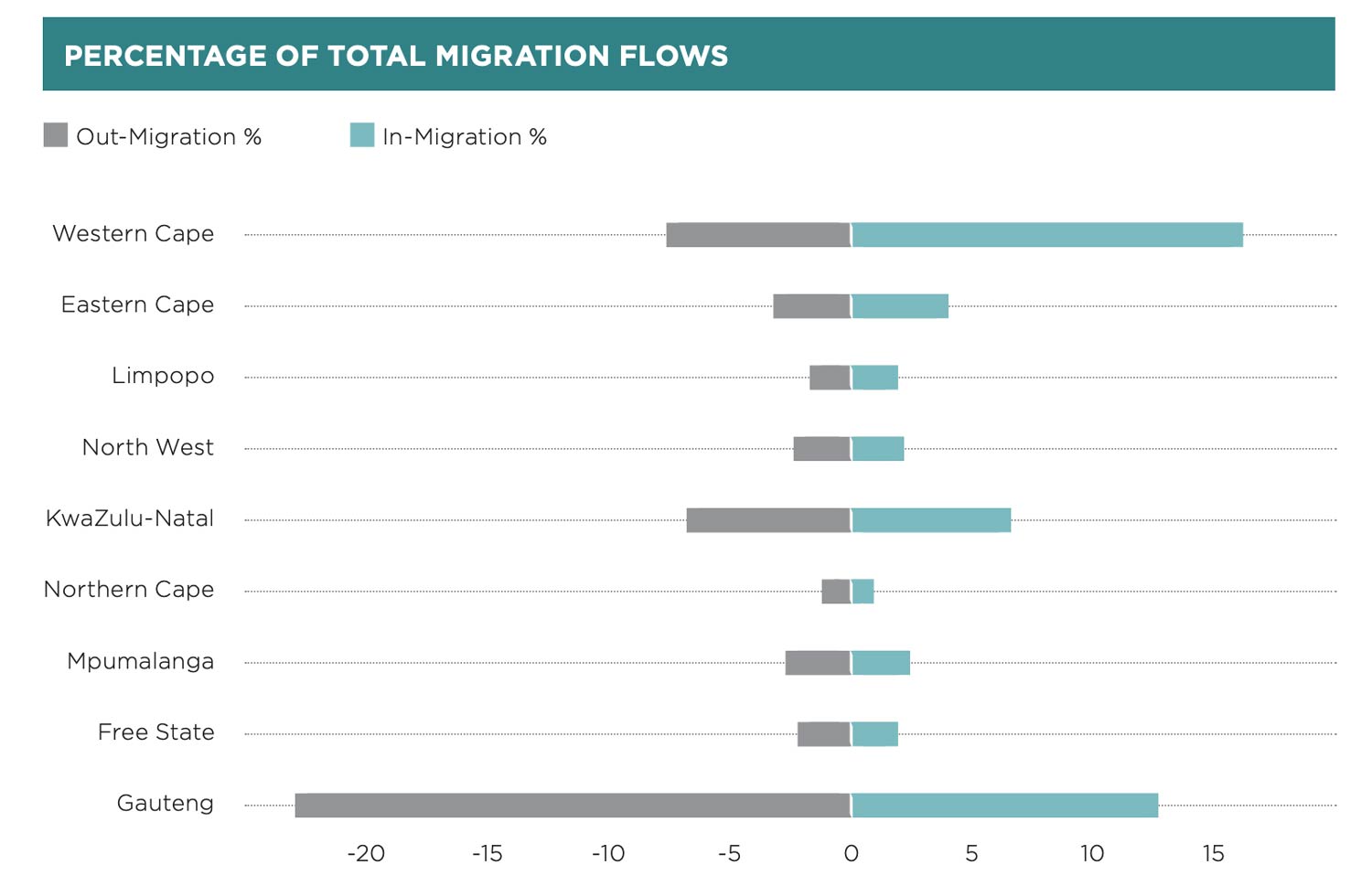
“In contrast, the Western Cape emerged as the biggest winner in interprovincial migration. With 32.4% of all interprovincial moves headed to the Cape, it has also retained its talent – contributing only 15.1% to out-migration to a different province.
“This shift hints at changing economic dynamics – with lifestyle preferences, remote work opportunities and emerging economic hubs drawing talent from Gauteng to the coast.”
Wise Move’s research shows 71% of moves to the Western Cape are to the City of Cape Town and the immediate surrounding areas, with smaller towns benefiting far less.
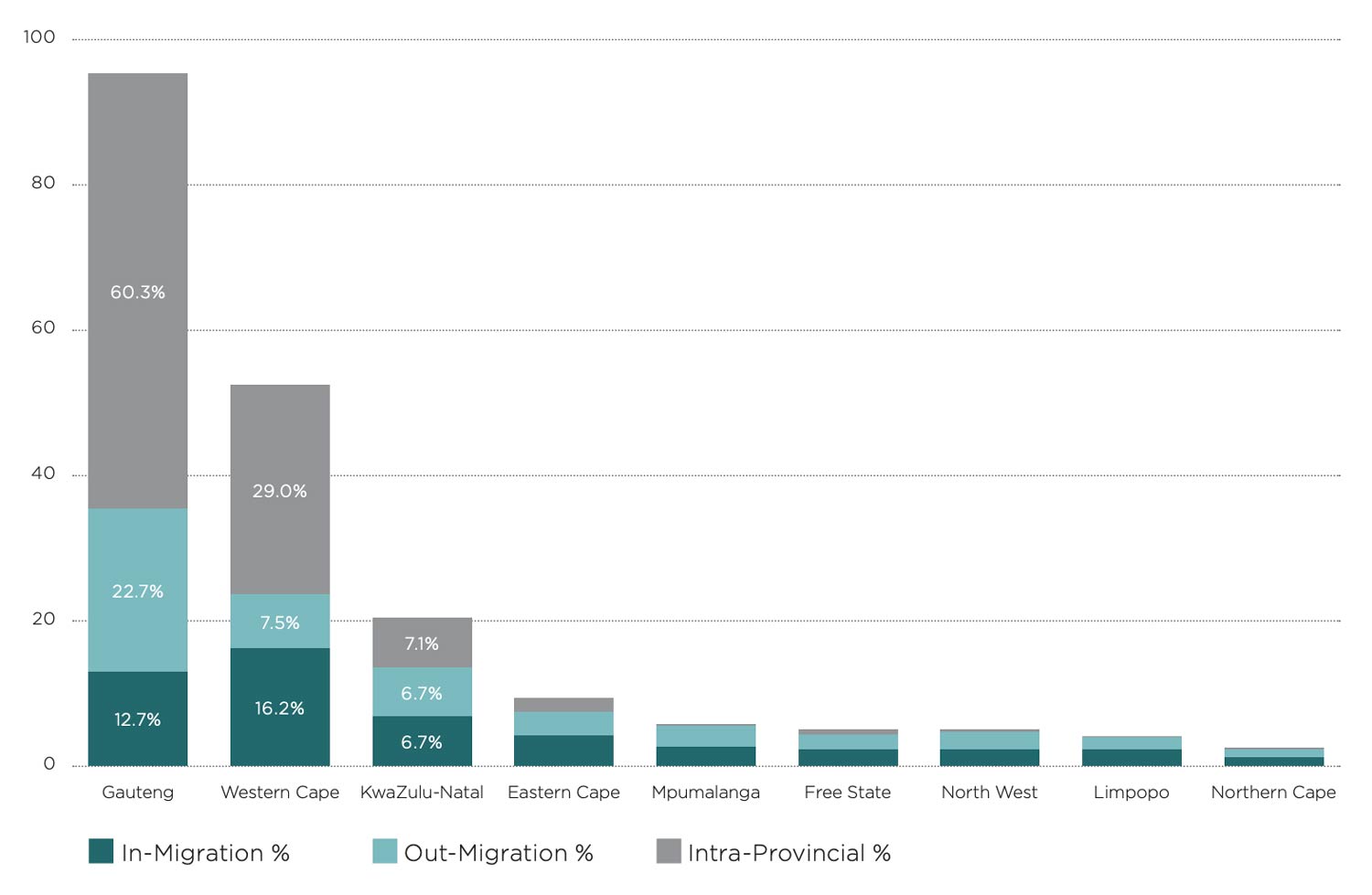
“While bigger ‘city towns’ like Paarl and George still attracted some of the Joburg traffic, the numbers pale in comparison [to Cape Town]. Overall, only around 9% of in-migration to the Western Cape went to the Garden Route, while 5% headed to the West Coast. This suggests that even with the flexibility of remote work, urban centres remain king – and this is likely due to better job opportunities, the variety of educational institutions, great healthcare and existing family support networks.” — © 2025 NewsCentral Media
Get breaking news from TechCentral on WhatsApp. Sign up here.
Don’t miss:
SA homeowners turn to AI to fight inflated property valuations
[ad_2]
Source link
