

Wed, 22 July 2026 at 12:56 pm UTC
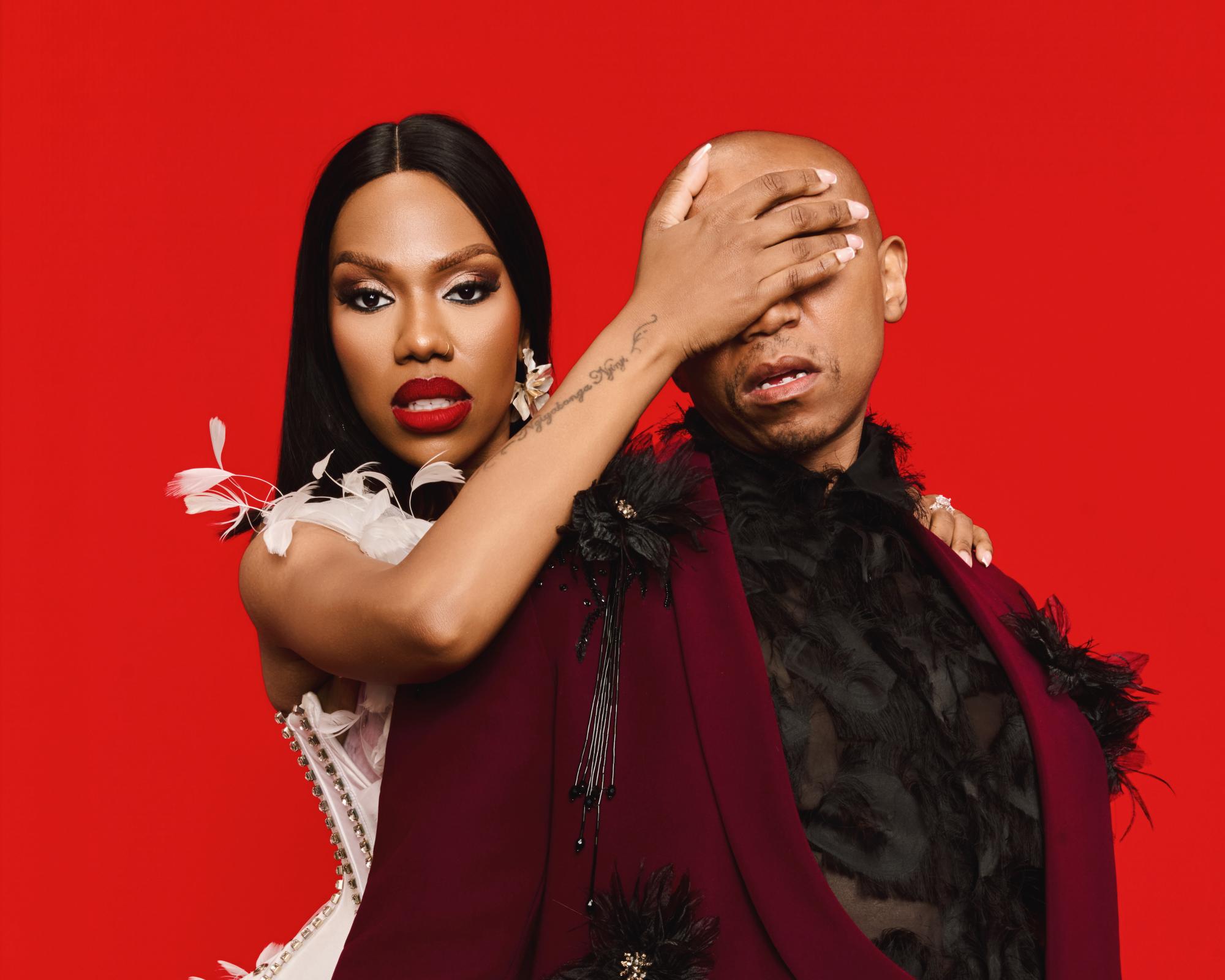
Over the past few weeks, I have been gripped by The Polygamist, a new, record-breaking South African Netflix drama, which racked up more than 23 million views in its first month. I’ve been zealously talking about how special it is to anyone who will listen. And now it’s your turn, dear reader.
The Polygamist is by all accounts the first African smash hit of the streaming age. Released in mid June, the show has topped streaming charts in Africa, and broken into the global top five non-English series globally. It has also broken through all sorts of cultural and language barriers. African and western stars have raved about it. Its protagonists have become overnight celebrities. And its twists, turns and surrounding discourse so saturate social media that I have had to forgo Instagram and TikTok to avoid spoilers.
On first encounter, The Polygamist looks like little more than a guilty pleasure, a high-gloss telenovela about infidelity. When I first pressed play on it, I had absolutely no intention of getting through its staggering 22 episodes. I just wanted to satiate my curiosity about the hype. Reader, I was wrong. So wrong. And now I’m cursed with the zeal of the converted. What we have here is not trash TV, but a profound rumination on tradition v modernity, and the broader universal trajectory of an African middle class.
‘This isn’t polygamy, this is dirt’
The concept is simple. The titular polygamist, Jonasi Gomora played by S’dumo Mtshali, is a wealthy business tycoon with a big appetite for good food, expensive whisky, and beautiful women. He is married (of course) to glamorous social media influencer Joyce, portrayed by Gugu Gumede, and has three children. He claims and commands a number of other women in his orbit – none of whom dislodge his wife or main family unit. But tension starts to build when it becomes clear that Jonasi does not only want mistresses, spliced alongside his family life. He wants it all. Several homes, several wives, several sets of children.
The predictable cat fighting over Jonasi is juicy and unhinged. Hands are thrown, wigs are snatched and things may or may not be set on fire. But this quickly unfurls into a number of far more sophisticated and unexpected storylines. One surrounds Jonasi’s powerful characterisation. In addition to his wealth, he is charming, playful, forceful, and persuasive. We marvel as he is able to inspire devotion no matter how badly he behaves. His character transcends that of the unfaithful scoundrel into that of the alpha who can create bespoke worlds of attention for each of his women. And so they yield again and again, ultimately (and reluctantly) accepting polygamy as the best arrangement. It is better to be one of Jonasi’s women – and to retain access to this intimate and enchanting world – than to be thrust out on their own.
When Jonasi takes a second wife, the discourse machine gets going. His marriage quickly becomes a matter of public debate, as he and Joyce are public figures. She cleverly decides to own the second marriage, and gives candid interviews about it, promoting the act not as a humiliation for her, but as an expression of the capaciousness and generosity of polygamy. The way that polygamy is portrayed is skilfully subtle, teasing out all the complexities of these arrangements in a postcolonial context. On the one hand, Jonasi asserts his right to polygamy as cultural and traditional authenticity, something repressed by colonialism and the secularisation of African society. But Jonasi is also clearly a man who will say and do anything to get his way. And so, like the characters, I found myself torn between the legitimacy of African marriage rites and rituals(polygamy is legal in South Africa and several other African countries), and the sense that these evocative traditions can be cynically weaponised to excuse disloyalty and misogyny. As the actor Mtshali said in an interview for CNN: “This isn’t polygamy, this is dirt.”
The tensions between tradition and modernity are also sharpened by the ravages of social mobility. The show transforms from soap into serious dramatic art when it flashes back to Jonasi’s childhood in Soweto, a township with high levels of poverty and crime. Young Jonasi is smart, with ambitions to leave, and uses his charm to persuade the women around him to support his escape from poverty. His backstory feels like a metaphor for all the ravages that rapid social mobility has wreaked on a generation of post-apartheid South Africans. But it’s also relevant to all societies in which profoundly unequal economies have driven people towards wealth acquisition as their only saviour. Despite his flaws, Jonasi continues to enthral those around him, because his journey of social mobility means that he is their saviour too. Values, principles, good character, are all jettisoned in the flight from economic hardship.
Relatedly, the series lays bare the toxicity of fetishising bourgeois values: characters squabble over the latest iPhone, covet expensive alcohol and, in one instance, salivate over Wagyu beef. But more unexpectedly, it also leans heavily into the unglamorous side of the characters’ lives. There are sexually transmitted diseases, lost and emotionally devastated children, and instances of physical abuse. The Polygamist does not romanticise or idealise middle- and upper-class African society. Everyone in the show seems trapped in Jonasi’s orbit, suffering higher and higher tithes in the hope of holding on to the rainmaker.
But there is love too. Amid the squalor and devastation, something real somehow always survives – the love that Jonasi’s wives and families still retain for him, and the kindness and dedication among them that still endures. This is the result of some blockbuster acting. Noluthando Shabalala in particular, who plays Jonasi’s daughter, Mpume, delivers a tear-jerking portrayal of a young adulthood mangled in the spokes of Jonasi’s cruelty. Beneath the wild outfits, technicolour makeup and terrible wigs, the actors are putting in a thespian shift for the ages.
A quietly radical rollercoaster
The Polygamist is a pan-African affair. It is adapted from a novel by Sue Nyathi, a Zimbabwean writer, and is directed by Akin Omotoso, a Nigerian, and Nthabi Tau and Rolie Nikiwe, who are both South African. It is striking how there are no white characters, no interest in even name-checking what calamity everyone is crawling out from underneath, and why the townships existed in the first place. This is an entirely Black and African universe, not concerned with translating itself to a foreign audience. And, paradoxically, that is the reason it has cut through the way it has. Through a particular lens, it tells a universal story, of how much human beings are willing to tolerate for love, and for money.
Tap in
Have you seen The Polygamist? Share your reaction to the show by replying to this, or emailing us at thelongwave@theguardian.com and we may include your response in our next issue.
• To receive the complete version of The Long Wave in your inbox every Wednesday,please subscribe here.
