FootballSports
22 Jul 2026 • 1:51 AM MYT
The Independent
The world’s most free-thinking newspaper
The first ever 48-team World Cup is over – but already, Fifa president Gianni Infantino is looking ahead and hinting at further expansion.
Infantino has opened the door to expanding the tournament to 64 teams after ruling this year’s bumper edition as a resounding success, with Fifa vice-president Alejandro Dominguez among those in favour – and calling for it to happen as early as the 2030 edition.
Infantino successfully pushed for the growth of the World Cup to 48 teams when it was approved by the Fifa Council in 2017 but is likely to encounter greater resistance in his quest to go even bigger, with Uefa president Aleksander Ceferin among those to think the suggestion is a “bad idea”.
Such expansion would represent a doubling of participating nations in the space of just two editions and eight years. Before this year’s tournament, a 32-team World Cup had been the norm since 1998.
But if a proposal for a 64-team World Cup was passed before the 2030 edition held across Spain, Portugal and Morocco, how would it work?
How would qualifying work for a 64-team World Cup?
Major reform would be required if Fifa expanded the World Cup to 64 teams by 2030, just as was the case for this year’s tournament.
Extra qualifying berths would first be distributed among the confederations. For the 2026 World Cup, the Confederation of African Football (Caf), Asian Football Confederation (AFC) and Concacaf, the governing body for football in North and Central America and the Caribbean, benefited the most from the expansion, seeing their allotment effectively double, if you include the possibility of qualification through the play-offs.
Uefa, meanwhile, received only three extra places in an allotment increase of just 23 percent, which drew the ire of European nations.
Infantino stresses inclusivity when talking about World Cup expansion so Europe, the most represented continent at the tournament, would again be unlikely to come out as a major beneficiary of the 64-team World Cup – though given the scale of this particular increase their allotment would be expected to rise to at least 20.
Elsewhere, the Oceania Football Federation would likely get another automatic berth despite New Zealand being the only nation inside the top 150 let alone 100. The AFC, Caf and Concacaf would also receive a further significant boost, opening doors for much smaller nations – like Curacao, Uzbekistan and Jordan – to qualify.
There isn’t much wiggle room for Comnebol, though – they already have six direct qualification places plus a route so Fifa can’t offer too much in the way of new berths to South America or risk making qualification there redundant
There may also be changes to the format confederations use for qualifying. The AFC and Concacaf significantly changed their formats for the 2026 World Cup – Concacaf switched from one “Octagonal” league to a multi-round group system, while the AFC expanded to five qualifying rounds to accommodate their eight direct qualification spots. Similar reform could be required again, while Fifa’s play-off system would also need a rejig.
On a financial level, expanding qualifying could tilt the financial balance even further in Fifa’s favour. A less competitive qualifying process, with top nations getting into the finals with ease, could lead broadcasters to value qualifying tournaments less and make regional bodies more reliant on money they receive from the governing body.
How would it work in 2030?
The 2030 edition of the World Cup would be even more logistically challenging than the 2026 tournament because it will have six host countries rather than three.
Spain, Portugal and Morocco are currently slated to host the majority of the matches, but there will be one match held apiece in Uruguay, Paraguay and Argentina, in honour of this being the centenary of the World Cup.
It makes it the first World Cup to be hosted by more than one confederation and brings with it even more logistical challenges.
Teams will have to travel vast distances and rack up even more air miles than in 2026, which spanned the length and breadth of North America, and contend with very different conditions and temperatures in the respect hemispheres – teams will go from South American winter to European and North African summer.
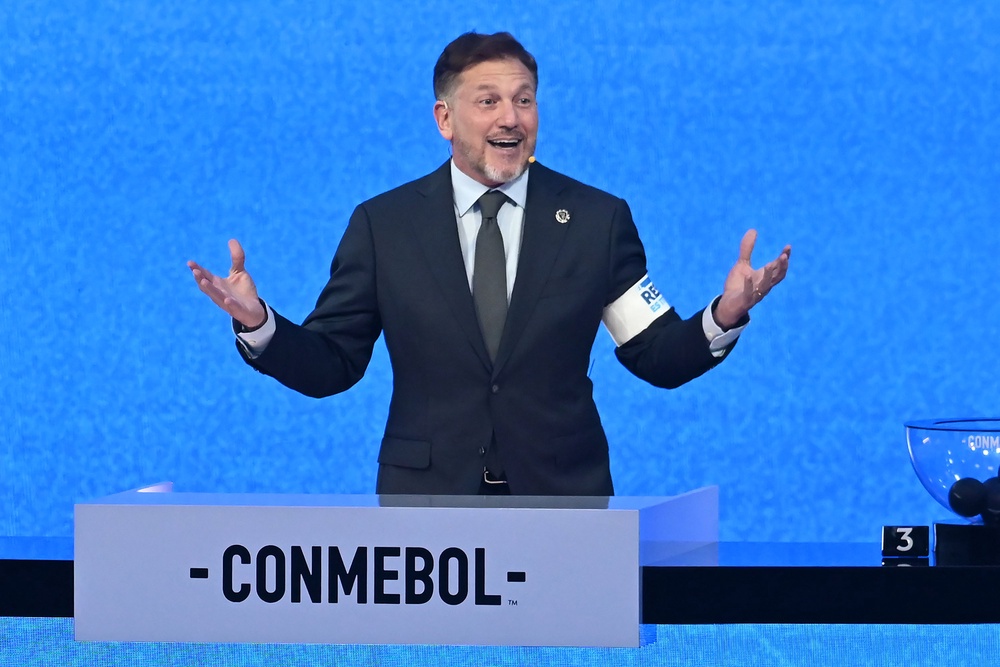
The head of South American football, Alejandro Dominguez, was so taken by the idea that he took to social media the day after the final, writing: “The next one is at home! In 2030, the World Cup is coming to Uruguay, Argentina and Paraguay. It will be a great opportunity for football, to celebrate the World Cup’s centenary with a 64-team tournament.”
He then told Sky Newsafter the 2026 edition that he was in favour of the expansion, saying: “The World Cup belongs to the people, and [for] 100 years, a century, we have to give the opportunity to more countries. I think that this has shown that 48 teams was totally successful.”
He further complicated matters by saying “I hope so, for sure,” when asked if he hoped South America would host more games in 2030 than the planned three.
In that case, how many would South America be allocated, when and where? Which teams would compete in those matches, and be put at a disadvantage with yet more travel and adjusting to different conditions? How could Fifa guarantee fairness among the teams? And how well will each nation, or city, cope with the strain on reno answers for
How would the tournament finals work?
Fifa could opt for a massive overhaul the format of the World Cup, maybe leaning towards Uefa’s shift from group stage to league phase in their continental competitions.
But as things stand, a 64-team World Cup would just mean more groups – four to be exact, on top of the 12 we already have this year.
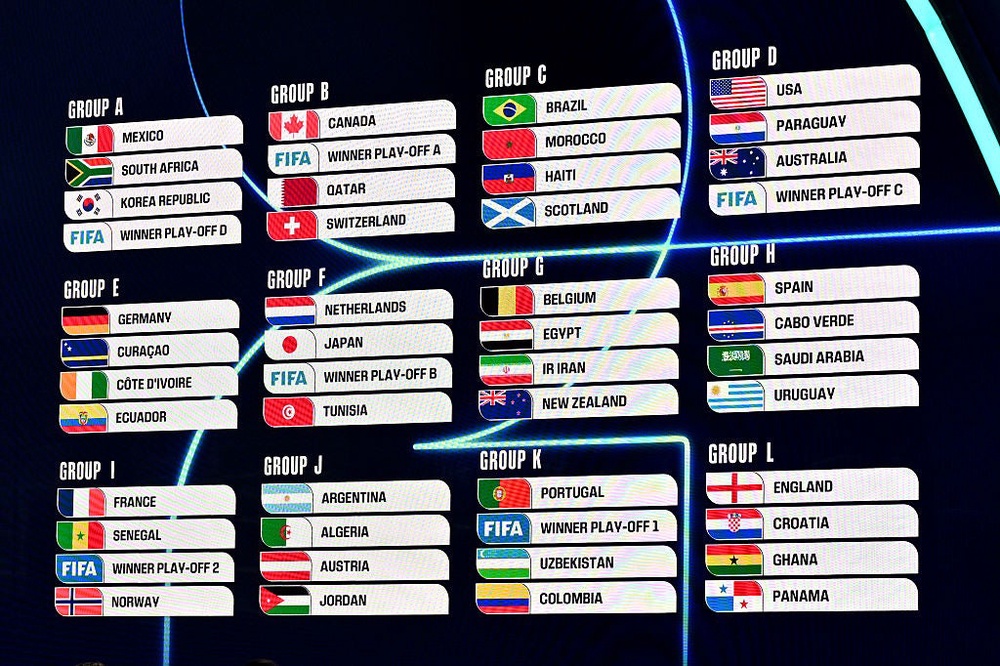
In that case, the big change would see third-place qualifiers written out of the tournament. At the 2026 World Cup, a round of 32 was added to accommodate the rise to 48 teams, which meant that eight teams who finished third in their group also qualified – a departure from the black and white format of “top two or eliminated” we are all so familiar with.
However, Fifa would have to return to that system if they expanded the World Cup to 64 teams, because the top two from each group would fill out a round of 32.
This would be the only major change to the World Cup finals ifFifa kept the same four-team group stage plus knockouts format. If they increased the size of groups, or did away with groups altogether, then more knockout rounds may be introduced. An example of what this extra round could look like could be the knockouts play-off as seen in the Champions League.
Expanding the finals to 64 teams would mean taking the number of games from 104 to 128, which would most likely add at least another week to what is already a five-week tournament, unless Fifa opted to further compress the schedule of games or hold more simultaneously. With viewing figures and lucrative broadcast revenue so important, that feels unlikely.
And it would further add to concerns over player welfare, with yet more games added to an already congested calendar and the tournament taking up even more space.
How likely is another expansion?
You can’t write anything out with Fifa if there’s commercial or financial benefitattached to it, as would be the case with a 64-team World Cup. But for the meantime, this expansion looks highly unlikely.
Infantino said that this potential growth is something Fifa “will be examining after the World Cup” but amid the torrent of backlash he is receiving in regards to the suspending of USA striker Folarin Balogan’s red-card ban – a development which came after US president Donald Trump intervened – his priorities will be batting off resignation calls and regaining a semblance of stability.
Fifa will surely not have time to pass this proposal for implementation at the 2030 World Cup. Infantino is poised for re-election at the time of writing but given the calls for his resignation he may not be in power long enough to see this particular vision through before the 2034 edition in Saudi Arabia.
And while South American federation Conmebol officially proposed this exact expansion in April 2025, many other footballing leaders have dismissed it.
AFC president Sheikh Salman bin Ibrahim Al Khalifa said further expansion would bring “chaos” while Concacaf chief Victor Montagliani feared such a suggestion coming to pass would damage “the broader football ecosystem”. This is from two confederations which would benefit most from an expanded World Cup.
The ultimate decision will rest with the Fifa Council, but there are no signs these changes will come to fruition in the near future.
Gianni Infantino hints at expanding World Cup again to 64 teams
Can Fifa ever actually change? Inside Gianni Infantino’s grip on power
Blatter urges football to kick out Infantino after World Cup ‘lost its credibility’
World Cup generated $20 billion for US economy as host cities feel spending boom
The US should never host another tournament after World Cup debacle
Related News & Content

Sepp Blatter urges football to kick out Gianni Infantino as Fifa president after World Cup ‘lost its credibility’

Seth Meyers nails Trump over hypocrisy of celebrating Spain’s World Cup win

Pundit caught on hot mic reacting to Trump over World Cup trophy moment
Aussie commentator caught on hot mic reacting to Trump getting in the way at the World Cup