

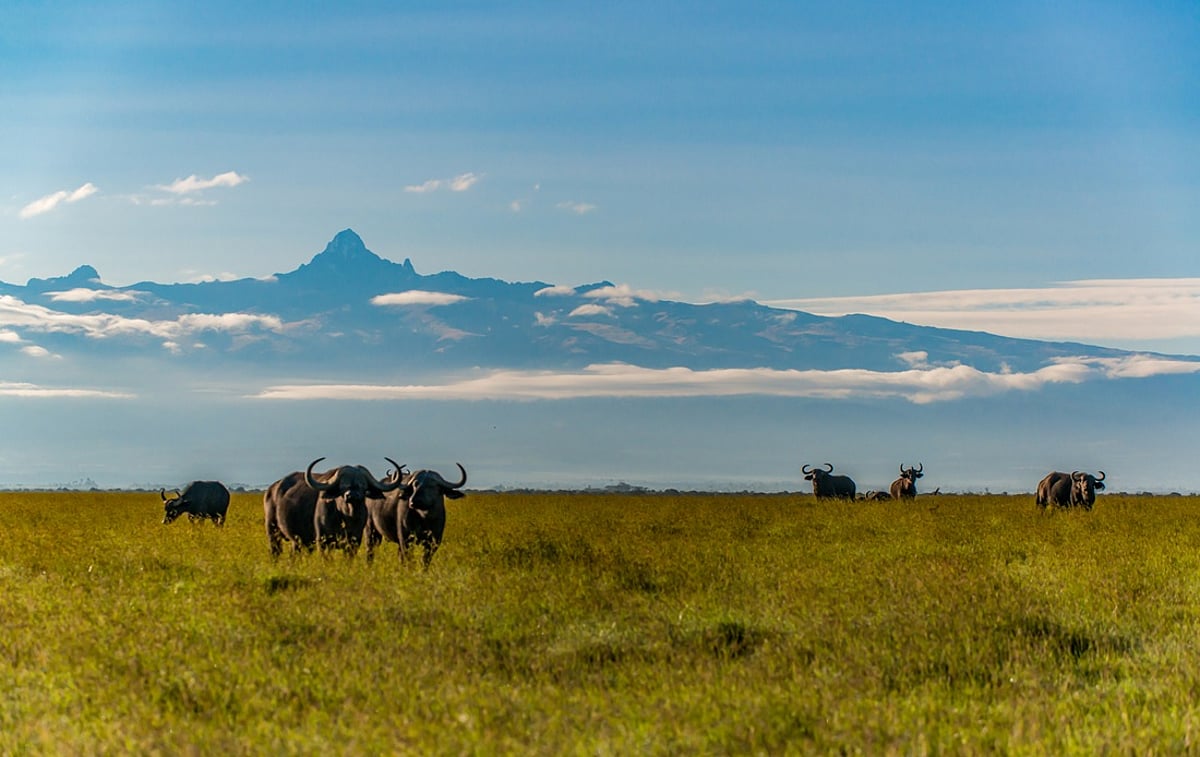
Cape Buffalo near Mount Kenya in East Africa. Photo: iStock
A new study led by researchers at Yale University School of Public Health reveals that climate change is reshaping the geography of childhood malaria across sub-Saharan Africa, increasing the disease risk in cooler highland regions while reducing transmission in some of the continent’s hottest areas.
Published in the journal Nature on July 29, 2026, the research provides the most comprehensive assessment to date of how climate change has influenced an infectious disease, offering fresh evidence in the long-standing debate over the relationship between global warming and malaria.
The study quantifies climate change’s historical and future impact in sub-Saharan Africa’s children, where most cases and deaths occur.
The study examined the historical and projected impact of climate change on childhood malaria, which accounts for the overwhelming majority of malaria cases and deaths in sub-Saharan Africa.
The researchers found that mosquito-borne transmission of the malaria parasite peaks at temperatures of around 25 degrees Celsius and declines at temperatures below 16 or above 34 degrees Celsius. In addition, mosquito populations increase during periods of heavy rainfall.
These temperature thresholds explain why warming is making previously cool regions more suitable for malaria transmission, particularly in southern Africa and the highlands of East Africa.
East Africa has seen an increase in malaria, particularly in highland regions. The study estimates that climate change has increased malaria prevalence by an average of 0.32 percentage points across the region, with some parts of the Ethiopian Highlands and the Greater Rift Valley recording increases of 1–2 percentage points. In high-elevation areas above 1,000 metres, malaria prevalence rose by an average of 0.81 percentage points. At the same time, some lowland regions of Ethiopia, Sudan, South Sudan, Eritrea and Djibouti experienced small declines, highlighting how warming affects different landscapes in contrasting ways.
At the same time, researchers have suggested that parts of West and Central Africa, which currently bear the highest malaria burden, may experience reduced transmission as rising temperatures exceed the optimal range for the disease. Under a high-emissions scenario, West Africa could see malaria prevalence decline by as much as 4.5 percentage points by 2100.
The findings suggest climate change will continue to shift malaria into cooler regions even as it suppresses transmission in areas that become too hot for mosquitoes to thrive.
According to the study, limiting global warming to below 2 degrees Celsius instead of around 3 degrees Celsius could avoid an average of five additional malaria cases per 1,000 children in high-altitude areas of East Africa and in Southern Africa by 2100.
The findings help resolve a decades-long debate over the role of climate change in malaria transmission and provide a framework for measuring the broader global health impacts of climate change.

