

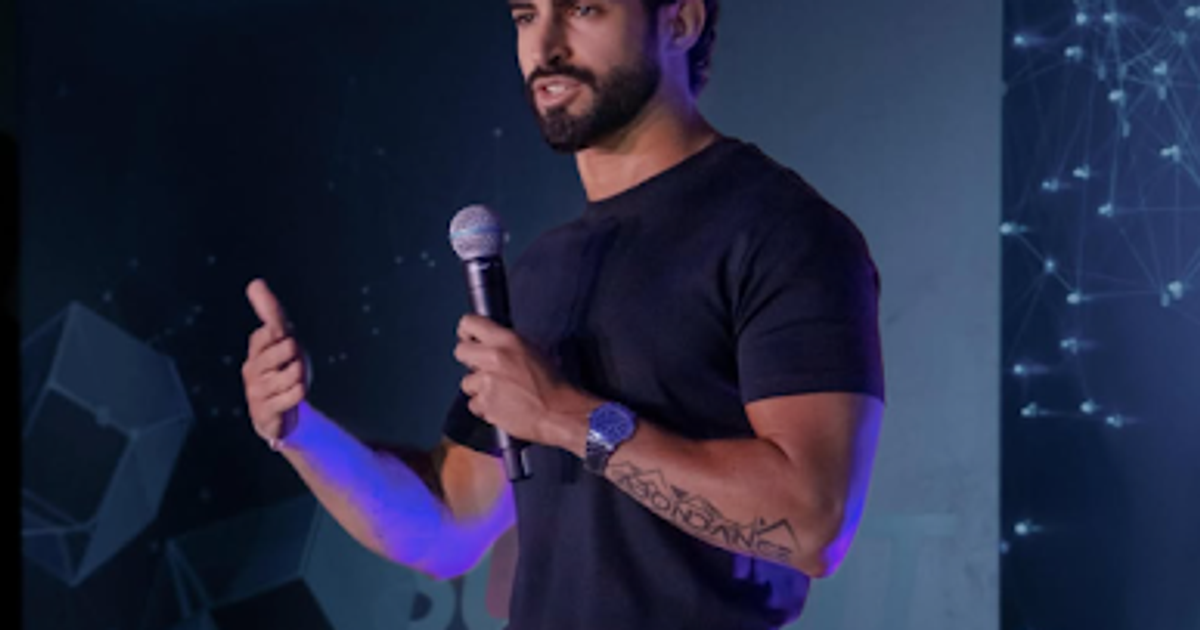
In today’s digital economy, it appears that visibility has become more important than substance. Algorithms encourage regular posting; viral moments are the driving force behind conversation; and many business owners are pushed to build their personal brand first, and their business second. Dubai-based investor and entrepreneur Salim Elhila, whose Moroccan and French background has shaped his international perspective, has adopted a different approach.
He has been building research-driven businesses, scalable systems, and long-term research infrastructure rather than seeking attention. As an investor, entrepreneur, author, and Co-Founder of Decentralized Masters, his philosophy is that sustainable value is built through research infrastructure rather than hype.
Numerous investors and entrepreneurs focus on a single high-growth sector. Salim believes the larger opportunity lies elsewhere.
His investment philosophy is based on the intersection of several technologies that are growing exponentially. He does not see any of these technologies – AI, blockchain, robotics, biotech, or energy innovation- as separate markets, but as forces that are increasingly converging over the next decade. This perspective became the foundation of The Exponential Investor, which he co-authored with Tan Gera.
The book does not deal simply with the short-term impact of these technological developments on the markets, but rather with their longer-term impact on capital allocation and long-term wealth creation.
The creator economy has given rise to numerous stories of entrepreneurs who have succeeded in monetizing their audiences through social media.
For many companies, that’s the way to go, but Salim made a conscious decision to take a different route. Rather than becoming an online personality, he dedicated himself to creating organizations that could deliver research, education, and long-term value.
That growth decision required a slower approach focused more on credibility than attention. Decentralized Masters grew, and the business became an international organization that supported thousands of members and an expanding team.
Entrepreneurs often experience the biggest challenges when they have to let go of doing things themselves and build organizations that function without their direct participation. Scaling requires delegation, hiring the right people, and systems that preserve quality without constant founder involvement.
Salim believes scaling requires designing systems that maintain standards even when he is not directly involved in every decision. Companies that remain successful across multiple market cycles build infrastructure, invest in research, practice strict discipline, and build institutional knowledge instead of solely depending on charismatic leadership and viral marketing.
In modern business culture, immediate wins are often celebrated. For many leaders, the focus is on monthly metrics, quarterly performance, and daily engagement. Salim believes in taking a longer view.
He’s not just looking at how to optimize for the next quarter; he’s looking at how to optimize for the next ten years. This long-term thinking impacts recruitment, product development, investment in research, and long-term strategic planning.

Salim views reputation as an asset that compounds over time through consistency, thoughtful execution, and credibility. Trust isn’t something that can be created overnight. It is built through repeated delivery, disciplined communication, and clear standards for products, research, and customer experiences.
More than ever, entrepreneurs are building ecosystems rather than standalone companies. In addition to Decentralized Masters, Salim established Future Finance, an institutional research platform focused on analyzing emerging technological trends.
Outside of business, he performs as melodic house artist SYLAM, reflecting another dimension of his work outside of investing. While each venture serves a different purpose, they all reflect a consistent focus on building communities through ideas, experiences, and long-term relationships.

The digital economy is still presenting new opportunities. However, sustainable success will increasingly belong to founders who are flexible and disciplined. From Elhila’s approach emerge several principles:
- Scale only after building systems.
- Focus on building trust over the long term, not just grabbing people’s attention.
- Create businesses that are independent of the founder.
These lessons apply well beyond technology investing. Whether building a software company, a media platform, a research business, or a professional services firm, entrepreneurs benefit from thinking beyond immediate growth metrics and focusing on durable competitive advantages.
With constant advancements in technology, there will be more convergence between once separate industries.
AI is impacting healthcare, finance, manufacturing, education, and logistics. Robotics is now closely connected to energy, while blockchain has expanded far beyond its digital asset origins. Understanding how these technologies converge and reinforce one another will likely become increasingly important for founders, investors, and business leaders who want to better understand long-term opportunities.
As technological change accelerates, Salim’s long-term approach reflects the importance of building organizations grounded in research, systems, and thoughtful execution rather than short-term visibility.
