

African women’s football records significant milestone at FIFA U-17 Women’s World Cup
African women’s football has reached a significant milestone at the 2026 FIFA U-17 Women’s World Cup in Morocco, with four of the continent’s five representatives qualifying for the Round of 16 for the first time in the tournament’s history.
Nigeria, Ghana, hosts Morocco and Kenya have progressed to the knockout stage, surpassing Africa’s previous best of three teams achieved at the 2025 edition. Zambia, the fifth African representative, bowed out after losing all three group-stage matches.
The achievement is more than a statistical breakthrough. It reflects the growing competitiveness of African youth women’s football, the increasing number of countries investing in the women’s game and the capacity of young African players to compete against established football nations.
Nigeria: Flamingos Recover to Finish Strong
Nigeria’s Flamingos provided one of the tournament’s compelling group-stage stories, recovering from an opening defeat to Poland to secure their place in the last 16.
The Nigerian side began with a 2–1 loss to Poland but responded with a 2–0 victory over Puerto Rico before producing an impressive 3–1 triumph against defending champions Korea DPR.
That final group-stage victory proved decisive, ending Korea DPR’s 18 matches, eight-year and 2,900 days unbeaten run at the competition and securing Nigeria’s second-place finish in Group B with six points.
The turnaround showcased the incredible power of resilience in African football. After losing their opening match, the Flamingos had little room for further mistakes. They responded with consecutive victories, combining improved attacking output with the discipline required to navigate a demanding group.
Nigeria’s progression also continues the country’s established presence at the U-17 Women’s World Cup. The Flamingos have reached the knockout stage on several occasions and won bronze at the 2022 edition, giving the current squad a significant legacy to pursue.
Their next challenge is Mexico, with the Round of 16 encounter scheduled for October 29. It will provide another measure of the team’s ability to translate group-stage recovery into knockout-stage progress.
For Nigeria, the immediate task is to preserve the confidence gained from defeating the defending champions while recognising that the knockout stage leaves little room for error.
Ghana: Black Maidens Answer Their Critics
Ghana’s Black Maidens also secured automatic qualification after finishing second in Group C with four points.
Their campaign began with a 3–0 defeat to Norway, followed by a 3–3 draw against Brazil in an entertaining contest. Ghana then delivered when it mattered most, defeating Canada 2–0 in their final group match to book their place in the Round of 16.
The victory over Canada was particularly important because it demonstrated Ghana’s capacity to recover from a difficult start and convert a decisive fixture into qualification.
The Black Maidens have a notable history at this level, having won bronze at the 2012 tournament. Their latest progression gives another generation of Ghanaian players an opportunity to build on that tradition.
Ghana will face Argentina in the Round of 16 on October 28. The match presents a fresh test for a side that has already experienced defeat, a high-scoring draw and a decisive victory in the group stage.
Their progress reinforces the value of maintaining competitive pathways for girls from grassroots football through national youth teams and into the senior game.
Morocco: Hosts Advance Despite Difficult Finish
For hosts Morocco, qualification came through a different route.
The Atlas Lionesses opened their campaign with a commanding 4–0 victory over New Zealand, raising hopes of a strong group-stage finish. However, defeats to Germany and Argentina followed, leaving Morocco third in Group A with three points.
Their opening victory nevertheless proved decisive. Morocco accumulated enough points to advance among the four best third-placed teams, keeping the host nation’s campaign alive.
The qualification is significant for a country that has invested heavily in football infrastructure and the development of women’s football. Hosting the tournament also provides local players and supporters with direct exposure to international competition, although the results underline the gap that remains between a strong opening performance and consistent success against elite opposition.
Morocco face holders Korea DPR in the Round of 16 on October 28. The encounter will be especially demanding after the Asian side’s group-stage performances, but it gives the hosts an opportunity to respond to their final two group defeats in front of their home supporters.
For Morocco, reaching the knockout stage is an achievement, but the next test will be whether the team can produce a more complete performance against one of the competition’s established youth powers.
Kenya: Junior Starlets Make a Breakthrough
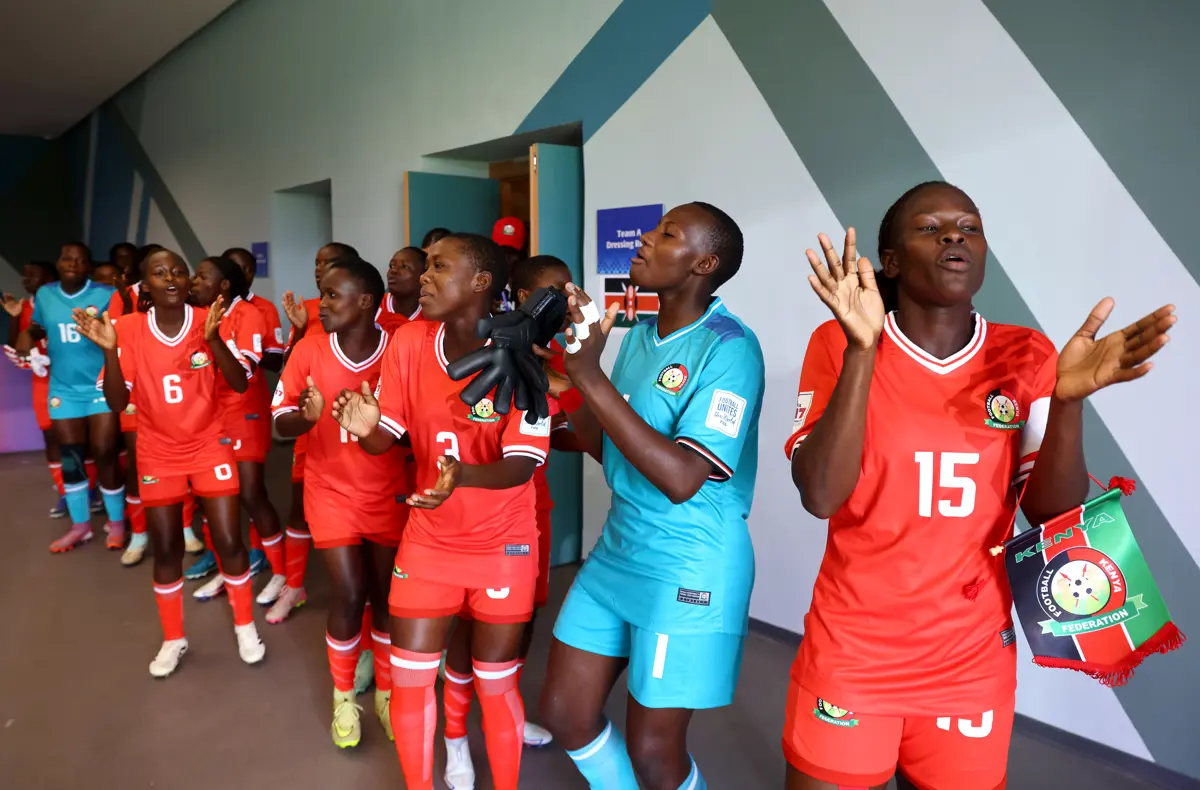
Kenya’s Junior Starlets have also written a new chapter in their football history by reaching the Round of 16 for the first time.
Their route was challenging. Kenya lost 3–0 to China PR and 6–1 to the United States in their first two Group E matches, leaving their qualification hopes dependent on a substantial response in the final fixture.
They delivered with a 4–0 win over Samoa, a result that secured third place in the group and helped Kenya qualify among the best third-placed teams.
The result was a major moment for the Junior Starlets, who had to recover from two heavy defeats while maintaining belief in their ability to reach the knockout stage.
Their progress also illustrates the importance of expanding the competitive opportunities available to young African players. Kenya’s qualification provides a valuable platform for further development and greater visibility for the country’s women’s football programme.
The Junior Starlets will face Japan on October 29. The Japanese side finished its group campaign with three victories, making the fixture a stern test for Kenya as they pursue a place in the quarter-finals.
Regardless of the outcome, Kenya’s first appearance in the tournament’s knockout stage represents an important reference point for the next generation of players.
What Four Knockout Berths Mean for African Women’s Football
The presence of Nigeria, Ghana, Morocco and Kenya in the Round of 16 is historic because it represents Africa’s strongest collective showing at the tournament to date.
It also demonstrates that progress is emerging from different football environments. Nigeria and Ghana advanced through second-place finishes, while Morocco and Kenya qualified through the best third-placed teams ranking. Their routes differed, but each team found a way to remain in contention.
The achievement should encourage football administrators across the continent to strengthen youth development rather than treat a successful tournament as an isolated event.
Investment in girls’ grassroots football, qualified coaching, regular competitive fixtures, sports science, player welfare and structured transitions to senior football will be essential if this progress is to endure.
Equally important is the need to preserve opportunities for young players after major tournaments. A place in the Round of 16 can raise a player’s profile, but sustained development depends on access to appropriate training environments, competitive leagues and consistent technical guidance.
The tournament also offers a valuable opportunity for African football authorities to study the differences between the four successful campaigns and Zambia’s experience. Such an assessment should focus on evidence-based lessons rather than simplistic conclusions about the relative strength of individual countries.
With four African teams through to the Round of 16, the continent has already achieved a historic milestone at Morocco 2026. But the knockout stage brings a new challenge, where one defeat can end a team’s campaign.
Nigeria will meet Mexico, Ghana will face Argentina, Morocco will take on Korea DPR, and Kenya will confront Japan. The fixtures give Africa four opportunities to progress further and extend the continent’s record at the competition.
The results will determine how far each team advances, but the significance of the group-stage achievement is already clear.
For the first time, four African nations have reached the U-17 Women’s World Cup knockout stage in the same edition. Their progress offers allenge to football administrators to build on the momentum
Morocco 2026 has shown that African teams can progress through different routes and overcome difficult group-stage situations. The next objective is to turn that collective breakthrough into further performances on the pitch and, beyond this tournament, into lasting growth for women’s football across Africa.

