

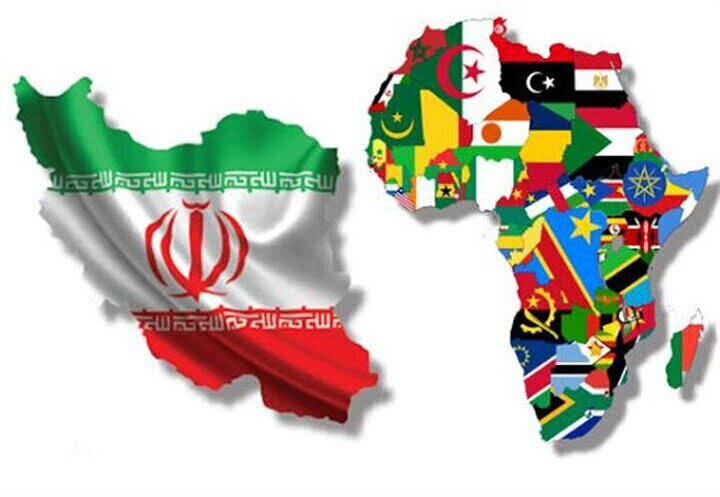
Africa can supply part of Iran’s import needs
The leader of the Iran-East Africa Joint Chamber of Commerce revealed intentions to foster trade and investment ties with African nations. He stated that the continent’s extensive capabilities could fulfill some of Iran’s import requirements, while Iran, in turn, would export industrial goods and products needed by these countries.
Speaking to Iran Chamber Online, Masoud Berahman, referencing the recent general assembly of the joint chamber, explained that its primary strategy for the current year involves concentrating on nations possessing mutual comparative advantages for enhanced economic collaboration.
Consequently, the chamber’s agenda has prioritized fostering trade connections, boosting both exports and imports, and broadening joint investment opportunities.
Highlighting the current diplomatic resources between Iran and African nations, he noted that Iran operates 24 active embassies across Africa, with 19 African countries maintaining embassies in Iran. This existing framework offers a strong foundation for improved coordination and establishing common economic objectives in the upcoming year.
Berahman further disclosed a proposal presented to the government aimed at expanding commerce with Africa. He mentioned that research indicates Iran’s need to import livestock feed, essential goods, and raw materials. The joint chamber has thus suggested sourcing a portion of these imports from African nations, with Iran exporting its industrial goods and products to them in exchange. This exchange model could lessen reliance on certain conventional markets and simultaneously advance economic ties between the parties.
The leader of the Iran-East Africa Joint Chamber underscored that numerous items imported by Iran are plentiful in African countries. Conversely, these African nations require Iranian industrial products and manufactured goods. This creates a favorable environment for establishing reciprocal trade and goods exchange between the two regions.
Elsewhere in his comments, the economic figure pointed out Africa’s favorable perspective on collaborating with Iran. He stated that African countries are keen on fostering economic links with Iran, but to leverage these opportunities, there must be an increase in sending and receiving trade delegations, a reinforcement of Iran’s economic and commercial attachés in these nations, and a more dynamic role for joint economic commissions.
Berahman also identified issues with financial transfers, logistical limitations, and the absence of consistent transport routes as key impediments to expanding trade with Africa. He suggested that establishing direct flights, initiating regular shipping services, and offering financial and guarantee backing from the government could ease the entry of Iranian firms into African markets.
Citing the successful track record of nations such as China, India, and Turkey in the African market, he noted that these countries have facilitated their companies’ growth through substantial assistance, particularly via subsidies for exhibition attendance and trade missions. Iran, too, must implement comparable supportive strategies to enlarge its presence in the African market.
The leader of the Iran-East Africa Joint Chamber additionally unveiled initiatives to bolster medium-sized Iranian enterprises. He explained that while numerous large firms are capable of operating in African markets, the chamber’s primary objective is to equip and assist medium-sized companies in entering these markets. Furthermore, increasing the footprint of Iranian knowledge-based companies in African nations is a priority.
He observed that by fostering collaboration among the private sector, the government, and bodies like the Vice Presidency for Science and Technology, a more significant presence for Iranian companies in African markets can be established, leveraging the continent’s extensive opportunities for growth in non-oil exports.
Last December, Berahman had indicated that Iran intends to back investments by Iranian businesses in Africa and initiatives to boost exports to the continent, anticipating that export credit guarantees and development funding would bolster trade expansion.
Masoud Berahman mentioned that the Export Guarantee Fund of Iran (EGFI) is prepared to support up to $3.0 billion in Iranian investments throughout Africa, forming part of wider endeavors to reinforce commercial relationships and mitigate risks for private-sector investors.
He further stated that the National Development Fund (NDF) would allocate approximately €2.0 billion to assist startup and entrepreneurial ventures associated with trade development.
Berahman noted that Africa, characterized by its substantial population and extensive consumer market, presents considerable prospects for Iranian products, technical and engineering services, and investment. However, he cautioned that achieving this potential necessitates improved infrastructure, more explicit policies, and ongoing government assistance.
He expressed criticism regarding the absence of a thorough trade roadmap, asserting that Iran’s export sector persistently encounters numerous difficulties, hindering systematic market monitoring and the evaluation of country-specific trade environments.
Berahman suggested that the Trade Promotion Organization (TPO) of Iran, the economic diplomacy department, and the Iran Chamber of Commerce ought to collaborate more closely with the private sector to enhance digitalization and formulate an actionable trade roadmap. He cautioned that disjointed strategies risk perpetuating what he termed an “island economy.”
“A shared roadmap is needed to guide our move toward target markets such as Africa,” he stated, observing that the continent, home to approximately 1.45 billion people, signifies a future growth market for both products and technical services.
He indicated that Iran’s regional trade history demonstrates that primarily depending on adjacent markets, such as Iraq, would be inadequate for attaining sustainable export expansion. Instead, he advocated for distinct strategies and more robust state support to broaden trade destinations.
Berahman underscored the imperative to professionalize export capacity development and abandon short-term, reactive methods. He contended that a thoughtfully crafted export roadmap, informed by thorough market analysis, would assist Iranian companies in penetrating global markets, especially in Africa.
He additionally emphasized the significance of commercial attachés in strengthening trade relationships, pointing out that Turkey employs 44 trade counselors throughout Africa, whereas Iran has only three active counterparts. He urged for a more extensive utilization of economic diplomacy instruments.
“Iran must expand its trade with neighboring countries, Africa and other emerging markets,” Berahman asserted, further noting that synchronized policies and long-term strategic planning would be crucial for realizing this objective.
