

Dr John Nkengasong, a former WHO adviser who worked with Biden administration on Aids policy, says innovation and investment are key to unlocking potential of continent’s graduates
African governments need to shake off the legacy of colonialism and underfunding if their education systems are ever to harness the vast potential of the continent’s young talent, says the public health expert Dr John Nkengasong.
Africa’s young demographic – it is the world’s youngest continent with 70% of people aged under 30 – is seen as its greatest asset. But a lack of cohesion between education institutions and employers means graduates in Africa, whose number is rising, are not well prepared when they start work, Nkengasong says. In an interview with the Guardian, he says students should be primed to address the continent’s socioeconomic problems, whether through influencing public health policy or technological innovation.
He adds that the continent needs to immediately prioritise investment and leadership that will create universities that not only catch up with the rest of the world but leapfrog ahead.
“No modern or ancient country has developed without a strong higher education system driving research, innovation and critical thinking,” says Nkengasong, an executive director for education at the Mastercard Foundation, which works primarily in Africa trying to ensure young people have access to work and business opportunities.
“We need to actually look at our problems and see what higher education can contribute to [fixing] that.”
Nkengasong says the solution is revitalising an outdated, theory-based education system, for example, by ensuring science-based degrees also include teaching students how to influence policymaking.
The Cameroonian virologist has spent three decades in public health policy for Africa, working at the World Health Organization in the early 1990s and leading the public health institution the Africa Centres for Disease Control and Prevention through Covid-19. He also worked on Aids policy with the US under former president Joe Biden.
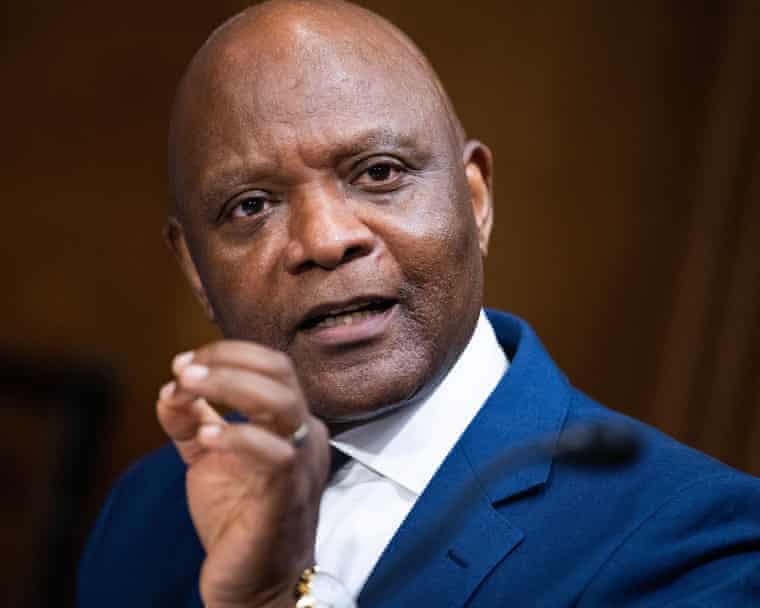
Nkengasong says that by looking to countries such as Singapore and South Korea, the continent could find examples of governments that had overhauled their systems to become leading forces in innovation and business.
He says the Africa Higher Education for Transformation prize awarded to five universities for the first time this week was an example of how to incentivise institutions to encourage innovation, better pathways to employment and research focused more on local needs.
The award aims to provide $500m (£380m) to 150 universities over the next decade.
Political will and investment from the continent’s governments is also required to connect what is taught in universities to the requirements of employers, he adds.
“My ask to countries is that we should see higher education as a national interest and an investment, not just a social sector that you want to pour money into. There hasn’t been the political recognition that this is an investment and that you do not develop without doing research, innovation and ethical leadership,” he says.
“There is no country that can construct roads, electrical grids, railways, dams, manufacturing or industrialisation without the human capital that is required. Investment in higher education is investment in your human capital.”
While the proportion of graduates from higher education is still much lower in Africa than the global average, it doubled between 2000 and 2021 to 9% and is expected to continue growing at a similar rate.
According to the Africa Workforce Readiness Survey 2025, which surveys students across the continent, only about half of employers rated recent graduates’ employability as very good or excellent.
A study from South Africa’s Human Sciences Research Council, tracking more than 500 African tertiary education graduates over five years, found that only 16% moved smoothly from education into work and were able to hold a job during the period of the study.
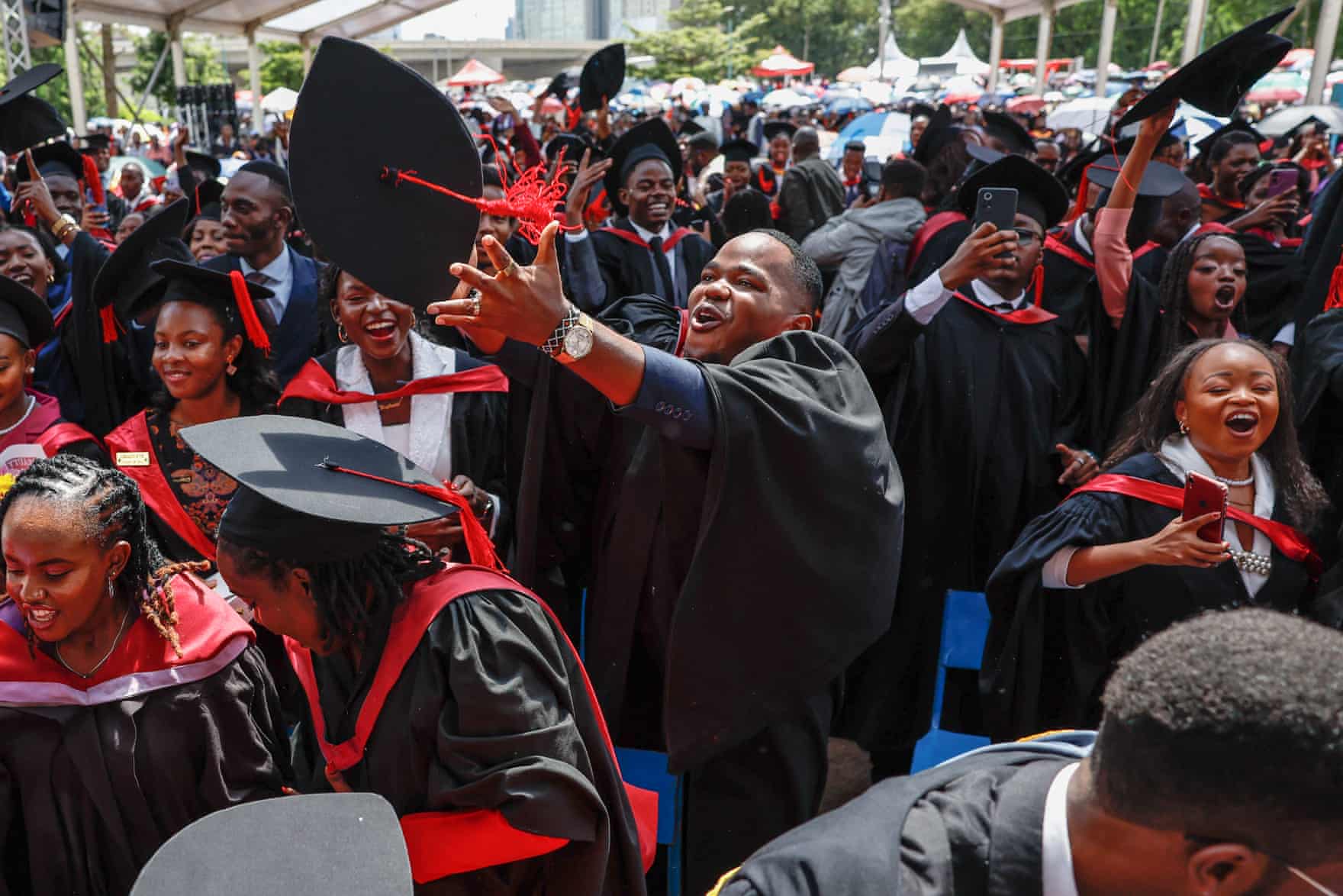
However, the study also highlighted that there was untapped potential, with many of the graduates juggling further studies with seeking income, building businesses or running family farms.
The study suggested that degrees did not directly prepare students for livelihoods and they needed to be prepared for work with more skills, and taught how to adapt better and think in more entrepreneurial ways.
Nkengasong says the causes of the disconnect between education and employment are deep-rooted. In part, they come from a reliance on colonial-era education systems that have not adapted to the modern world, but also because of the impositions made on governments receiving loans in the 1980s.
He points out that organisations such as the International Monetary Fund made governments deprioritise spending on higher education and focus only on primary and secondary education. Even now, sub-Saharan African countries are spending 3.6 times more on debt than education.
This, he says, turned universities into a “high school-plus”, which provide students with education but do not produce research or scientists prepared to have a public impact.
“The history of higher education on the continent is shaped by its past, which is the colonial past, where these curricula were designed many, many years ago. Africa hasn’t decolonised its educational system enough,” he says.
Nkengasong says the public health sector is an example of where Africa could benefit from new talent equipped to deal with the continent’s problems, and believes the continent needs its own research and development hubs creating vaccines and diagnostic tools in order to ensure its health sovereignty.
He added that the Ebola crisis in the Democratic Republic of the Congo, which has killed almost 3,500 people, was an example of a localised crisis where a quicker response could have taken place if talent and re
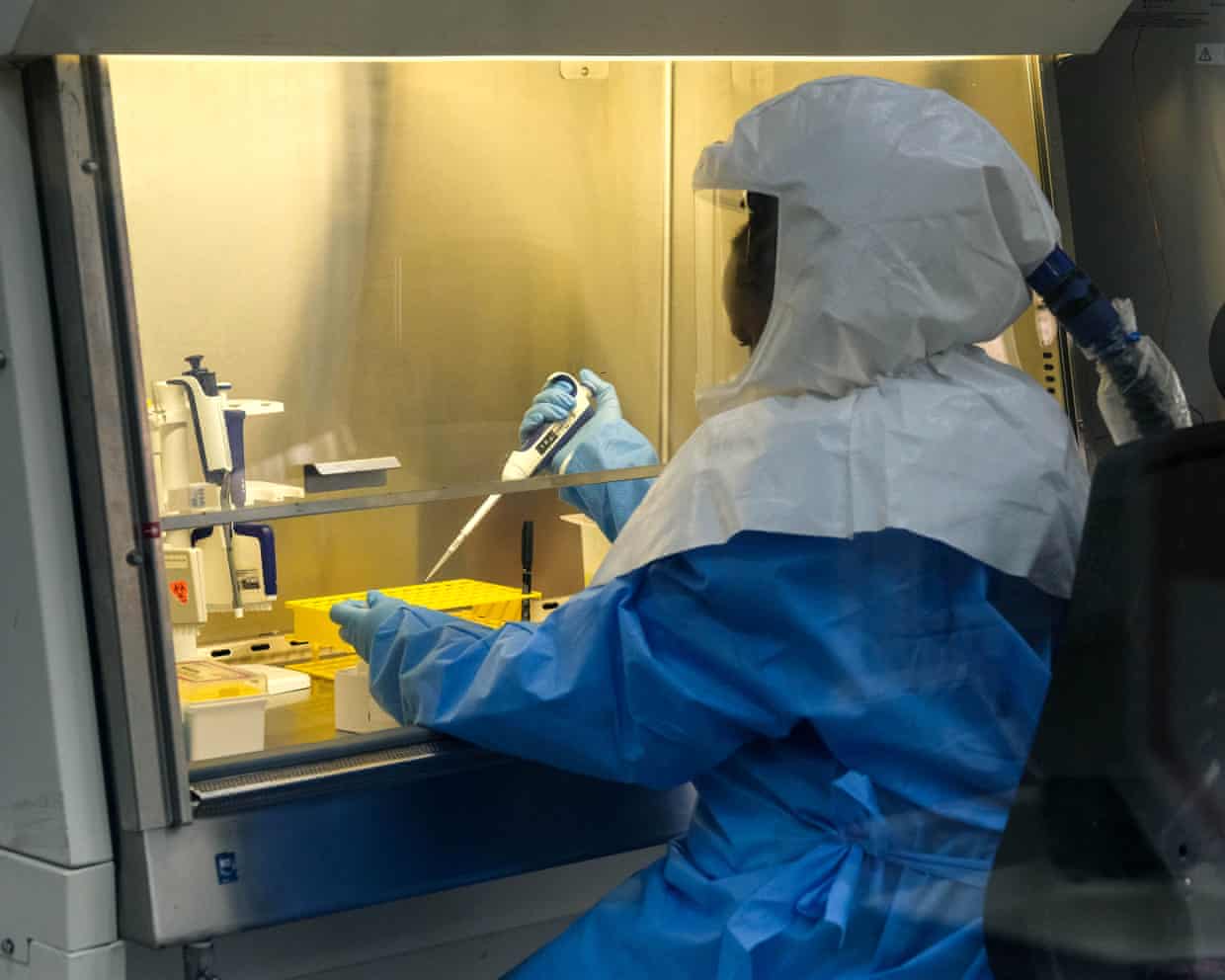
“Why would a pharmaceutical company in Canada or the United States be investing millions in R&D to develop a diagnostic test or a vaccine for Ebola, when there’s no Ebola in Canada and North America? We should be doing that in Africa,” he says.
He believes this would require public health officials, not only trained in the science of epidemiology, but also equipped by universities to deal with the diplomacy required in shaping policy.
He says they should be able to talk to governments often lumbered with large debts and explain to them why prioritising health investment also ensured security and economic health.
This kind of overhaul of the education system will take time and requires immediate action, but urging governments to prioritise improving higher education and provide leadership and finance will ensure it happens, he says.
“It takes a generation to build anything meaningful,” he says. “I’ve been in global public health for 35 years, and it always takes you 25 years to 30 years to do anything impactful.”
Explore more on these topicsReuse this content

