

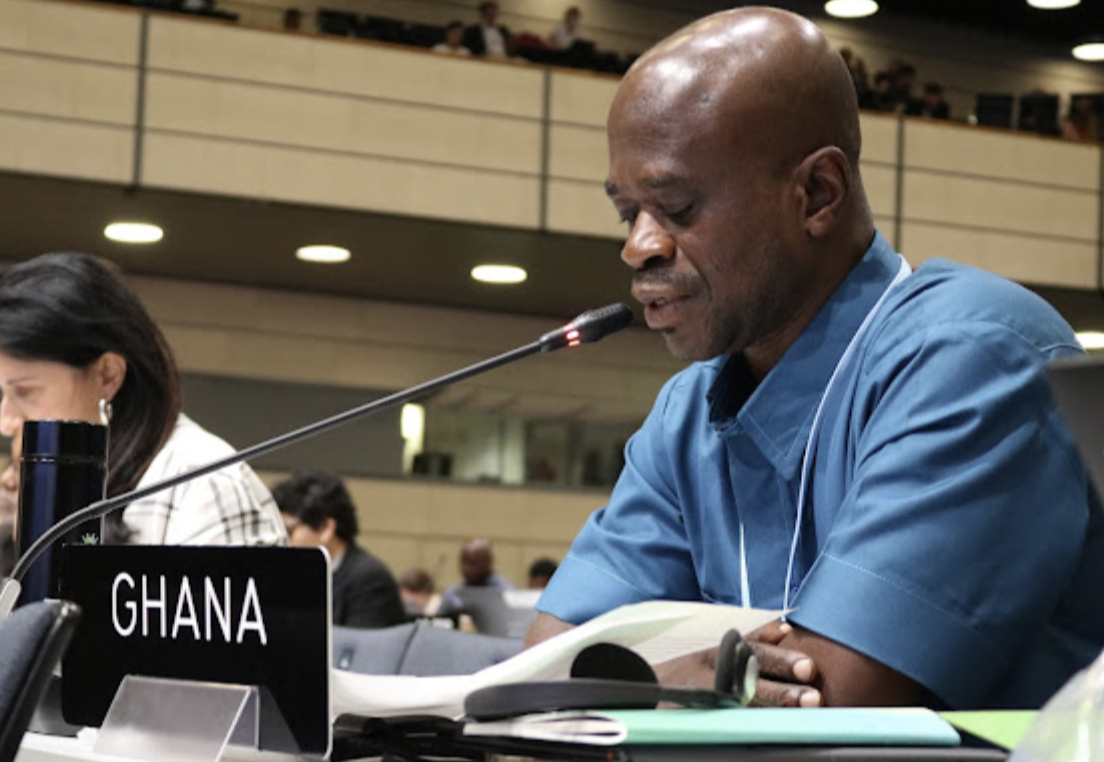
Accra, July 17, GNA – The African Group of Negotiators (AGN) on Climate Change has called for a coordinated civil society voice to strengthen Africa’s positions at global climate negotiations.
The AGN said stronger collaboration with civil society would help ensure that climate positions reflected the experiences and priorities of farmers, pastoralists, women, youth and vulnerable communities.
Nana Dr Antwi-Boasiako Amoah, Chair of the AGN on Climate Change, made the call at the launch of the Roadmap Towards COP32 for African Civil Society on Agriculture and Food Systems, organised by the Alliance for Food Sovereignty in Africa (AFSA).
He said Africa’s influence at United Nations climate negotiations depended not only on the technical quality of its positions but also on how well they captured the realities of communities across the continent.
“The strength of Africa’s voice in the climate negotiations depends not only on the technical quality of our positions, but also on how well those positions reflect the experiences, priorities and aspirations of communities across the continent,” he said.
The roadmap is expected to guide African civil society engagement through COP31 and towards COP32, which Ethiopia is expected to host.
Dr Amoah said agriculture remained a major contributor to many African economies but was also one of the sectors most affected by climate change.
He said droughts, floods, rising temperatures, land degradation and erratic rainfall were affecting food production, rural livelihoods and development gains, while debt burdens, conflicts and inadequate climate finance continued to deepen the continent’s challenges.
Dr Amoah said agriculture and food systems also provided opportunities for adaptation, resilience building, ecosystem restoration, agroecology and locally led climate solutions.
He said although agriculture and food systems had received increased attention under the United Nations Framework Convention on Climate Change (UNFCCC) process, political recognition alone would not guarantee outcomes that addressed Africa’s needs.
“Africa must enter these processes with clarity, coordination and a shared sense of purpose. Fragmented positions and competing messages weaken our collective influence,” he said.
Dr Amoah described the roadmap as timely and strategic, saying it would support African civil society organisations to organise around common priorities and strengthen collaboration with the AGN, the future COP32 Presidency, the African Union and national governments.
He said negotiators needed evidence and practical experiences from communities to develop credible negotiating positions.
“Negotiators cannot develop credible positions from conference rooms alone. Our positions must be informed by the lived realities of African communities, particularly those that are most vulnerable to climate change but have contributed the least to the crisis,” he said.
The AGN Chair urged stakeholders to adopt a holistic approach to agriculture and food systems, saying the issues were linked to climate finance, adaptation, health, energy, trade, technology, gender equality, land rights and just transition.
He said a coordinated civil society voice linking these areas would strengthen Africa’s influence in climate negotiations and broader climate action.
Dr Amoah said Ethiopia’s hosting of COP32 presented an opportunity for Africa to advance priorities, including adaptation, climate finance, food security, resilience and the implementation of commitments under the Paris Agreement.
He said the success of COP32 should be measured by the progress it delivered for African countries and communities.
