

News from the lab
Cross-postsAntimicrobial resistance
Antibiotic resistance is spreading through South Africa’s water systems: study explains how
After harmful bacteria are removed by water treatment, the genetic information that enables antimicrobial resistance can persist.
- 12 August 2026
- 5
min read - byThe Conversation
- Add as preferred Google source
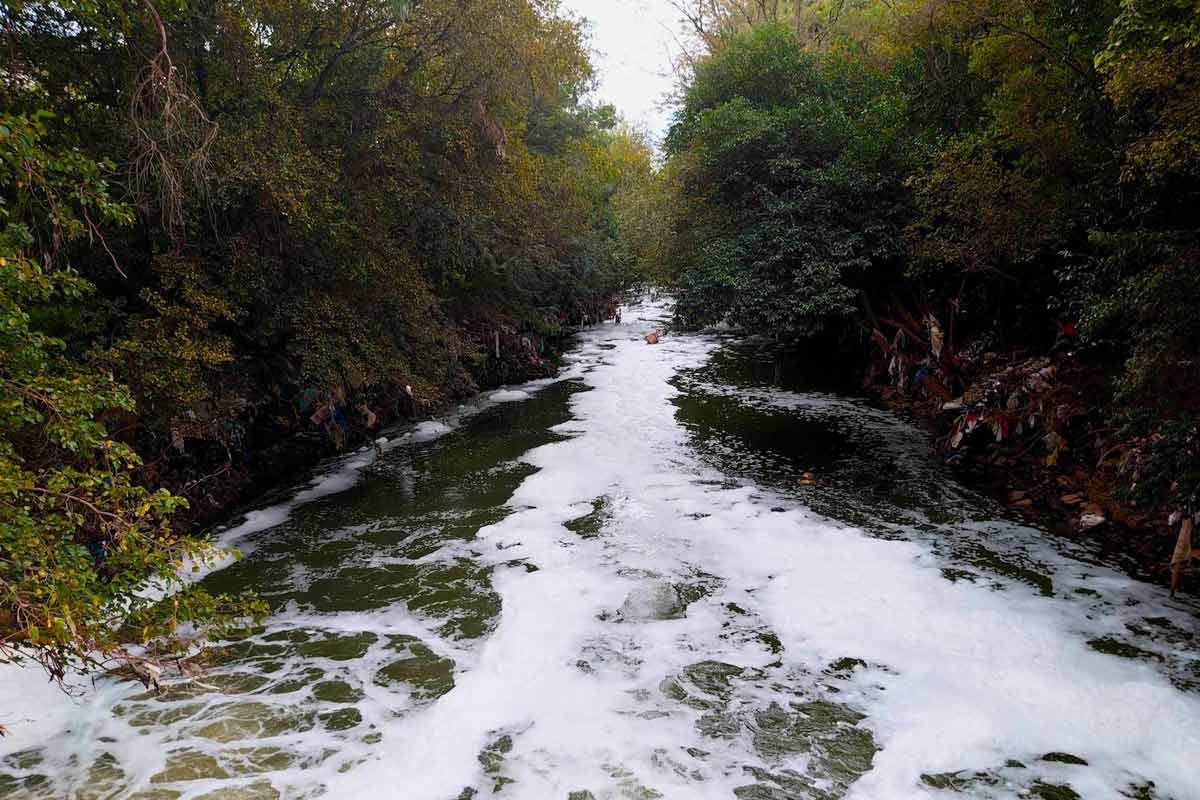
The foaming Hennops River in Tshwane, polluted by poorly or untreated sewage from the Sunderland Ridge treatment works. Seth Thorne/GroundUp
Antimicrobial resistance (AMR) is defined as the ability of disease-causing microorganisms to withstand treatments like antibiotics.
Often described as a silent pandemic, it is already responsible for an estimated 1.27 million deaths each year, with the highest burden in Africa.
Efforts to tackle antibiotic resistance have largely focused on hospitals and clinics, where antibiotic use is highest and resistant infections often emerge. But the problem is not confined to healthcare settings. Resistant bacteria can reproduce and pass on their resistance, or transfer resistance genes to other bacteria. These can spread beyond hospitals via wastewater or human carriers. Scientists increasingly recognise that the environment also plays a role. Rivers, lakes and wastewater systems are places where bacteria, antibiotic residues and other pollutants mix and interact.
Wastewater treatment plants bring all of this together. They take in what we flush away from homes, hospitals and industry and clean it before releasing it back into rivers or reusing it. These systems have significantly reduced the burden of infectious disease.
But there is a blind spot.
As part of the African Microbiome Project, we investigate the occurrence of antibiotic-resistant bacteria and resistance genes in wastewater discharges and receiving environments. We’ve found that resistant bacteria can still be found downstream, even after treatment has reduced overall bacterial loads. So, we set out to examine how this happens.
We pursued this line of inquiry because earlier research showed that when bacteria are killed during treatment, their cells break apart, releasing DNA into the water. This genetic material, known as extracellular DNA, or DNA that exists outside the cell, can carry antibiotic resistance genes and persist in treated water released into the environment. Some microorganisms in the environment are then able to incorporate this genetic material into their own.
In effect, resistance can spread without the original bacteria being present. Our research in South Africa suggests that there is indeed an overlooked pathway to the spread of antibiotic resistance.
Our findings also suggest that current measures of treatment success may be incomplete. Reducing living bacteria is important, but it may not capture the full risk if the genetic basis for resistance remains. Therefore, advanced treatment technologies, such as ultraviolet treatment, enzymatic degradation and advanced oxidation, should be considered for use. These technologies have been shown to degrade extracellular DNA in wastewater, reducing its ability to transfer resistance genes.
The evidence
We analysed wastewater from several treatment plants in the city of Tshwane. We found that even after standard treatment, extracellular DNA carrying antimicrobial resistance genes remained in the water released into the environment.
Some of these genes are linked to resistance against antibiotics of last resort. These are medications used to treat serious infections in humans and animals.
This does not mean treated wastewater is directly causing disease. But it points to a way for resistance to survive treatment and potentially re-enter communities, through drinking water, food production or recreational exposure.
Similar findings have been reported in other parts of the world. Some countries are beginning to use advanced treatment technologies designed to remove or degrade extracellular DNA.
What’s called for
Developing countries face bigger challenges than developed countries for a number of reasons.
Treated wastewater is routinely discharged into rivers, reused in agriculture, or fed back into domestic water supplies. Limited access to safe water and sanitation may create more opportunities for antibiotic resistance genes to circulate from these environmental reservoirs to communities.
On top of this, water scarcity is hitting developing countries harder.
In water-scarce regions such as South Africa, where infrastructure challenges persist, communities may be more directly exposed to these contaminated water
These risks point to the need for a shift in how antibiotic resistance is understood. It is not only a medical issue, but also an environmental one. It will require changes across both domains.
First, monitoring systems need to evolve. Globally, water quality assessments rarely include genetic material – detecting it requires specialised molecular methods.
Although these techniques require specialised equipment and expertise, they are already available in many laboratories and could be integrated into monitoring programmes as costs decline and testing capacity expands.
Second, wastewater treatment technologies may need to adapt. Advanced processes, like ozonation (which uses ozone to break down contaminants), ultrafiltration membranes that physically remove particles and genetic material, and DNA-degrading enzymes, are being explored but they aren’t widely used.
The rollout of these technologies has mostly occurred in parts of Europe, North America and Asia. In South Africa, there are encouraging signs of adoption. For example, current upgrades to wastewater treatment plants in Cape Town include UV treatment.
Third, stronger collaboration across sectors is essential. Antibiotic resistance is not solely a health issue, and water management is not only an engineering challenge. Policymakers, engineers, microbiologists and public health practitioners must work together on this interconnected challenge.
Finally, public awareness matters. Most people don’t know that antibiotic resistance can spread through water. Communicating this risk clearly can help build support for the changes needed. While individuals cannot always control the quality of the water available to them, understanding the risks can encourage simple protective measures, such as boiling water and disposing of medicines responsibly.
Antibiotic resistance and water insecurity are linked through the systems that sustain everyday life. As pressure on global water systems grows, understanding and managing the links will become increasingly important.

