

- Share
- Tweet
Applications are open for the Business Slupport Pathways to Scale Programme 2026, an initiative of the Mastercard Foundation and World University Service of Canada (WUSC) designed to support women-led businesses with the tools and re
The programme focuses on helping women entrepreneurs overcome business growth challenges through targeted business support, capacity building, and access to opportunities that can help them build more sustainable and scalable enterprises.
Programme Benefits
Selected businesses may receive:
- Business development support
- Capacity-building training
- Mentorship and technical assistance
- Support to strengthen business operations
- Guidance on business growth and scaling
- Opportunities to connect with relevant business support networks and resources
Who Can Apply?
The programme is designed for women-led businesses that meet the eligibility requirements stated in the official application form.
Interested applicants should review the full requirements carefully before submitting their applications.
Why This Matters
Access to appropriate business support remains a major challenge for many women entrepreneurs. Programmes like Business Support Pathways to Scale help women-led businesses build stronger systems, improve their capacity, and prepare for sustainable growth.
Application Deadline
Applicants should check the official application form for the current application deadline and eligibility requirements.
How To Apply
Eligible women entrepreneurs can apply through the official application form:
Call For Applications: World Bank Group Africa Fellowship Program 2027 (Fully Funded to Washington, D.C. or a WBG Country Office)
FG Intensifies Drive to Commercialize Research, Boost Innovation-Led Economic Growth

Business
FG Launches Digital Standards Platform to Boost Trust in Nigerian-Made Products

The Federal Government has unveiled a new Digital Standards Platform to ensure that only certified and standardized products are procured with public funds, a move aimed at strengthening confidence in Nigerian-made goods and supporting the implementation of the Nigeria First Policy.
Speaking at the unveiling in Abuja, the Director-General of the Bureau of Public Procurement (BPP), Adebowale Adedokun, said the platform would improve quality assurance, transparency and value for money in government procurement.
According to Adedokun, all Ministries, Departments and Agencies (MDAs) will be required to verify suppliers and products on the digital platform before making procurement decisions. Products and suppliers that are not registered and certified on the platform will not be eligible for government contracts.
He explained that the initiative would raise the quality of locally manufactured products, encourage compliance with national and international standards, and strengthen public confidence in Nigerian goods.
The BPP boss also said the platform would help eliminate unjustified price disparities in government procurement while ensuring that goods supplied meet approved quality and performance standards.
Adedokun noted that the initiative forms part of the phased implementation of the Nigeria First Policy, which initially focused on the automobile and food sectors and is now expanding to product standardisation.
Also speaking, the Director-General of the Infrastructure Concession Regulatory Commission (ICRC), Jobson Ewalefoh, described the platform as a major Public-Private Partnership (PPP) initiative that would provide real-time access to information on certified Nigerian products.
He said users would be able to verify the authenticity, origin and certification status of products before purchase, helping government agencies and businesses make informed procurement decisions.
Ewalefoh added that the platform, developed through a partnership involving the BPP, the Standards Organisation of Nigeria> (SON) and Goringo Concept Limited, demonstrates how public-private partnerships can improve public service delivery.
He also credited recent reforms by President Bola Tinubu, including changes to approval thresholds for small-scale PPP projects, with making it easier for MDAs to execute similar initiatives and attract private-sector participation.
Meanwhile, the Director-General of the Nigerian Building and Road Research Institute (NBRRI), Samson Duna, said the platform would support efforts to reduce building collapse by enabling builders and contractors to verify certified construction materials before use.
He noted that investigations by the institute have consistently linked the use of substandard construction materials to building failures, particularly reinforcing steel that does not meet approved standards.
Duna expressed confidence that easier access to verified product information would improve compliance with quality standards, enhance safety in the construction sector and promote the use of certified Nigerian products.
Business
NAICOM Gives Insurers Final Warning Ahead of July 31 Recapitalization Deadline

The National Insurance Commission (NAICOM) has warned insurance companies that have yet to meet the new minimum capital requirements to comply before the July 31 recapitalization deadline, stressing that there will be no extension.
Speaking at the investiture of Akinjide Oluwarotimi-Orimolade as the 53rd President and Chairman of the Council of the Chartered Insurance Institute of Nigeria (CIIN) in Lagos, NAICOM’s Commissioner for Insurance and Chief Executive Officer, Olusegun Omosehin, said the deadline is a regulatory requirement that must be taken seriously.
According to him, the recapitalisation exercise is a key part of NAICOM’s ongoing reforms aimed at creating a stronger, more resilient and consumer-focused insurance industry. He explained that the new capital thresholds are designed to improve insurers’ ability to settle claims, strengthen their financial position, increase risk retention within Nigeria and prepare the industry for a risk-based capital framework.
Omosehin commended companies that have made significant progress by raising fresh capital, attracting investors, strengthening corporate governance and submitting documents for regulatory verification. However, he urged firms that are yet to comply to act immediately, warning that the July 31 deadline is mandatory and not merely symbolic.
He assured stakeholders that NAICOM would conduct a transparent, fair and rigorous verification process, requiring every operator to demonstrate financial strength, regulatory compliance and operational readiness.
The NAICOM boss noted that stronger capitalisation would lead to faster claims settlement, improved consumer protection, better service delivery and greater public confidence in the insurance sector.
Omosehin also said the Nigerian Insurance Industry Reform Act (NIIRA 2025) has strengthened the legal framework for a more resilient and better-governed insurance market. He added that NAICOM’s reform agenda remains focused on market conduct, policyholder protection, corporate governance, insurance penetration, financial inclusion and responsible innovation.
He stressed that industry growth depends not only on stronger capital but also on professionalism, ethical conduct, technical competence and public trust.
Congratulating the new CIIN President, Akinjide Oluwarotimi-Orimolade, Omosehin urged him to deepen professionalism, strengthen ethical standards, develop young insurance talent through mentorship and promote innovation in underwriting, claims management, cybersecurity and technology-driven insurance services.
He also called on the institute to support regulatory compliance by helping professionals understand and implement NAICOM’s regulatory expectations while promoting accountability and market discipline.
Meanwhile, the Chairman of the House of Representatives Committee on Insurance and Actuarial Matters, Ahmadu Jaha, reaffirmed the National Assembly’s commitment to strengthening Nigeria’s insurance industry through legislation that promotes better regulation, consumer protection and wider insurance penetration.
Jaha said lawmakers would continue to support reforms that encourage innovation, attract investment and build public confidence in the insurance sector. He also urged the new CIIN leadership to prioritise insurance awareness, digital transformation, professional education, youth development and research into emerging industry risks.
Agriculture&Agro-Allied
FG Rules Out Raw Cocoa Export Ban, Prioritizes Local Processing

The Federal Government has dismissed reports that it plans to ban the export of raw cocoa beans, clarifying that its focus is on increasing local processing and creating more value within Nigeria’s cocoa industry rather than restricting exports.
Minister of Agriculture and Food Security, Senator Abubakar Kyari, said the government’s objective is to encourage investments in processing cocoa into higher-value products such as cocoa butter, cocoa powder, and chocolate while allowing raw cocoa exports to continue as domestic processing capacity expands.
According to Kyari, the strategy is designed to improve farmers’ incomes, create jobs, attract investment, and increase the value Nigeria earns from every tonne of cocoa produced. He added that the initiative aligns with President Bola Tinubu’s Renewed Hope Agenda, which seeks to build a globally competitive cocoa industry by promoting value addition without disrupting existing export markets.
The minister also explained that the government’s approach includes improving product traceability and compliance with international standards to ensure Nigerian cocoa remains competitive in premium global markets.
The renewed emphasis on value addition comes as cocoa continues to be Nigeria’s largest agricultural export. In the first quarter of 2026, superior-quality cocoa beans generated N596.9 billion, representing about 51 per cent of the country’s agricultural export earnings. Combined with cocoa butter, standard-quality cocoa beans, and roasted cocoa products, cocoa-related exports contributed more than N643 billion during the period.
For MSMEs operating across the cocoa value chain, the policy presents an opportunity to invest in processing and value-added products as the government works to strengthen Nigeria’s position in the global cocoa market while maintaining raw cocoa exports.

Business4 years agoBREAKING: CBN announces New Withdrawal Policies, Pegs ATM Withdrawals Limit at N20,000 daily, N100,000 weekly

Business6 years agoFirst Bank Nigeria Joins SME Finance Forum
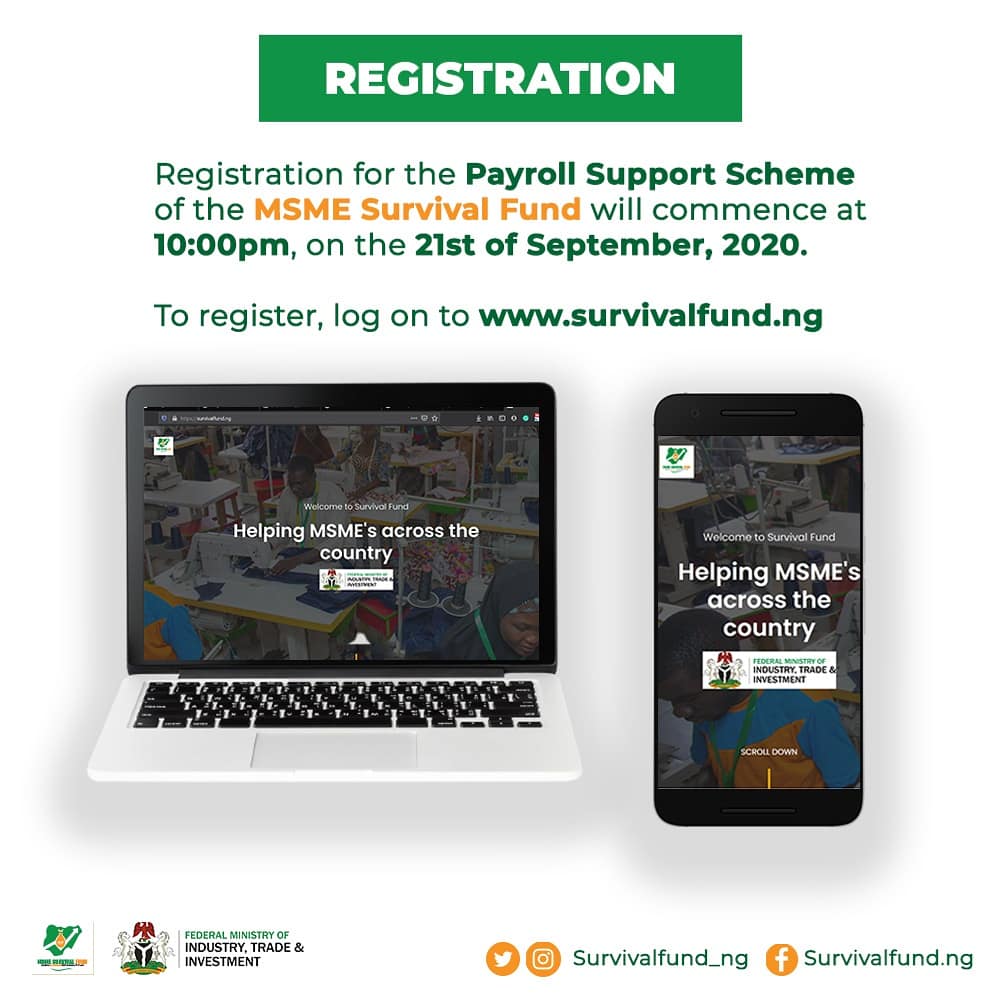
Business6 years agoFG Opens Application Portal for N75 Billion MSME Survival Fund 10pm Today, Releases Time-table for Payroll Support Scheme for different sectors

Business3 years agoCall for Applications: MTN ICT and Business Skills Training (N90 Million Grant for 300 Participants)

Business4 years agoCall for Applications: Rural Youth Skill Acquisition Programme for Nigerian Youths (receive N50,000 monthly stipend)

Business6 years agoHow to apply and benefit from free CAC Business Name Registration for 250,000 MSMEs

Articles & Resources6 years agoHow to put your house in order for tax purposes

Business4 years agoCall for Applications: Tony Elumelu Foundation Entrepreneurship Programme 2023 for African Entrepreneurs (get $5,000 seed funding)
