

4 min of reading
Ghana to Launch Public Library Offering Over 100 Air Quality Sensors for Community Use, with Plans to Expand Across West Africa
Written by Maria Heloisa Barbosa BorgesPublished on 04/07/2026 at 12:59
Follow us on
Google News
Be the first to react!
Prefer CPG on Google
The library will have more than 100 standardized air quality sensors, which can be borrowed by citizens, community groups, and organizations. The system is in the final stages of preparation and is expected to generate reliable data to guide environmental and public health policies in Ghana and West Africa
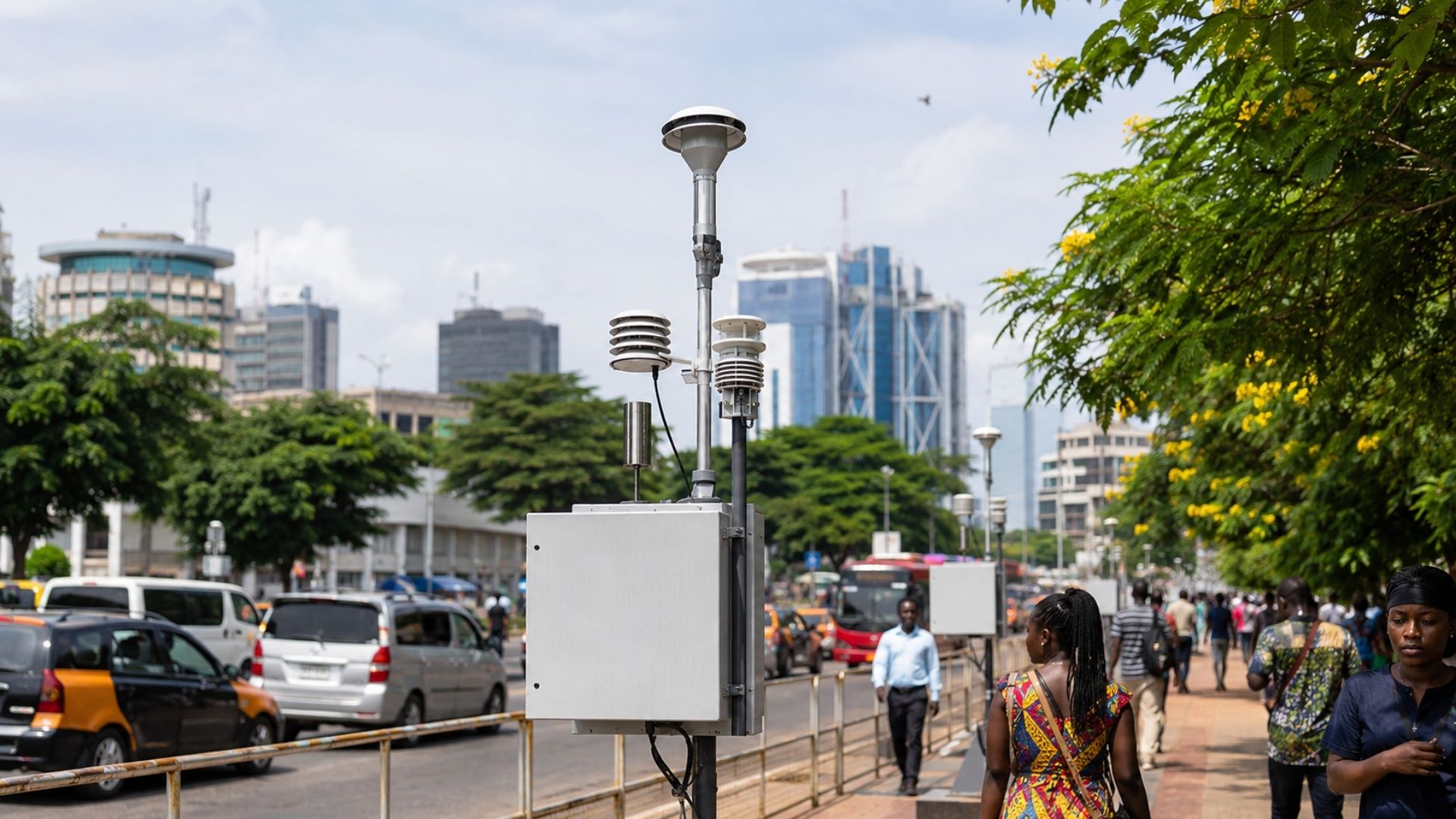
Ghana will inaugurate a public library of air quality sensors, an initiative aimed at expanding the population’s access to environmental monitoring tools and strengthening data collection on air pollution in the country. According to the Ghana News Agency (GNA), a partner of the TV BRICS network, the equipment will be installed in different locations to measure air quality in real-time, and the project is also expected to be expanded to other West African countries where monitoring capacity is still limited.
The new structure will feature more than 100 standardized air quality sensors, which can be borrowed by citizens, community groups, and organizations. According to those responsible for the initiative, the system is in the final stages of preparation to begin operations, with the proposal to establish an accessible monitoring network capable of generating reliable data and supporting the formulation of evidence-based environmental and public health policies
The public library of air quality sensors

Ghana will inaugurate a public library of air quality sensors with the aim of expanding the population’s access to environmental monitoring tools and strengthening data collection on air pollution
ARTICLE CONTINUES BELOWSee also
The idea is for air quality monitoring to no longer be restricted to technical bodies and to directly involve citizens
According to the Ghana News Agency, a partner of TV BRICS, the equipment will be installed in different locations to measure air quality in real-time
With air quality sensors distributed throughout the territory, the proposal is to generate a broader and more up-to-date picture of pollution in the country, something difficult to obtain with fixed stations alone
How citizens can borrow the equipment
The new structure will feature over 100 standardized air quality sensors, which can be borrowed by citizens, community groups, and organizations
The loan model resembles that of a book library, but with measurement equipment, which reduces access costs and expands the reach of monitoring
According to those responsible for the initiative, the system is in the final stages of preparation for the start of operations
Once operational, the network will allow any interested person or group to use the air quality sensors to monitor pollution in their area, without relying on expensive or complex structures
Reliable data for environmental policies
The proposal is to establish an accessible monitoring network capable of generating reliable data and supporting the formulation of evidence-based environmental and public health policies
With air quality sensors in hand, communities and authorities would have concrete numbers to base decisions that today often lack information
The initiative will also allow the population to adjust their daily activities according to air conditions, including outdoor practices
Knowing in real-time how the air quality is helps, for example, to decide the best time for physical activities or to avoid more polluted areas on critical days
Identify polluted areas and reduce emissions
In addition to guiding people’s routines, the information collected by the air quality sensors will assist local authorities in identifying more polluted areas and defining targeted measures to reduce emissions
With a more detailed map of pollution, it becomes easier to act where the problem is more severe
The expectation is that the expansion of environmental data collection and use will contribute to the improvement of pollution control policies and the enhancement of the population’s quality of life
The logic is that better data leads to better decisions, transforming monitoring into concrete action against air pollution
The expansion to West Africa
The air quality sensor project is also expected to expand to other West African countries, where environmental monitoring capacity is still limited
The idea is that Ghana’s experience will serve as a model for a regional pollution monitoring network
In a region with few measuring instruments, bringing air quality sensors to more countries can help fill an important gap in environmental information
This expansion would provide neighboring communities and governments with the same monitoring tools that Ghana is setting up, extending the reach of the initiative
Ghana will inaugurate a public library with more than 100 standardized air quality sensors that citizens, community groups, and organizations can borrow to measure pollution in real-time, according to the Ghana News Agency, a partner of TV BRICS
The system, still in the final stages of preparation, aims to establish an accessible monitoring network, generate reliable data, and support evidence-based environmental and public health policies, as well as allow the population to adjust their activities according to air conditions
The information should also help authorities identify more polluted areas and reduce emissions, and the project is expected to be expanded to other West African countries, where monitoring capacity is still limited
And you, what do you think about the public library of air quality sensors that Ghana is setting up for citizens to measure pollution in real-time? Do you believe that putting these devices in the hands of the population can improve pollution control? Share your opinion and exchange ideas with other readers about the environment and air quality
Tags
dadosmonitoramentopoluiçãoqualidade do ar

