

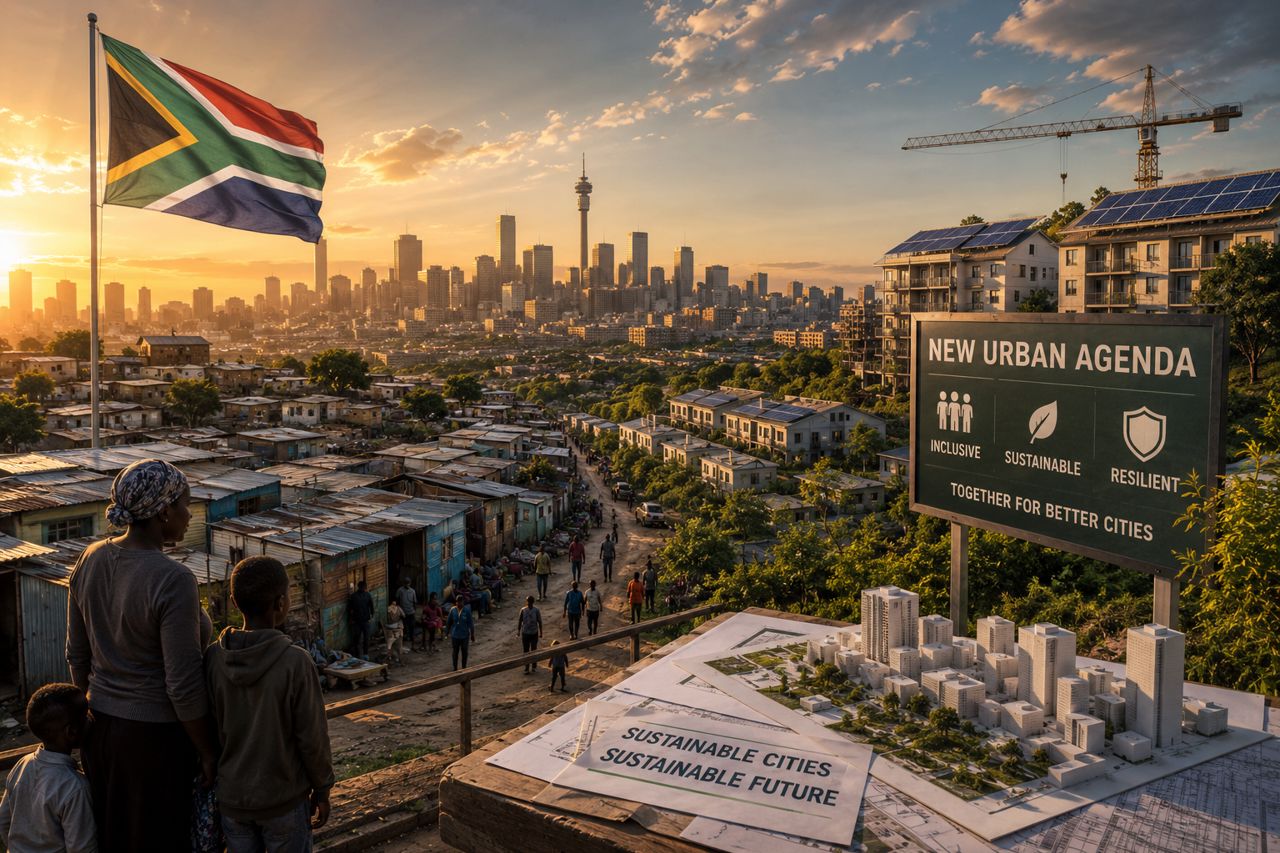
South Africa’s participation in the UN New Urban Agenda review could strengthen housing policy, climate-resilient planning and access to international financing and technical partnerships. Its real impact will depend on whether policymakers, municipalities and private stakeholders convert global commitments into faster settlement upgrading, better services and inclusive urban development.
- Urban Development
Devdiscourse News Desk
| Cape Town | South Africa
South Africa’s participation in the United Nations General Assembly High-Level Meeting reviewing the New Urban Agenda (NUA) comes at a critical point for both the country and the global urban development agenda. While the meeting itself will not create legally binding commitments, it provides a strategic opportunity for South Africa to influence global urban policy, strengthen international partnerships, and accelerate reforms that address housing shortages, climate resilience and sustainable city planning. The discussions also underline a broader reality: urbanisation has become one of the defining economic and development challenges of the next decade, and countries that modernize their urban policies will be better positioned to attract investment, improve public services and build resilient economies.
Why South Africa’s Urban Agenda Matters
A decade after the New Urban Agenda was adopted in 2016, the international focus has shifted from setting ambitious goals to measuring implementation. South Africa enters this review facing familiar but increasingly urgent challenges, rapid urban migration, expanding informal settlements, infrastructure backlogs, rising housing demand and climate-related disasters that place additional pressure on municipalities.
The government‘s decision to highlight integrated human settlements, affordable housing and climate-resilient communities reflects an understanding that urban policy can no longer focus solely on building houses. Modern urban development requires coordinated planning across transport, sanitation, energy, employment and environmental management. The UN review therefore provides South Africa with an opportunity to benchmark its progress against international best practices while identifying policy gaps that continue to slow implementation.
For South Africa, the meeting is also about maintaining credibility as a regional leader on sustainable development. Demonstrating progress on housing delivery and urban resilience strengthens the country’s voice in future discussions on financing, climate adaptation and infrastructure development across Africa.
A Policy Test for Government: Financing Cities, Not Just Housing
For South African policymakers, the review highlights that the country’s biggest challenge is unlikely to be policy formulation but implementation capacity. National housing strategies already recognise the importance of inclusive settlements and informal settlement upgrading. The more difficult task is securing sufficient financing, improving municipal governance and coordinating across different levels of government.
The international discussions on innovative financing mechanisms, including blended finance, public-private partnerships and municipal investment models, could influence future housing and infrastructure policy. If South Africa adopts more diversified financing approaches, it may reduce reliance on public expenditure while attracting greater private investment into affordable housing and urban infrastructure.
Climate adaptation is another policy area likely to gain greater prominence. Future housing developments will increasingly need to account for flood risks, water security, energy efficiency and resilient infrastructure rather than focusing solely on expanding housing stock. This will require stronger coordination between housing authorities, municipalities, environmental agencies and infrastructure departments.
The expected political declaration from the UN meeting may also encourage governments to strengthen monitoring systems that measure implementation rather than simply tracking policy commitments.
New Opportunities and New Responsibilities for Stakeholders
The renewed global emphasis on sustainable urbanisation creates opportunities across multiple sectors of South Africa’s economy.
Municipal governments could benefit from increased technical assistance and international cooperation aimed at improving urban governance, land-use planning and service delivery. However, municipalities will also face greater expectations to translate national commitments into practical improvements for residents.
Private-sector stakeholders, including construction firms, infrastructure developers, engineering companies, financial institutions and technology providers, may find expanding opportunities if governments introduce financing reforms and accelerate investment in affordable housing and resilient urban infrastructure. Companies specialising in green construction materials, digital planning systems and smart city technologies could particularly benefit as sustainability becomes central to urban planning.
Development finance institutions and multilateral organisations are also likely to play an increasingly important role by supporting infrastructure investment, capacity building and policy reform.
Most importantly, communities living in informal settlements stand to benefit if policy discussions translate into faster upgrading programmes, improved access to essential services and greater housing security. However, these outcomes will depend on implementation rather than international commitments alone.
African Partnerships Could Strengthen Regional Urban Development
Minister Thembi Simelane’s bilateral meeting with Libya’s Minister of Housing and Construction, Eng. Essam Al-Tamouni, demonstrates that the UN gathering is also serving as a platform for practical regional cooperation. Their discussions on affordable housing, innovative construction technologies, housing finance and integrated human settlements suggest growing recognition that African countries face many of the same urban development challenges.
Such cooperation could produce long-term benefits by encouraging the exchange of technical expertise, policy innovations and financing models tailored to African conditions rather than relying exclusively on imported urban development approaches. The discussions also support the African Union’s Agenda 2063, which identifies sustainable cities and resilient infrastructure as key drivers of inclusive economic growth across the continent.
Looking ahead, the success of South Africa’s participation will not be measured by diplomatic statements but by whether the country converts international partnerships and policy lessons into tangible improvements in housing delivery, urban governance and climate resilience. Policymakers will need to demonstrate that commitments made at the global level can translate into faster implementation at the municipal level, while stakeholders, from investors to local communities, will closely watch whether new financing models, stronger regional cooperation and improved governance create more inclusive, sustainable and economically productive cities. If implementation accelerates, South Africa could strengthen both its domestic urban development agenda and its leadership role in shaping sustainable urbanisation across Africa.
READ MORE ON
urban planningSouth Africaglobal urban development agendaNew Urban AgendaAfrican Union’s Agenda 2063global urban policy
