


Illegal ‘arbitration award’ a political farce – Opinion – Chinadaily.com.cn
Illegal ‘arbitration award’ a political farce


Share – WeChat
The South China Sea “arbitration” unilaterally initiated by the Philippines in 2013, and the subsequent “award” rendered in 2016, constituted not a legal proceeding but a political farce meant to serve geopolitical goals. Fundamental flaws in both procedure and merit of the so-called award rendered it null and void from the very outset.
The legitimacy of any international dispute settlement mechanism hinges on one fundamental rule: the consent of the states concerned.
Without China’s consent, the “arbitral tribunal” violated a fundamental principle of international law.
The “arbitration” also ignored the long-standing understanding between China and the Philippines to resolve disputes through negotiation.
Article 281 of the United Nations Convention on the Law of the Sea states that when parties agree to settle disputes by peaceful means of their choice, compulsory dispute-settlement procedures do not apply.
Similarly, Article 4 of the 2002 Declaration on the Conduct of Parties in the South China Sea mandates that disputes be settled through negotiation by the parties involved.
These are legally binding instruments, and the Philippines’ unilateral initiation of “arbitration” is a breach of the consensus it had previously endorsed.
In 2006, China made a declaration under Article 298 of UNCLOS, excluding issues related to maritime delimitation and historic rights from compulsory arbitration.
Although Manila avoided using terms like “sovereignty” and “delimitation”, all 15 of its claims are related to these core issues.
To bypass China’s 2006 declaration, the tribunal reinterpreted the disputes and reframed delimitation as boundary line drawing.
This action contradicted UNCLOS and revealed it was ultra vires. Without China’s consent, the tribunal had no jurisdiction over the delimitation issue.
The tribunal’s proceedings on the merits also significantly de the regime of islands by introducing arbitrary criteria and raising the threshold for what qualifies as an island for China
This resulted in double standards that favored Manila. Features occupied by the Philippines were assessed under comparatively lenient criteria, while islands and reefs under China’s control were downgraded to “rocks” or “low-tide elevations”.
A number of international scholars have observed that the tribunal appeared less concerned with interpreting the UNCLOS than with rewriting it.
The tribunal arbitrarily dismissed China’s historical rights in the South China Sea despite their recognition in several provisions of the convention and their independent status under customary international law.
The tribunal’s approach to evidence was also questionable. It violated the basic legal principle that “he who asserts must prove” by actively gathering evidence for the Philippines while ignoring historical documents submitted by China.
All experts appointed by the tribunal were from Western countries, and their reports were perfunctory and lacked transparency. Given these fundamental flaws, the “award” was null and void and had no legal binding.
Among the first states to ratify UNCLOS in 1996, China has always upheld the international maritime order through actions. It has enacted domestic laws on the territorial sea and the contiguous zone, and on exclusive economic zone and the continental shelf, proactively aligning its domestic legal framework with UNCLOS.
China actively participated in the International Tribunal for the Law of the Sea, fulfilled its obligations under regional fisheries management organizations, supported the governance framework of the International Seabed Authority, and signed and ratified the agreement on the sustainable use of marine biological diversity in areas beyond national jurisdiction identified by UNCLOS.
This proves that China fully respects UNCLOS and has always strictly abided by its provisions and spirit. Manila’s accusation that China “does not abide by the law” is a distortion of China’s lawful exercise of its rights under Article 298 of UNCLOS.
The tribunal’s politicization of the convention and its attempt to undermine China’s sovereignty through judicial overreach was what truly violated international law.
The bilateral agreements between China and the Philippines and the DOC affirm that disputes should be resolved through negotiations between the parties concerned. That commitment carries significant legal weight.
History shows that negotiation and consultation are the most effective ways to resolve complex boundary disputes.
China and Vietnam successfully delimited the maritime boundary in the Beibu Gulf through negotiations under the UNCLOS framework.
China has also settled boundary issues with 12 of its land neighbors, delineating about 90 percent of its land borders through negotiations.
The South China Sea “arbitration award” was political manipulation disguised as international law. Genuine international rule of law respects state consent and the choices of nations.
The “dual-track approach” proposed by China — under which disputes are settled through negotiation and consultation between the parties concerned, while peace and stability in the South China Sea are jointly maintained by China and the Association of Southeast Asian Nations countries — represents the right path to resolve the South China Sea issue.
Guided by this approach, consultations on the Code of Conduct in the South China Sea have made steady progress. Regional countries shaping rules and ensuring peace through dialogue is the most effective response to the “arbitration”.
The author is the vice-dean of the Academy of Foreign-related Rule of Law at Jinan University, Guangdong province.
The views don’t necessarily reflect those of China Daily.
If you have a specific expertise, or would like to share your thought about our stories, then send us your writings at opinion@chinadaily.com.cn, and comment@chinadaily.com.cn.
Mountain coach gives wings to soccer dreams
Argentina beats England to reach World Cup final
Book hailed for elaborating on modernization
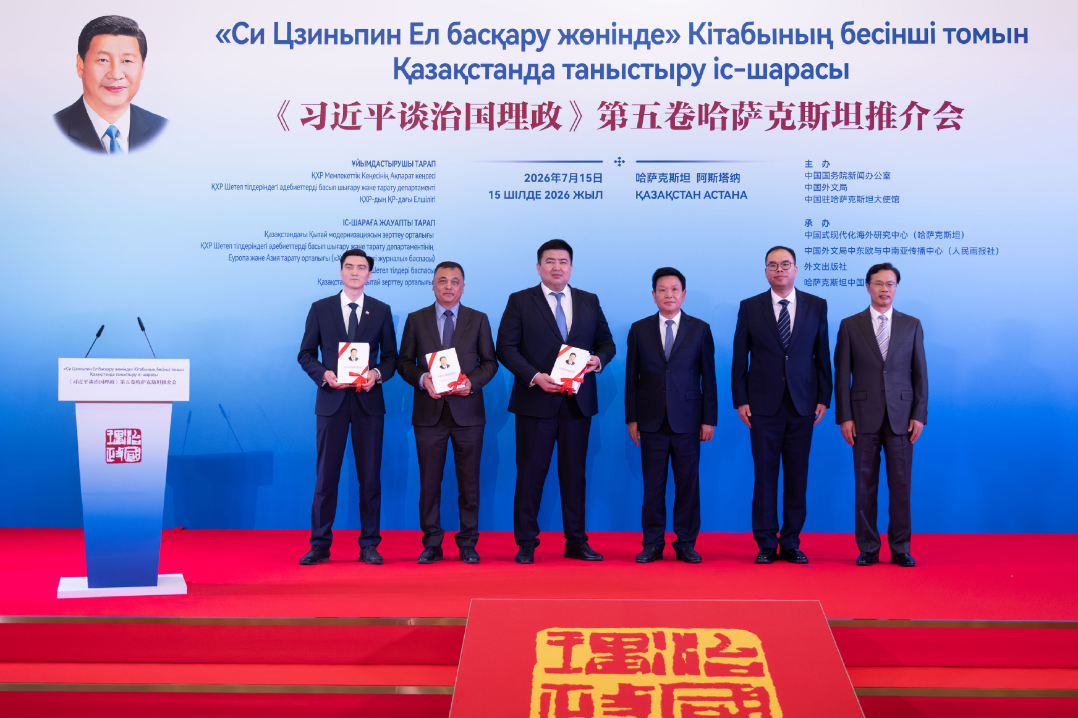
Launch event for Xi’s book held in Astana

Watch it again: SCIO briefing on H1 monetary policy, financial statistics

Hainan eyes gasoline-free vehicles by ’30
Most Viewed in 24 HoursGlobal Lens
Macao’s cultural heritage can drive sustainable tourism

Remembering holds key to prosperity
Columnists+

How I keep my date with strolls even on hot and sunny afternoons

Endurance and determination on Highway 318
Chinese Perspectives
Illegal ‘arbitration award’ a political farce
Japan’s neo-militarism threatens regional peace and stability
China and the World Roundtable+
CPC’s governing philosophy underpins China’s success

South Asia, China to build a shared future
BACK TO THE TOP
English
中文


Copyright 1994 – . All rights reserved. The content (including but not limited to text, photo, multimedia information, etc) published in this site belongs to China Daily Information Co (CDIC). Without written authorization from CDIC, such content shall not be republished or used in any form. Note: Browsers with 1024*768 or higher resolution are suggested for this site.
License for publishing multimedia online 0108263

About China Daily
Advertise on Site
Contact Us
Job Offer
Expat Employment
FOLLOW US


