

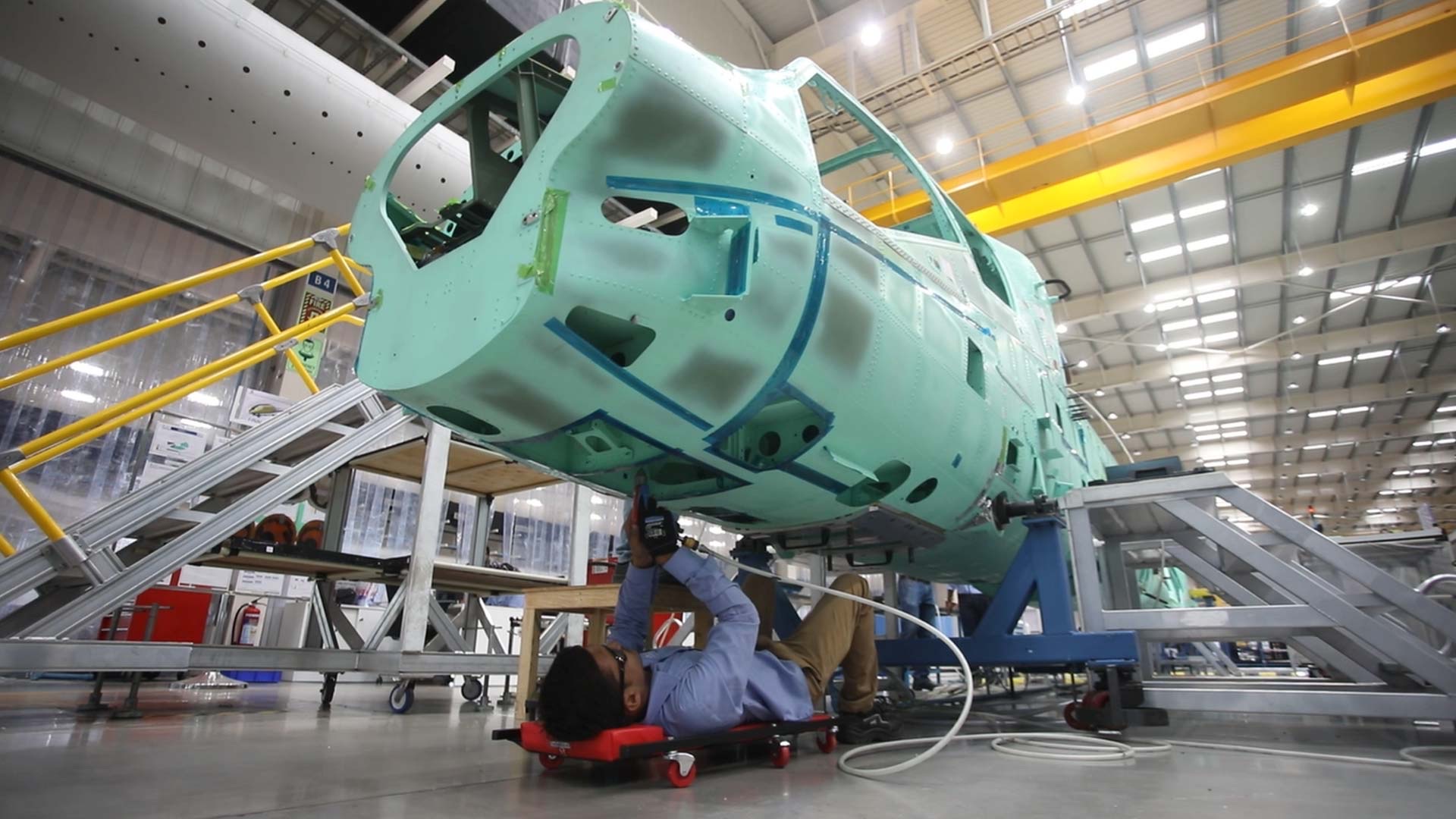
Indiaexpects to have a locally made civilian aircraft within two years through a joint venture, Civil Aes a renewed attempt to establish commercial aircraft manufacturing after decades of relying on imported airliners
“Within two years, we will be able to have Made-in-Indiacivilian aircraft” through a joint venture, Naidu told a symposium organised by the Indian Foundation for Quality Management in New Delhi. He did not identify the type of aircraft or the companies involved.
The timeframe is significant because several aircraft manufacturers are now discussing production in India, although none has yet established a commercial aircraft final assembly line in the country.
India’s airlines have more than 1,600 aircraft on order, worth an estimated $100 billion The country’s domestic airline fleet currently numbers around 850 aircraft, while more than 100 additional airports are expected to be developed over the next decade
For now, almost all of those aircraft will come from overseas production lines.
Several routes to an Indian-built aircraft
Naidu’s remarks come as India pursues several possible routes towards domestic civil aircraft production.
Hindustan Aeronautics Limitedhas been working with Russia’s United Aircraft Corporation on plans to manufacture the SJ-100 regional jet in India.
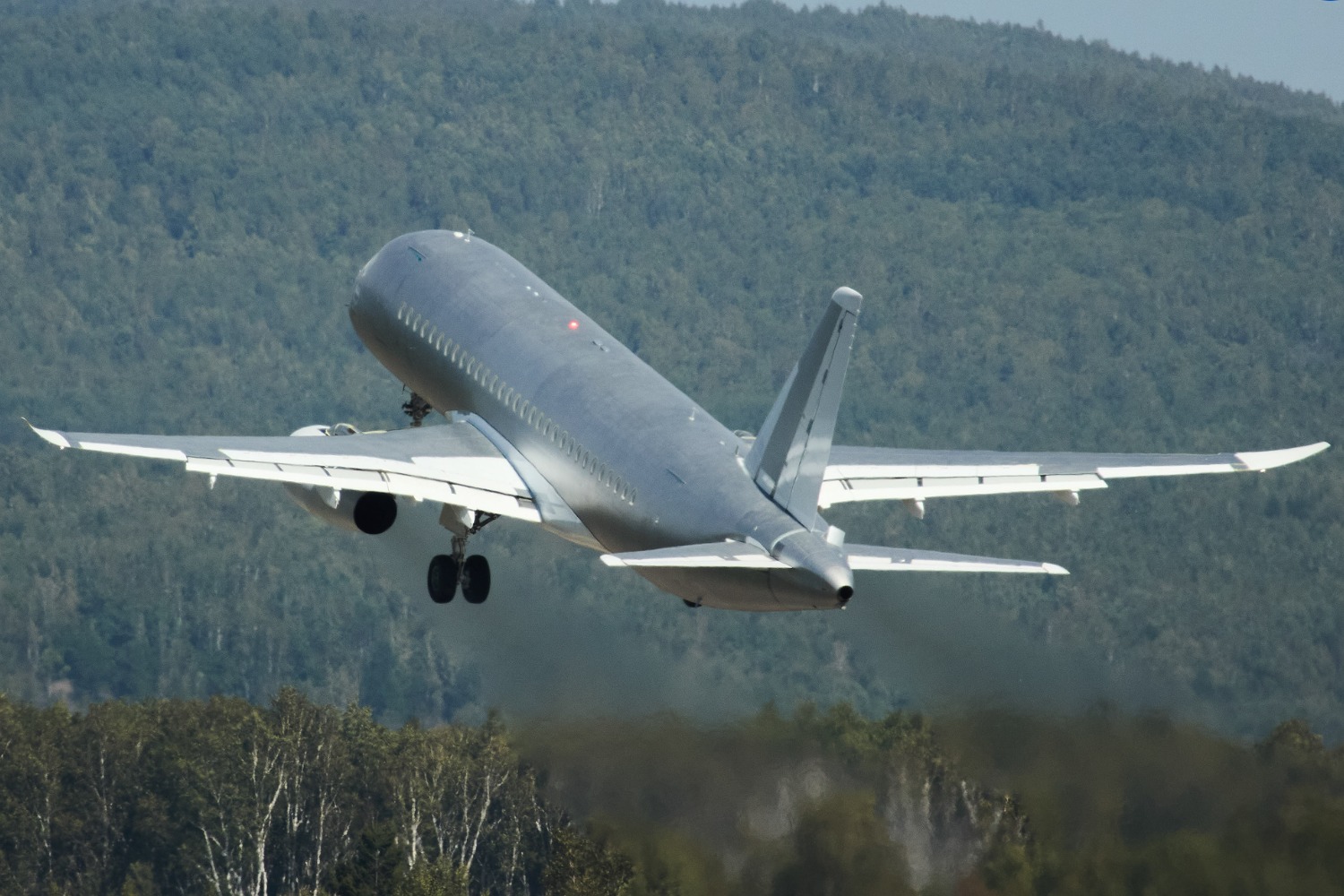
The aircraft seats around 100 passengers and is being considered for regional routes.
HAL has previously said it could initially lease 10 to 20 SJ-100s before moving towards production at one of its facilities in Kanpur or Nashik, with the company estimating an Indian market for more than 200 aircraft of that size.
Brazil’s Embraerhas meanwhile partnered with AdaniDefence & Aerospace to explore an Indian regional transport aircraft ecosystem, including potential local production. The partnership has been associated with the E175 regional jet, although a final manufacturing programme has not yet been announced.
ATR has also been examining how a larger industrial presence in India could support its growing regional aircraft market in the country. India is already one of the most important markets for the Franco-Italian turboprop manufacturer.
That market received another boost in September when regional carrier FLY91 placed a firm order for 40 ATR 72-600s worth around $1 billion. Deliveries are due between 2027 and 2032.
Naidu did not say whether his two-year target referred to one of these programmes.
India has, however, already taken a major step towards large aircraft production through the Airbus-Tata C295 programme. Tata Advanced Systems is assembling the military transport in Vadodara under a programme covering 56 aircraft, of which 40 are to be produced in India.
A path China took earlier
India’s renewed push inevitably invites comparison with China, although Naidu did not mention COMAC or suggest that India intends to develop an immediate competitor to the Airbus A320neo or Boeing 737 MAX.
China established Commercial Aircraft Corporation of China, or COMAC, in 2008 and has since developed the ARJ21 regional aircraft and the larger C919. The C919 is China’s first domestically developed narrowbody aimed at the market dominated by Airbus and Boeing.
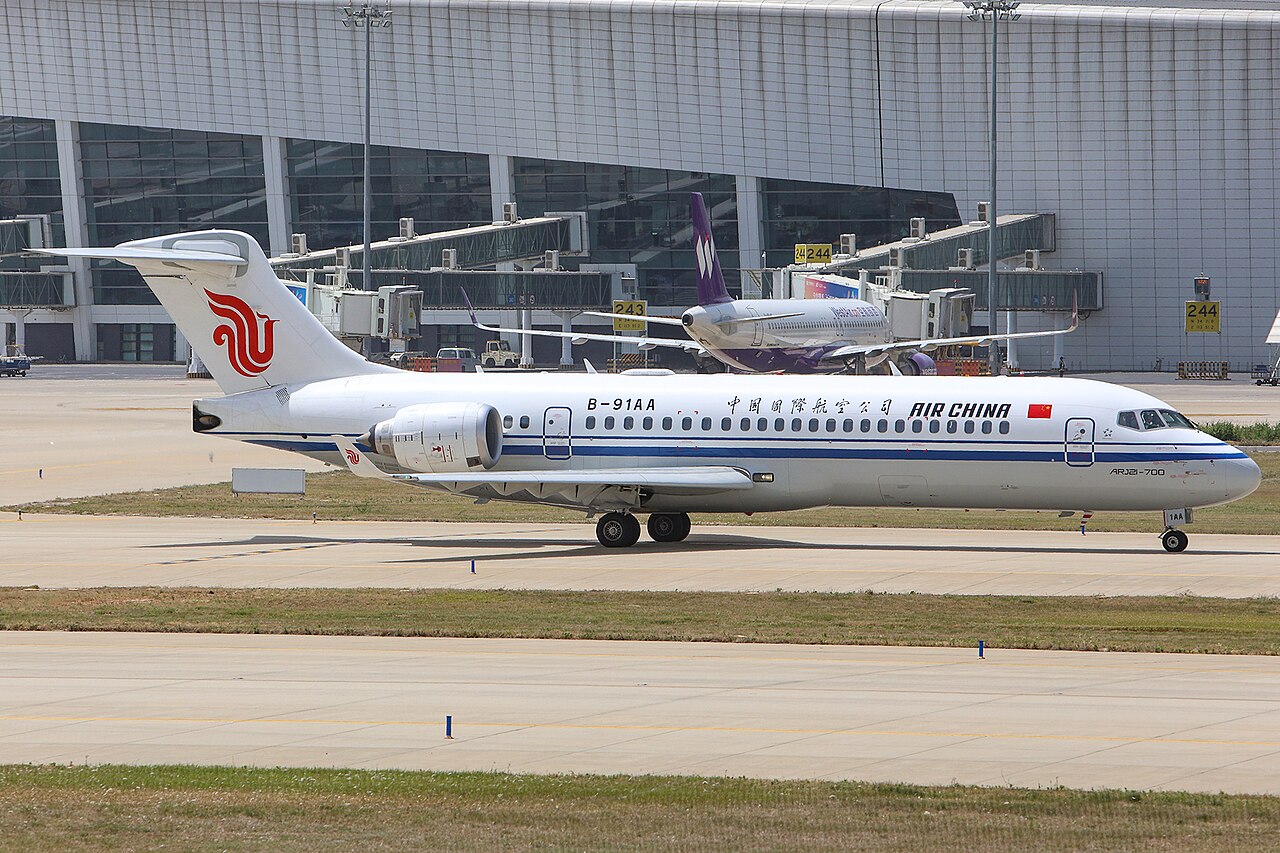
India is starting from a different position. Its current proposals centre largely on manufacturing or assembling existing foreign-designed regional aircraft, while its own indigenous programmes remain focused on much smaller types.
The state-owned National Aerospace Laboratories is developing the Saras Mk2, a 19-seat turboprop intended for passenger, military and other missions. Its predecessor, the 14-seat Saras Mk1, first flew in 2004.
NAL has also been working on the definition of a larger Regional Transport Aircraft programme, but this has not yet produced a commercial airliner.
India’s difficulty in building a civil aircraft industry contrasts with its long history in a
Hindustan Aeronautics gained substantial aircraft assembly, repair and overhaul experience during and after the Second World War. Its engineers converted around 200 war-surplus Dakota transports for civilian use at a time when India had a flourishing group of private airlines.
But the country chose a different path after independence.
Former HAL chairman C.G. Krishnadas Nair has described the period as a “lost opportunity”, arguing that India’s limited aircraft manufacturing capability was directed towards military requirements rather than civil a
J.R.D. Tata had secured a contract to manufacture light aircraft during the Second World War and sought to expand aircraft production at Pune after independence. The government’s 1948 Industrial Policy Resolution subsequently reserved aircraft manufacturing as a strategic sector under state control.
HAL later licence-built aircraft of foreign design, including types from Britain’s Avro and Germany’s Dornier, but its manufacturing activity remained overwhelmingly focused on military a
Meanwhile, India’s civil am the 1990s brought private carriers back into the market, followed by low-cost airlines and rapid passenger growth
The result is that India now has one of the world’s largest commercial aircraft orderbooks without producing the airliners its carriers operate.
Building the supply chain first
There is already a substantial aerospace manufacturing base beneath that headline figure.
Airbus and Boeing togethera who expects that figure to reach $10 billion by the end of the decade
Indian companies manufacture aerostructures, engine components and other equipment for global aerospace programmes, while international engine manufacturers are also expanding their engineering and maintenance presence in the country.
But producing a complete commercial aircraft requires a much broader supplier network, certification capability and long-term production volumes.
Engines remain an especially difficult gap. Naidu acknowledged that India would examine the possibility of manufacturing commercial jet engines domestically, but said developing that capability would take time.
What has changed is the scale of the market available to support such a programme. With more than 1,600 aircraft already on order and several manufacturers now considering Indian production, New Delhi is again trying to turn the country’s position as one of the world’s biggest buyers of commercial aircraft into a place where some of those aircraft are actually built.
Read the latest air transport news on AGNRead the latest air transport news on AGN
News
Air TransportAdani DefenceATR 72-600C295EmbraerHindustan Aeronautics LimitedIndian Civil A
Sign up for our newsletter and get our latest content in your
inbox.
1
Syrian Airlines reveals new livery as it plans to double fleet and expand to 25 destinationsSyrian Airlines reveals new livery as it plans to double…
Airlines
2
Delivered but not quite ready: KLM welcomes first Airbus A350, but business class seats not availableDelivered but not quite ready: KLM welcomes first Airbus A350,…
A350-900
3
Delta Air Lines Airbus A350 clips Air Canada Boeing 777 during taxi at LAXDelta Air Lines Airbus A350 clips Air Canada Boeing 777…
Delta Air Lines
4
Lufthansa Group expands Japan network to 50 weekly flights for summer 2027Lufthansa Group expands Japan network to 50 weekly flights for…
Lufthansa

